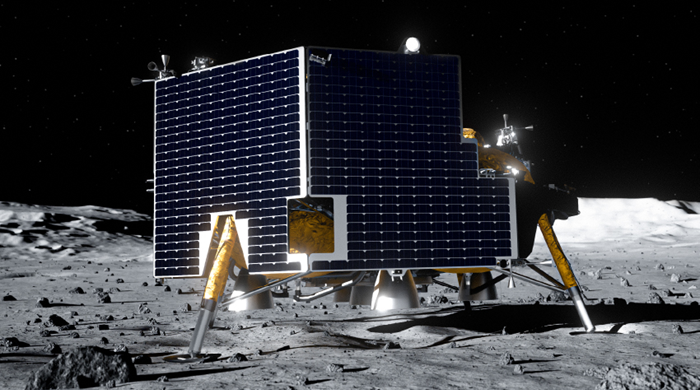
Astrobotic Technology, a US-based aerospace company specializing in lunar logistics, robotic landers and planetary mobility systems, is advancing commercial lunar exploration through a portfolio of lunar delivery platforms designed for cargo transportation, surface mobility, and precision landing operations on the Moon. The company’s lunar transportation architecture combines modular landers and lightweight rover systems intended to support scientific, commercial and government missions across diverse lunar environments.
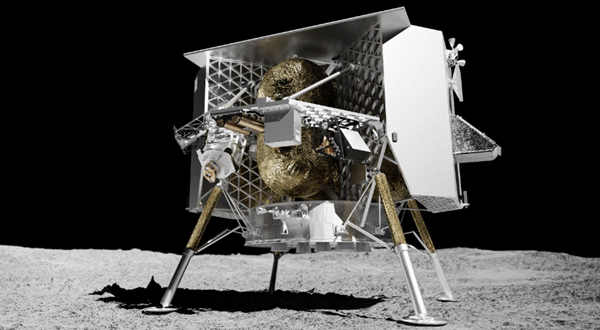
Astrobotic’s lunar lander portfolio is centered around the Peregrine and Griffin spacecraft platforms, both engineered for payload transportation and autonomous lunar landing operations. The Peregrine lander is designed to deliver payloads to the lunar surface through configurable payload integration architectures supporting above-deck, below-deck, and enclosed payload accommodations. The spacecraft integrates five main engines and 12 attitude control thrusters for propulsion and orientation control, while onboard avionics, lithium-ion battery systems, and triple-junction solar panels support mission operations throughout transit and landing phases.
For larger payload missions, the Griffin lander expands the company’s lunar transportation capability through a medium-class architecture designed to transport rovers and high-mass payload systems to the lunar surface. Griffin supports payload delivery for missions requiring larger cargo capacity and incorporates deployment mechanisms designed for surface mobility systems. The platform integrates propulsion systems, autonomous guidance technologies and landing sensors optimized for operations in challenging lunar terrain, including polar regions.
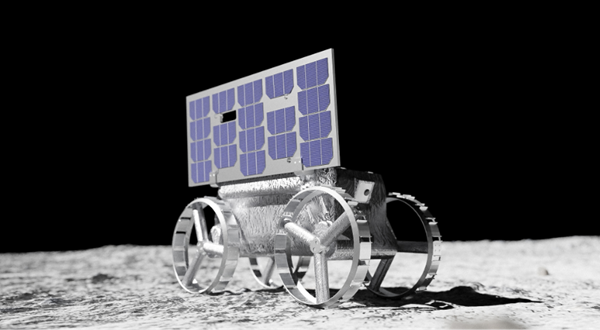
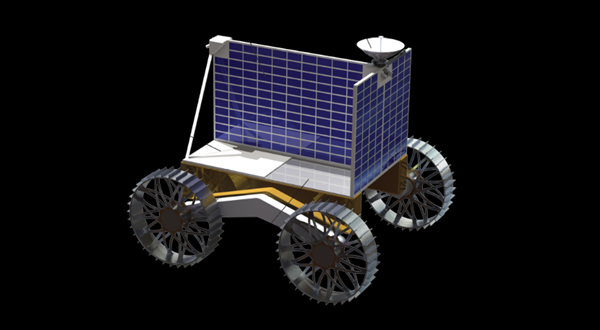
Complementing its lander systems, Astrobotic has also developed a portfolio of lunar rover platforms focused on lightweight mobility and surface exploration. The company’s CubeRover® platform is a modular micro rover architecture engineered to provide low-cost lunar surface mobility for scientific instruments and technology payloads. The rover system is designed to reduce lunar mission costs while supporting distributed surface exploration and payload deployment operations. For larger-scale lunar surface operations, Astrobotic developed the Polaris rover, a higher-capacity mobility platform designed for cargo transport, regolith interaction, and extended lunar traversal missions. The rover architecture supports larger payload systems and is designed for long-distance surface operations across diverse lunar terrains.
A key technical focus across Astrobotic’s lunar systems is the integration of autonomous navigation and precision landing technologies. The company develops Terrain Relative Navigation (TRN), hazard detection systems, and Doppler LiDAR technologies designed to support autonomous landing operations and improve landing accuracy in complex planetary environments. NASA has also selected Astrobotic to deliver payloads to the Moon under the agency’s Commercial Lunar Payload Services (CLPS) initiative, supporting the development of commercial lunar transportation infrastructure for future exploration missions.
About Astrobotic Technology
Astrobotic Technology is a U.S.-based aerospace company headquartered in Pittsburgh, Pennsylvania, focused on developing lunar logistics, robotic exploration systems, and autonomous space technologies. The company specializes in lunar landers, rover platforms, spacecraft navigation systems and precision landing technologies designed to support scientific, commercial, and government missions to the Moon. The technology portfolio includes the Peregrine and Griffin lunar landers, CubeRover and Polaris rover systems, and autonomous navigation technologies for planetary landing and surface mobility operations. Astrobotic also develops payload delivery infrastructure and lunar transportation systems intended to support long-term commercial and scientific activity on the lunar surface.
Click here to learn more about Astrobotic Technology’s Surface Rovers