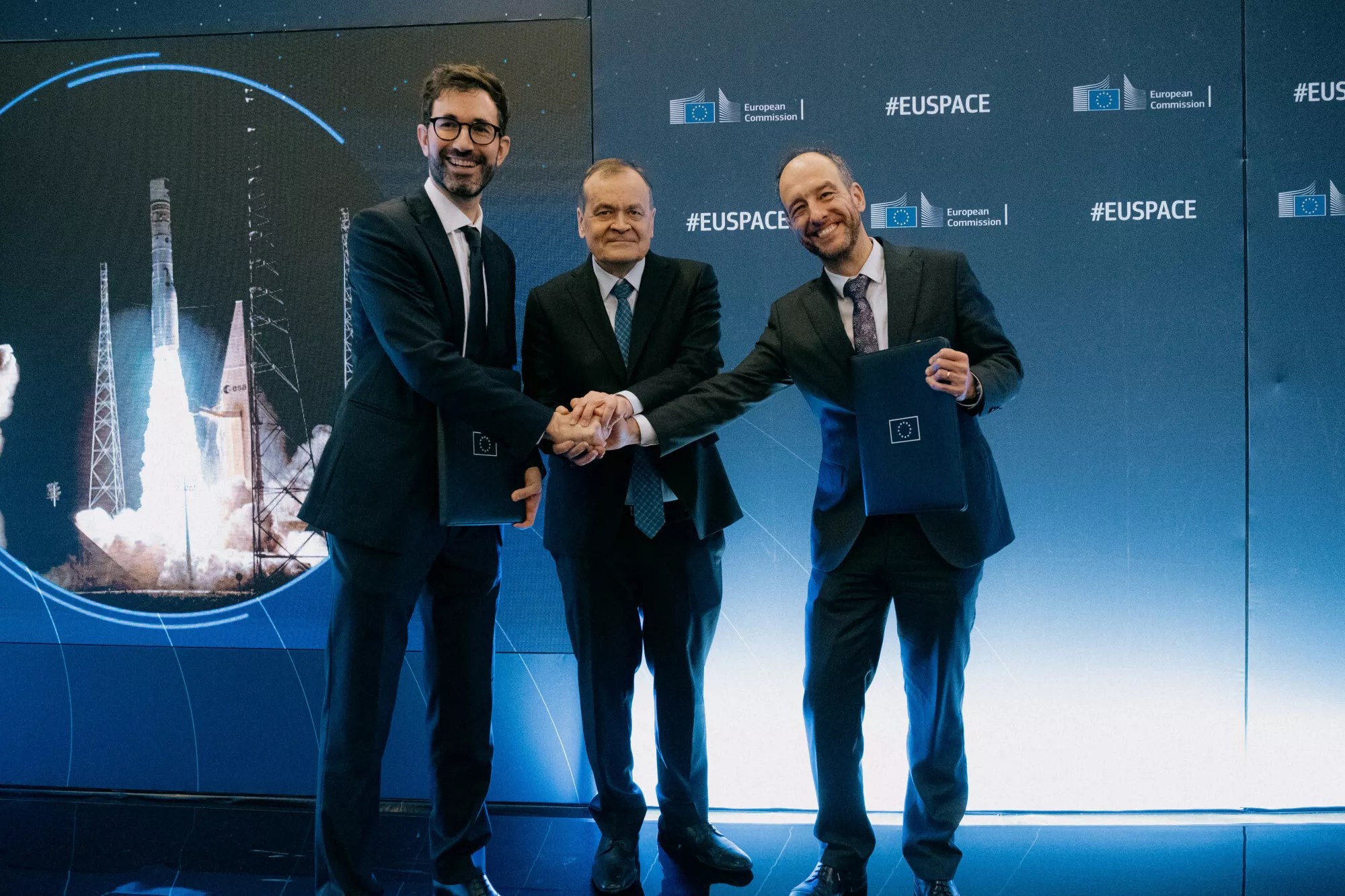
The European Union Agency for the Space Programme (EUSPA) has signed a new contract to launch second-generation Galileo navigation satellites using Europe’s Ariane 6 rocket, reinforcing the bloc’s push for independent access to space, the agency said on Tuesday.
Under the agreement, the Ariane 6 launcher will deploy two Galileo L18 satellites. Ariane 6, developed as Europe’s new heavy-lift rocket, completed its first mission last year and is central to EU efforts to reduce reliance on non-European launch providers for strategic space assets.
The European Union has in recent years relied on SpaceX, founded by Elon Musk, to launch several Galileo satellites after delays to European launch systems. Galileo provides Europe with its own global navigation and timing services, independent of the U.S. Global Positioning System.
The new contract comes as the EU places greater emphasis on strategic autonomy in defence and security, a priority that has gained momentum since U.S. President Donald Trump returned to the White House last year. While many European commercial satellite operators continue to use SpaceX because of its lower costs and higher launch capacity, EU institutions have increasingly stressed the importance of maintaining sovereign launch capabilities for critical infrastructure.
“This signature with the European Commission and EUSPA underscores Arianespace’s commitment to guaranteeing Europe’s sovereign access to space,” said David Cavaillolès, referring to the launch services provider that will operate Ariane 6. He added that recent Galileo launches had demonstrated the rocket’s suitability for high-precision missions.
EUSPA Executive Director Rodrigo da Costa said the agreement builds on a first contract signed last year for Galileo’s second generation and reflects the agency’s expanding role, including responsibility for launch activities. “It reinforces our responsibility for delivering precise and reliable services while strengthening the Union’s space autonomy for users worldwide,” he said.
The European Commission said the deal underlines Galileo’s role as a pillar of European strategic independence. “The Galileo programme is a cornerstone of Europe’s strategic autonomy,” said Timo Pesonen, Director-General for Defence Industry and Space. “This new launch contract confirms our commitment to a robust, secure, and fully European navigation system.”