
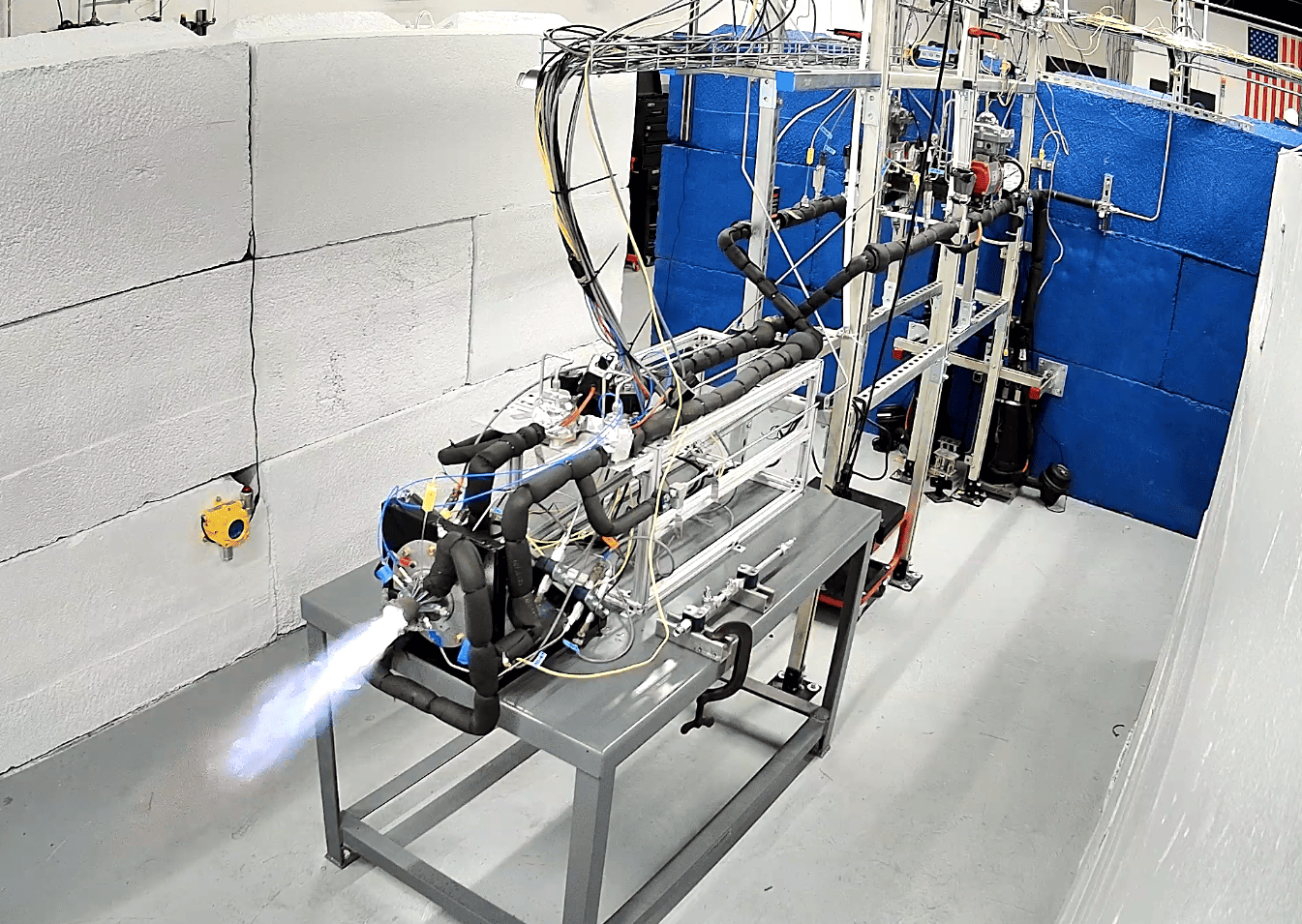
Juno Propulsion has secured $1.4 million in pre-seed funding to support the development of its first flight-ready rotating detonation engine (RDE), known as Project Iris, ahead of a planned in-orbit demonstration mission in 2027.
The investment round was led by SOSV, with participation from Hypernova, Leslie Ventures, Activate, Collab Fund, Safar Partners, and Cape Fear Ventures.
The company said the funding will be used to complete development and testing of the Iris propulsion system while expanding in-house manufacturing capabilities.
Preparing for First In-Orbit Demonstration
Juno plans to fly the Iris engine as a hosted payload aboard a satellite bus provided by Momentus during the first quarter of 2027.
If successful, the mission would represent the first commercial use of a rotating detonation engine to propel a satellite in orbit.
The demonstration is intended to validate the engine’s performance in space, including its ability to execute long-duration burns for orbital adjustments and short, precise burns that could support future rendezvous and proximity operations (RPO).
Advancing a New Propulsion Technology
Rotating detonation engines have attracted growing interest from the aerospace industry because they offer the potential for greater efficiency than traditional rocket engines.
According to Juno, recent hot-fire tests of the company’s RDE system demonstrated combustion efficiency approximately 7% higher than that of a theoretically ideal constant-pressure engine.
The technology differs from conventional propulsion systems by utilizing continuous detonation waves rather than traditional combustion processes, potentially improving performance while reducing complexity.
Alternative Propellants
In addition to efficiency gains, Juno highlights the environmental and operational advantages of its propulsion approach.
Many existing satellite propulsion systems rely on hydrazine, a highly toxic propellant that requires specialized handling and safety procedures.
Juno’s engine instead uses nitrous oxide and ethane, which the company says offer safer handling characteristics and lower operational costs.
The use of alternative propellants could help reduce mission costs while simplifying satellite integration and launch preparations.
Growing Global Competition
Juno joins a growing number of organizations pursuing rotating detonation engine technology for aerospace applications.
Research programs and commercial initiatives involving agencies and companies such as the Japan Aerospace Exploration Agency (JAXA), Venus Aerospace, and Stellar Alpina are also working to demonstrate the technology’s viability.
While many competitors remain focused on research and testing, Juno says its strategy includes preparing for future commercial production once the technology has been demonstrated in orbit.
Scaling for Commercial Deployment
The company plans to use part of the newly raised capital to expand its manufacturing capabilities and support future production of propulsion systems.
Juno’s long-term objective is to scale output to dozens of engines annually while advancing the Iris platform toward Technology Readiness Level (TRL) 9, the highest level of technology maturity used in aerospace development.
“We’re trying to parallelize developing more product lines. We have a lot of different irons in the fire,” said Alexis Harroun, Chief Executive Officer of Juno Propulsion.
As satellite operators seek more efficient and cost-effective propulsion technologies, successful demonstration of rotating detonation engines could open new opportunities in orbital maneuvering, satellite servicing, and future space infrastructure applications.
The planned 2027 mission will serve as a key milestone for Juno as it seeks to validate the technology and position itself within the evolving commercial space propulsion market.