India’s Polar Satellite Launch Vehicle (PSLV) may have suffered a technical setback during its return-to-flight mission on Sunday, marking a potential second consecutive problem for the workhorse rocket after a failure last year.
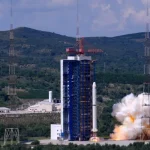
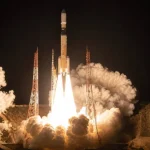
The PSLV lifted off from the Satish Dhawan Space Centre on India’s east coast at 10:18 a.m. local time on Monday (0448 GMT), carrying the EOS-N1 military Earth-observation satellite along with 15 secondary payloads. The mission was the rocket’s first since May 2025, when a launch failure led to the loss of ISRO’s EOS-09 satellite.
During the live broadcast, Indian Space Research Organisation (ISRO) officials indicated that irregularities were observed late in the third-stage burn, echoing issues seen on the previous failed mission.
“Close to the end of the third stage [engine burn], we are seeing a little more disturbance in the vehicle roll rates, and subsequently, there is a deviation observed in the flight path,” ISRO Chairman V. Narayanan said during the webcast. “We are analyzing the data, and we shall come back at the earliest.”
ISRO has not yet confirmed whether the payloads were successfully deployed or if the anomaly resulted in a mission failure. If confirmed, the incident would represent the fourth failure in the PSLV’s 64 launches over more than three decades of service.
The primary payload, EOS-N1 — also referred to as Anvesha — is understood to be a hyperspectral imaging satellite intended for military use, designed to collect detailed Earth imagery across hundreds of wavelengths. It was expected to strengthen India’s growing fleet of defence and surveillance satellites.
The mission also carried a mix of international and commercial payloads, including an Earth-observation satellite jointly developed by Thailand and the United Kingdom, a Brazilian satellite aimed at maritime safety, an in-orbit refuelling technology demonstrator from an Indian company, and a re-entry capsule from Spanish startup Orbital Paradigm.
The re-entry capsule, known as KID (Kestrel Initial technology Demonstrator), was scheduled to separate during the later stages of the flight and splash down in the South Pacific. ISRO has not yet provided updates on its status.
Despite the recent challenges, the PSLV has historically been a cornerstone of India’s space programme, having launched major missions such as Chandrayaan-1 to the Moon, the Mars Orbiter Mission, and the Aditya-L1 solar observatory. ISRO said further details on Sunday’s launch would be released after a full review of the flight data.