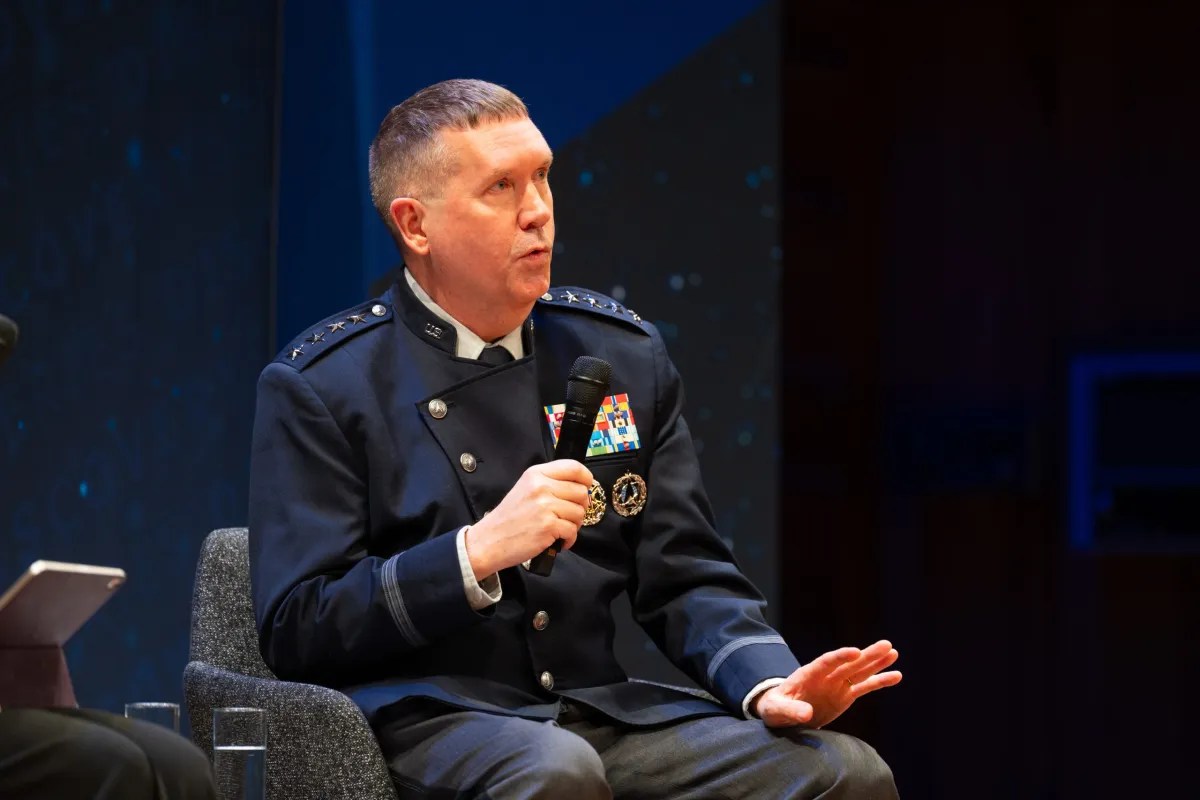
The U.S. Space Force needs to think more seriously about its future role in operations on and around the moon, even as its small size and near-term priorities have constrained long-term planning, Vice Chief of Space Operations Shawn Bratton said this week.
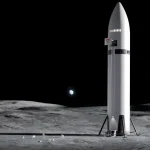
Speaking on Jan. 21 at an event hosted by Johns Hopkins University’s Bloomberg Center in Washington, Bratton said cislunar space — the vast region between Earth’s geosynchronous orbit and the lunar surface — should be a core part of the service’s forthcoming “objective force” plan, which is expected to be released later this year.
“We’re thinking about that a little bit, but we should be thinking about it a lot right now,” Bratton said. “Some of that is capacity; we’re small, and we’re focused on first things first. … But we should be thinking about cislunar.”
The objective force document is intended to define what platforms, manpower and support structures the Space Force will need to maintain space superiority through 2040. To date, much of the U.S. government’s lunar focus has rested with NASA, particularly through its Artemis program, which aims to return astronauts to the moon in mid-2027 and conduct a series of lunar and lunar-orbit missions beginning as early as next month.
By contrast, the Defense Department and the U.S. intelligence community have concentrated on improving space domain awareness and navigation capabilities in cislunar space. The Space Force’s Oracle program, led by the Air Force Research Laboratory, plans to launch multiple space situational awareness satellites in coming years. Meanwhile, the National Geospatial-Intelligence Agency is working with NASA and the Space Force on mapping infrastructure intended to support a GPS-like lunar navigation system.
Bratton said the Space Force should more actively engage companies already supporting NASA or pursuing commercial lunar missions, urging them to consider how their work could intersect with national security needs.
“There are a lot of companies going to the moon right now,” he said. “What is the national security implication of your work? And what do you need from the Space Force? Start to demand that, or at least help us think through that.”
Beyond cislunar operations, Bratton highlighted two additional areas that the objective force will need to address: satellite refueling and the long-term question of whether Space Force personnel — known as Guardians — might one day operate in orbit.
The military has been studying satellite refueling for years, and several demonstration missions are scheduled to launch in 2026 to test refueling, servicing and repair capabilities. Bratton said the Space Force has developed a strong understanding of when refueling makes economic sense but noted that financial logic does not always align with military advantage.
“We have a really good hand on the cost curve of when it becomes economically beneficial to start refueling a constellation,” he said. “I don’t know that that’s the exact same thing as military advantage.”
In contrast, discussion about humans operating in space has been limited, Bratton said, despite its potential long-term significance.
“Where are we going with that? I don’t have the answer to that,” he said. “It would be tragic if that didn’t happen someday. Is that day 2030, 2040, 2050? I don’t know. We owe work on that.”