China is preparing to launch its next Shenzhou spacecraft to the Tiangong space station ahead of schedule after damage to a docked return capsule disrupted routine crew operations, state broadcaster CCTV reported on Saturday.
The Shenzhou-22 spacecraft—originally planned for launch in mid-2026—will now be sent uncrewed roughly six months early to restore an emergency return option for astronauts aboard Tiangong. According to CCTV, “Preparations for the Shenzhou-22 mission have commenced. The spacecraft will carry a full cargo load, including astronaut provisions and equipment for the space station.”
The move follows an incident 10 days earlier in which Shenzhou-20, while docked at the orbiting outpost, sustained minor damage believed to have been caused by space debris, leaving a small crack in the window of its return capsule. The incident forced its three-person crew to extend their stay by nine days, sharing the station temporarily with a newly arrived trio of astronauts.
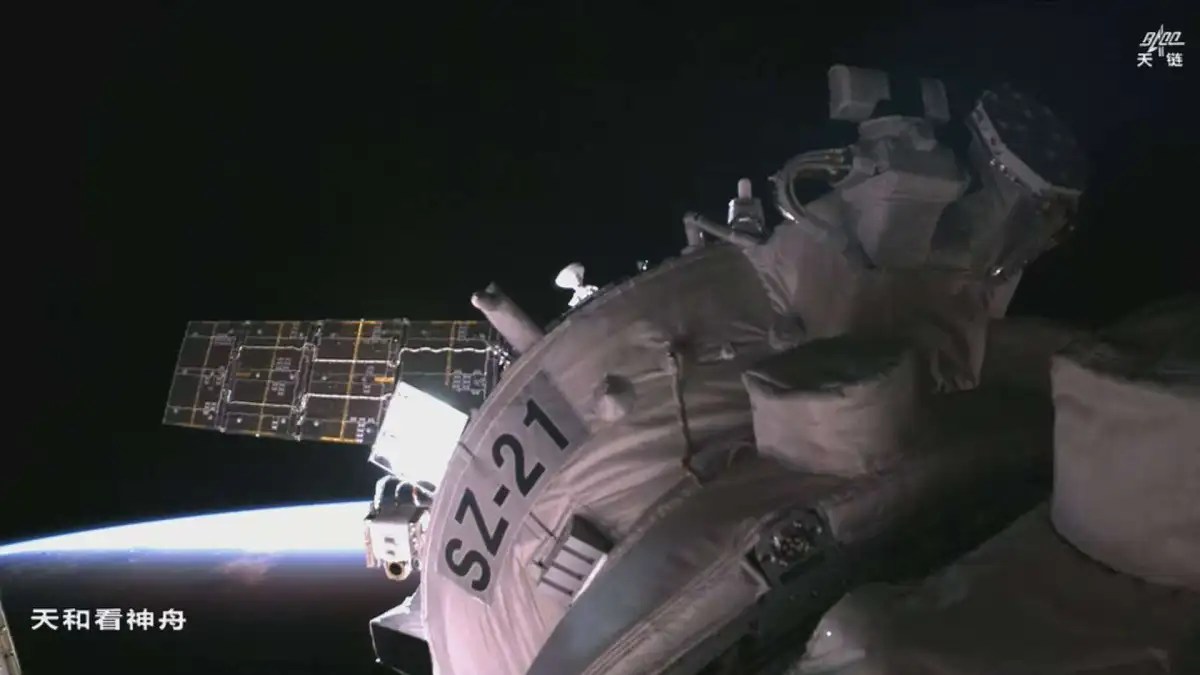
The Shenzhou-20 crew returned to Earth on Friday using the Shenzhou-21 spacecraft, leaving the recently arrived crew aboard Tiangong without an escape vehicle in case of emergency. China’s human-spaceflight program typically maintains at least one docked spacecraft ready for crew evacuation.
Officials said the accelerated launch of Shenzhou-22 will “plug the security risk” and enable the Shenzhou-21 crew to complete their six-month rotation and return to Earth around April 2026.
Tiangong can host up to six astronauts, but only for limited periods. Its life-support system is designed for three crew members on six-month missions, making the presence of a functional lifeboat spacecraft essential for longer stays.
Beijing has yet to announce the fate of the damaged Shenzhou-20 capsule. Spaceflight analysts said it may be undocked and deorbited over the Pacific Ocean, a standard procedure for compromised spacecraft. The incident highlights rising concerns about the growing volume of orbital debris and the risks it poses to human spaceflight.