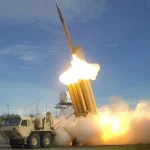
Following a scrub-prone launch campaign in June, Arianespace have enjoyed first-time success with Wednesday’s launch of their Ariane 5 ECA vehicle – her third mission of the year. The workhorse has two telecommunication passengers – Nilesat-201 and RASCOM-QAF1R – and launched slightly after the start of the long launch window.
Ariane 5 ECA:
Flight 196 is the 52nd Ariane 5 launch and the third in 2010. An Ariane 5 ECA (Cryogenic Evolution type A), the most powerful version in the Ariane 5 range, will be used for this flight, launching from the European Spaceport in Kourou, French Guiana.
Launcher 554, the 48th production phase Ariane 5, is the twenty-sixth of the 30 PA contract launchers, for which Astrium is production prime contractor. 554 is consequently the twenty-sixth complete launcher to be delivered to Arianespace, integrated and checked out under Astrium’s responsibility in the Launcher Integration Building (BIL).
See Also
- LIVE Ariane 5 Launch Updates
- 60 Launch Vehicle Manuals (L2)
- Click here to Join L2
Arianespace is looking to recover from the numerous issues associated with their Arabsat 5A and COMS 1 launch attempt on the 23rd, which suffered from an issue relating to the launcher subsystem late in countdown operations, resulting in a scrub for the day.
The countdown appeared to be going to plan on the following day, prior to a hold being called at T-17 seconds. With the clock reset to T-7 minutes, another attempt was made, before another hold was called at almost the same time as the earlier issue.
Lacking available time in the launch window to resolve the problem – classed as an issue with the spaceport’s launch infrastructure, a scrub was called, with the third attempt set for 48 hours later – which enjoyed an issue-free countdown, resulting with a launch at the start of the window.
For the latest campaign, Ariane 5 ECA is again using the dual-payload configuration, with the debut use of the SYLDA 5 K – seven metres high, i.e. 60 cm more than the usual SYLDA 5 A – system with an extended nose-cone (total height: 17 m), to carry the Egyptian NILESAT 201 satellite in the upper position and the African RASCOM-QAF1R satellite in the lower position.
Space Shuttle
(adsbygoogle = window.adsbygoogle || []).push({});
Nilesat-201 will enable the Egyptian satellite operator Nilesat to deliver digital Direct to Home (DTH) TV and radio broadcasting and high-speed data transmission services to North Africa and the Middle East starting in September 2010.
Built on a Spacebus 4000B2 platform, Nilesat-201 is fitted with 24 Ku-band and 4 Ka-band transponders. It will be positioned at 7 degrees West longitude and offers a design life of 15 years. Weight at launch will be about 3,200 kg, and it will generate 5.9 kW of power at end-of-life.
RASCOM-QAF1R will ensure service continuity for the operator RascomStar-QAF and its customers, by giving Africa access to advanced communications and information technologies, in particular rural telephony.
Based on the Spacebus 4000B3 platform, the RASCOM-QAF1R satellite Is equipped with 24 equivalent 36 MHz transponders in both Ku-band and C-band. The bird will provide 6.4 kW of power at end-of-life. Positioned at 2.9 degrees East longitude, RASCOM-QAF1R will cover the African continent, as well as parts of Europe and the Middle East.
RASCOM-QAF1R – which has a liftoff mass of about 3,050 kg. – will be deployed from Ariane 5’s lower passenger position at approximately 33 minutes into the flight.
The August 4 mission also will be Ariane 5’s third flight of 2010, which follows two previous dual-payload launches: the June 26 mission that orbited the Arabsat-5A and COMS spacecraft, and the May 21 launch with ASTRA 3B and COMSATBw-2.