
Zenno Astronautics is developing the Z01 Supertorquer, a superconducting spacecraft control technology designed to provide fuel-free, fully autonomous attitude control and satellite positioning by interacting with Earth’s magnetic field. Built on the company’s proprietary high-temperature superconducting magnet platform, the system is intended to deliver strong magnetic control authority for missions operating in Low Earth Orbit (LEO), Medium Earth Orbit (MEO) and Geostationary Orbit (GEO), including weak-field environments where conventional magnetic actuators become less effective.

At the core of the Z01 Supertorquer is a set of superconducting electromagnets arranged across multiple axes. When energized, the magnets generate a controllable three-dimensional magnetic field that interacts with Earth’s natural magnetic field, allowing the spacecraft to adjust its orientation without consuming fuel. Because superconductors operate with near-zero electrical resistance, the system can sustain extremely high currents and produce significantly stronger magnetic fields than conventional torque rods while minimizing energy losses.
Top Magentorquers for Space & Satellite MissionsClick here
A key differentiator of the Z01 platform is its ability to provide high-dipole magnetic actuation for MEO and GEO spacecraft without the mass, complexity and operational risks associated with oversized torque rods or thruster-based control systems. Zenno offers both single-axis ultra-high-dipole actuators for MEO and beyond and three-axis low-dipole actuators for LEO missions. Current configurations provide magnetic dipole moments ranging from 100 Am² to 8,000 Am², with maximum torque capability of up to 4,000 mNm, total system mass between 3.8 and 15 kg, and continuous power requirements as low as 8–16 W. The systems are also designed for radiation-tolerant operation, with configurations supporting up to 50 krad Total Ionizing Dose (TID).

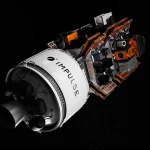
The technology is engineered for straightforward spacecraft integration. The Z01 mounts to a spacecraft using a standardized mechanical interface and supports RS-422, RS-485, Ethernet and CANBUS command-and-data interfaces, with additional mission-specific interface options available upon request. Zenno also offers custom configurations exceeding 10,000 Am² for missions requiring even greater magnetic control authority. The platform has progressed beyond laboratory development into orbital validation. The Z01™ Supertorquer was launched as a hosted payload aboard D-Orbit’s orbital transportation mission and successfully demonstrated the operation of the world’s first high-temperature superconducting electromagnets in space. Zenno subsequently announced successful on-orbit operation aboard Impulse Space’s Mira satellite, establishing what the company describes as the first superconducting spacecraft actuator successfully operated in orbit and providing significant flight heritage for its fuel-free spacecraft control architecture.

Building on this validation, Zenno is expanding the Z01 roadmap toward satellite mobility, proximity operations, docking technologies, advanced radiation shielding and future electromagnetic space infrastructure systems. The company is also collaborating with Mitsubishi Electric on a high-fidelity simulation environment for mission integration and performance analysis of the Supertorquer platform. By combining superconducting electromagnetics, autonomous spacecraft control, quantified MEO/GEO performance, and demonstrated orbital operation, Zenno is developing a new category of propellant-free space mobility technology for future commercial, government and long-duration space missions.
About Zenno Astronautics
Zenno Astronautics is a New Zealand-founded space technology company specializing in superconducting magnetic systems for spacecraft control and mobility. The company develops high-temperature superconducting technologies for fuel-free attitude control, satellite mobility, docking systems, radiation shielding and future electromagnetic space infrastructure, with a focus on enabling sustainable long-duration operations beyond Earth.