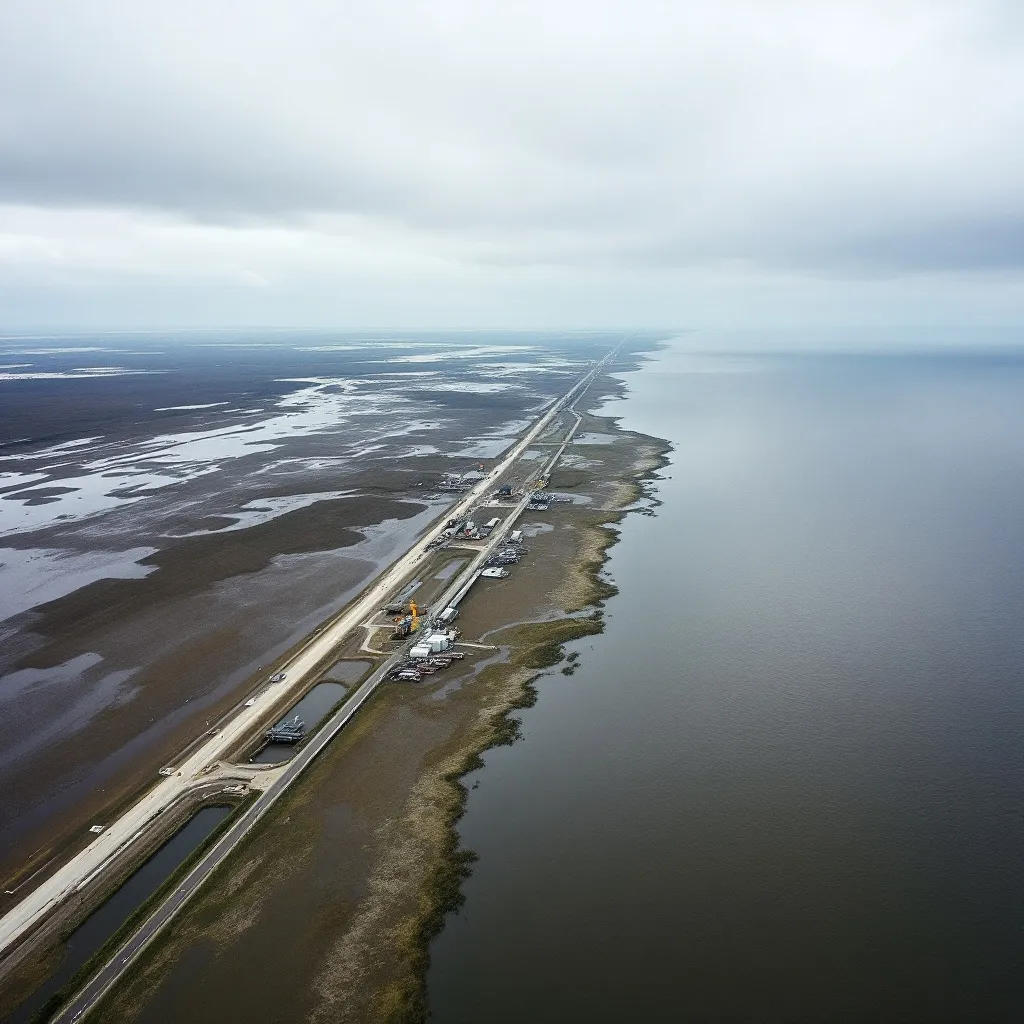
SpaceX is set to build a new spaceport along roughly 18 miles of coastal land in southern Vermilion Parish, Louisiana, creating another launch location for the company as it expands its rocket operations, according to information emerging from Louisiana Gov. Jeff Landry’s office.
The proposed facility would be built on a roughly 130,000-acre tract in the Acadiana region and would give SpaceX a launch site oriented toward the Gulf of Mexico. Rockets launched from the site could fly over the Gulf and continue toward orbit, potentially adding a strategically positioned launch complex between SpaceX’s existing major facilities in Texas and Florida.
Landry is expected to brief elected officials and business leaders about the agreement during an announcement next week in Abbeville. As of Aug. 20, the exact date and time of the announcement had not been released, and key commercial details—including the final dollar value of the project and construction schedule—remain undisclosed.
The project has been anticipated for weeks as Louisiana officials and local residents weighed the possibility of a major SpaceX development on the state’s Gulf Coast. Its emergence now represents a potential new phase in SpaceX’s effort to expand launch infrastructure as demand for Falcon 9 and Starship missions grows.
A 130,000-Acre Coastal Site Could Become SpaceX’s Next Launch Hub
The proposed spaceport would occupy an approximately 18-mile stretch of coastal property in Vermilion Parish. The larger tract covers roughly 130,000 acres and was previously owned by ExxonMobil before being transferred to the state of Louisiana as part of a broader coastal settlement.
The size of the property is notable because rocket launch complexes require substantially more land than the launch pad itself. Safety zones, propellant and ground-support infrastructure, roads, utilities, processing areas and flight corridors can all require large exclusion areas, particularly for powerful vehicles such as SpaceX’s Starship.
The exact configuration of the Louisiana facility has not yet been made public. It is therefore too early to determine whether the project would initially include a single launch pad or eventually develop into a larger integrated launch and manufacturing complex.
The distinction matters. A basic launch site can support vehicle processing and flight operations, while a larger SpaceX-style campus could eventually incorporate manufacturing, testing and other infrastructure. SpaceX has progressively expanded its Texas Starbase operation from a relatively focused launch and test site into a much larger industrial complex.
For now, however, the Louisiana project should be viewed primarily as a planned launch facility rather than an announced Starship factory or full aerospace campus.
Why the Gulf Coast Location Fits SpaceX’s Launch Strategy
The most important technical advantage of the proposed site is its geography.
Orbital rockets generally benefit from launching toward the east because Earth’s rotation provides additional velocity to vehicles heading into equatorial or low-inclination orbits. A coastal launch site also allows a rocket to fly over open water during the early stages of ascent, reducing the number of populated areas exposed to launch hazards.
The proposed Vermilion Parish location offers both characteristics.
A rocket departing from the Louisiana coast could establish a flight corridor over the Gulf of Mexico before continuing downrange. That arrangement is broadly consistent with the safety architecture used at other U.S. coastal launch sites, including SpaceX’s facilities in Florida and Texas.
The Gulf location could also provide logistical advantages. Rocket hardware can be transported by road, rail or water, while a coastal industrial site can potentially accommodate large structures and equipment without the land constraints found around heavily developed metropolitan areas.
The location is also strategically positioned within SpaceX’s broader U.S. launch network.
SpaceX already operates major launch infrastructure at Cape Canaveral and Kennedy Space Center in Florida, as well as at Vandenberg Space Force Base in California and Starbase in southern Texas. Each location serves different orbital inclinations, mission profiles and customers.
A Louisiana facility would not simply duplicate those sites. Instead, it could provide another launch option for a company increasingly focused on high launch cadence.
Starship Is the Likely Long-Term Context
The proposed Louisiana project arrives as SpaceX continues to scale its Starship program.
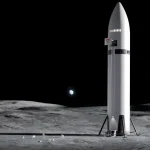
Starship is substantially larger than the Falcon 9 family and is designed around full reusability of both its Super Heavy booster and upper-stage spacecraft. Its eventual operating model depends on launching, recovering, inspecting and rapidly relaunching large vehicles at a cadence far beyond traditional expendable or partially reusable launch systems.
That creates an infrastructure problem as much as a rocket-development problem.
A single launch site can become a bottleneck if vehicle production and flight demand grow faster than pad availability. Additional launch complexes can allow a company to distribute missions across multiple locations, reduce scheduling conflicts and provide greater operational resilience.
SpaceX has already been developing Starship launch infrastructure beyond its original Texas base. The company has been working to establish additional Starship capability at NASA’s Kennedy Space Center in Florida, while its broader launch business continues to rely heavily on Falcon 9 operations from Florida and California.
A Louisiana site would therefore fit into a wider pattern: SpaceX is building a geographically distributed launch network rather than relying on one dominant spaceport.
It remains uncertain, however, exactly which rocket would be the first to operate from Vermilion Parish. The available announcement information does not specify whether the facility is intended for Starship, Falcon-family vehicles, or a combination of future systems.
Louisiana Wants a Larger Role in the Commercial Space Economy
For Louisiana, the proposal is about more than another rocket launch site.
State officials have increasingly promoted aerospace and commercial space as an opportunity to diversify an economy historically associated with energy, petrochemicals, shipping and offshore industries.
Louisiana lawmakers approved a package of incentives for private space companies earlier in 2026 as the state sought to attract launch and testing activity. Those measures form part of a broader effort to make the state more competitive as commercial launch companies search for additional locations.
The proposed SpaceX facility could therefore become an anchor for a wider aerospace ecosystem.
A launch complex requires engineers, technicians, construction workers, safety personnel, logistics specialists and a broad network of suppliers. Over time, companies that provide propulsion components, electronics, fabrication, transportation, construction and specialized services can cluster around major aerospace facilities.
The economic effect could extend beyond direct SpaceX employment. Airports, roads, utilities, housing and local services would also face pressure to expand if a major industrial project brought workers and contractors into a relatively small coastal community.
Local officials have already acknowledged that population growth and infrastructure planning would be important considerations if the project proceeds.
The Economic Opportunity Comes With Significant Environmental Questions
The same geography that makes Vermilion Parish attractive for a launch site also creates some of the project’s biggest challenges.
Pecan Island and the surrounding coastal region contain extensive wetlands and are important for fishing, hunting and wildlife. The Louisiana coast is also one of the most environmentally vulnerable areas in the United States, with long-running problems involving coastal erosion, land loss, storms and rising sea levels.
That makes the environmental footprint of a large rocket facility an unusually important issue.
Construction could require roads, drainage systems, electrical infrastructure, launch structures, storage facilities and other industrial development in an environment that is already difficult to build in. Rocket launches introduce additional concerns involving noise, debris, emissions and temporary access restrictions.
The regulatory process will therefore be a major part of the project’s development.
The Federal Aviation Administration licenses commercial launches and evaluates public-safety risks associated with rocket operations. Environmental reviews and consultations can also influence where and how a launch complex is constructed and operated.
The Louisiana proposal is emerging at a particularly consequential moment for commercial space regulation. The federal government has been pursuing changes intended to streamline the approval process for commercial space activities, while environmental groups and some local residents have argued that faster permitting should not come at the expense of environmental safeguards.
The outcome could help establish a precedent for how rapidly large private launch facilities can be developed in environmentally sensitive coastal areas.
Vermilion Would Give SpaceX a Different Kind of Launch Geography
SpaceX’s existing launch locations illustrate why a Louisiana site could be useful.
Starbase in South Texas provides a dedicated location for Starship development and flight testing, but its relationship with nearby communities and sensitive coastal areas has also generated regulatory and environmental controversy.
Florida offers access to established space infrastructure and a mature aerospace workforce. Kennedy Space Center and Cape Canaveral also provide decades of experience supporting orbital launches.
Vandenberg, meanwhile, is particularly valuable for missions requiring high-inclination and polar trajectories.
Louisiana would add another coastal option without simply replicating the orbital role of California or the existing launch architecture in Florida.
Its position on the Gulf could make it particularly useful for missions using southeastern or easterly trajectories, although the exact orbital applications will depend on the final range design and regulatory approvals.
The larger strategic value may be capacity.
If SpaceX succeeds in making Starship a high-frequency reusable launch system, launch pads could become as important a constraint as rocket production. Additional sites would allow SpaceX to increase the number of vehicles it can fly without forcing every mission through the same launch complex.
From a Rural Parish to a Potential Aerospace Center
The scale of the proposed land package also makes the project different from a conventional commercial launch pad.
Vermilion Parish is a predominantly rural area, and the proposed site is close to communities whose economies and lifestyles are closely connected to the coastal environment.
A major aerospace installation could transform that economic structure.
Supporters anticipate new jobs, investment and infrastructure. A large SpaceX operation could also create demand for housing, restaurants, transportation, contractors and technical services, potentially bringing new economic activity to the wider Acadiana region.
But the transition could be disruptive.
Construction traffic, restrictions on access to surrounding areas, launch noise and population growth could alter everyday life in communities that currently have little connection to the space industry. Housing costs and pressure on public services could also rise if employment expands rapidly.
The challenge for Louisiana will therefore be balancing the economic benefits of becoming a launch hub with the costs of converting a sparsely populated coastal landscape into a major aerospace operating area.
The Next Step Is the Governor’s Formal Announcement
The most immediate milestone is expected next week, when Gov. Jeff Landry is scheduled to brief Louisiana elected officials and business leaders in Abbeville.
That announcement should clarify several issues that remain unresolved.
Among them are the financial terms of the agreement, the construction schedule, the precise scope of the facility and the rocket systems SpaceX intends to operate there. The project’s regulatory pathway and the division of responsibilities between SpaceX, Louisiana and local authorities will also become increasingly important as development moves forward.
Reports from earlier this month have described the prospective investment in much larger terms than the initial description of a multimillion-dollar spaceport, with some characterizing the broader development as potentially multibillion-dollar. Until the governor and SpaceX disclose the terms, however, the final investment figure should be treated as unconfirmed.
The announcement will also determine whether the project moves from a closely watched development deal into a concrete aerospace infrastructure program.
For SpaceX, the strategic logic is clear even before those details are known: more launch infrastructure supports higher flight cadence, greater geographic flexibility and the company’s long-term transition toward highly reusable launch systems.
For Louisiana, the proposal represents a potential entry into one of the fastest-growing segments of the U.S. space economy.
The next stage will be turning a large tract of Gulf Coast land into a launch complex capable of supporting orbital-class rockets while addressing the environmental, regulatory and community challenges that come with it. If the agreement is formally confirmed, Vermilion Parish could become one of the most consequential new locations in America’s expanding commercial launch network.