SpaceX has announced plans to invest approximately $100 billion in the construction of Starbase Louisiana, a massive new Starship launch complex on Louisiana’s Gulf Coast that would become the company’s largest spaceflight operations center and one of the most ambitious commercial space infrastructure projects ever proposed. The development is intended to support thousands of Starship launches annually and dramatically expand SpaceX’s long-term launch capacity as the company pursues satellite deployment, lunar missions, and eventual Mars transportation objectives.
The project, unveiled jointly with Louisiana Governor Jeff Landry on Aug. 25, is planned for approximately 125,000 acres in Vermilion Parish near Pecan Island. Construction is expected to begin in 2027, with the first Starship launch targeted for 2029.
A Second Major Starship Hub Beyond Texas
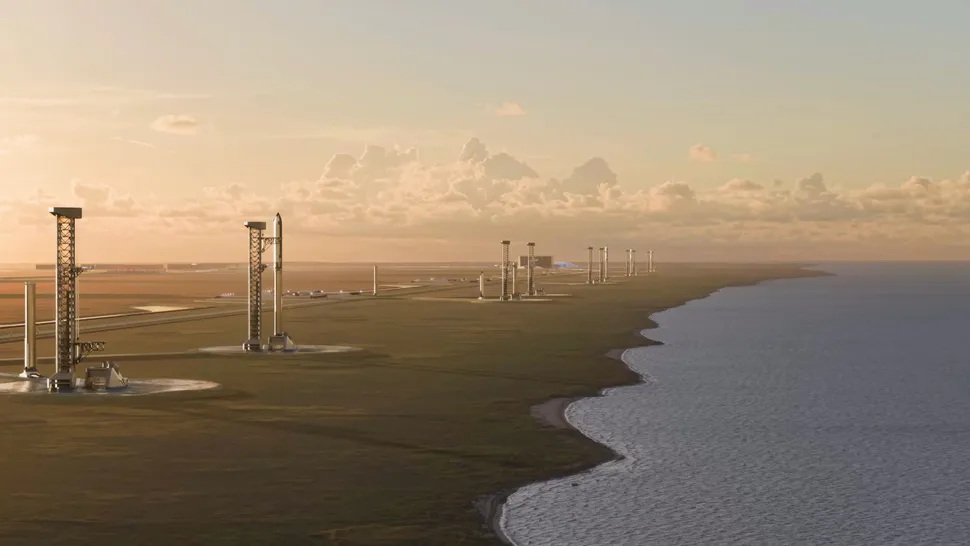
Starbase Louisiana represents a significant evolution in SpaceX’s infrastructure strategy. While the company’s existing Starbase facility in South Texas remains the primary center for Starship development, testing, and production, the Louisiana complex is designed primarily as a large-scale launch and operations hub. According to project details released by the company, the site will feature five launch complexes containing a total of ten launch pads, enabling a launch cadence far beyond what current Starship infrastructure can support.
The new facility will reportedly include:
- Multiple Starship launch and landing complexes
- Methane and propellant production infrastructure
- Power generation facilities
- Deep-water transportation access
- Logistics and shipping facilities
- Potential airport infrastructure
Unlike the Texas Starbase site, Louisiana is not currently expected to host Starship manufacturing operations, suggesting SpaceX intends to separate production from large-scale launch activities as flight rates increase.
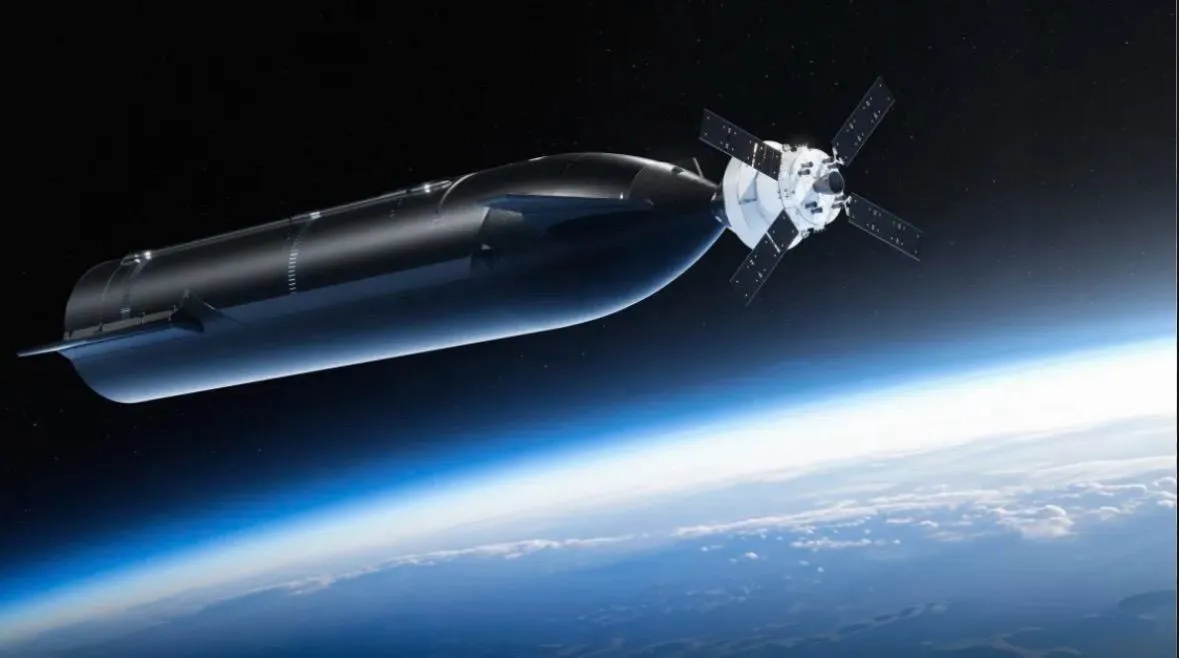
Render of Starship and Orion docked on Artemis III, scheduled for mid-2027. (Image credit: SpaceX)
Why Louisiana Matters for Starship Scaling
The announcement highlights one of the central challenges facing Starship: infrastructure scalability.
Starship is designed as a fully reusable transportation system consisting of the Super Heavy booster and the Starship upper stage. Achieving the economics envisioned by SpaceX requires launch rates that are unprecedented in orbital spaceflight. Elon Musk has repeatedly argued that Starship must eventually fly at airline-like frequencies to support large satellite constellations, lunar logistics, and future Mars missions. Recent company statements have referenced ambitions reaching dozens of launches per day.
Even if vehicle reusability is achieved, launch infrastructure can become a bottleneck. High-cadence operations require:
- Rapid propellant loading systems
- Multiple launch and landing pads
- Large exclusion zones
- Extensive power and utility infrastructure
- Redundant ground-support equipment
- High-throughput logistics networks
The scale of the Louisiana project suggests SpaceX is attempting to solve these constraints years before Starship reaches full operational maturity.
Strategic Location on the Gulf Coast
Vermilion Parish offers several advantages for a heavy-lift launch facility.
Like Boca Chica, Texas, the site provides direct access to the Gulf of Mexico, allowing launch trajectories that minimize overflight of populated regions. The Gulf Coast location also provides access to existing energy infrastructure, including natural gas resources that could support methane production for Starship operations.
Transportation is another major consideration. Starship hardware is exceptionally large, and future variants may exceed current dimensions. Deep-water shipping access allows major structures, propellant systems, and support equipment to be transported more efficiently than over road networks.
From an operational standpoint, having multiple Gulf Coast launch locations could provide resilience against weather disruptions, maintenance periods, and regulatory constraints affecting any single site.
Economic Impact and Industrial Development
Louisiana officials estimate the project will create more than 3,000 direct jobs, with thousands of additional indirect positions generated through suppliers, construction activity, logistics providers, and support services. Average salaries are expected to significantly exceed regional averages.
For the broader U.S. space industry, the investment reflects a shift toward vertically integrated aerospace ecosystems centered around launch operations. Similar economic clusters have emerged around Cape Canaveral in Florida and SpaceX’s existing Starbase operation in Texas.
The project could also strengthen Louisiana’s role within the national aerospace supply chain. The state already has connections to space manufacturing through NASA’s Michoud Assembly Facility near New Orleans, where major spaceflight hardware has been produced for decades.
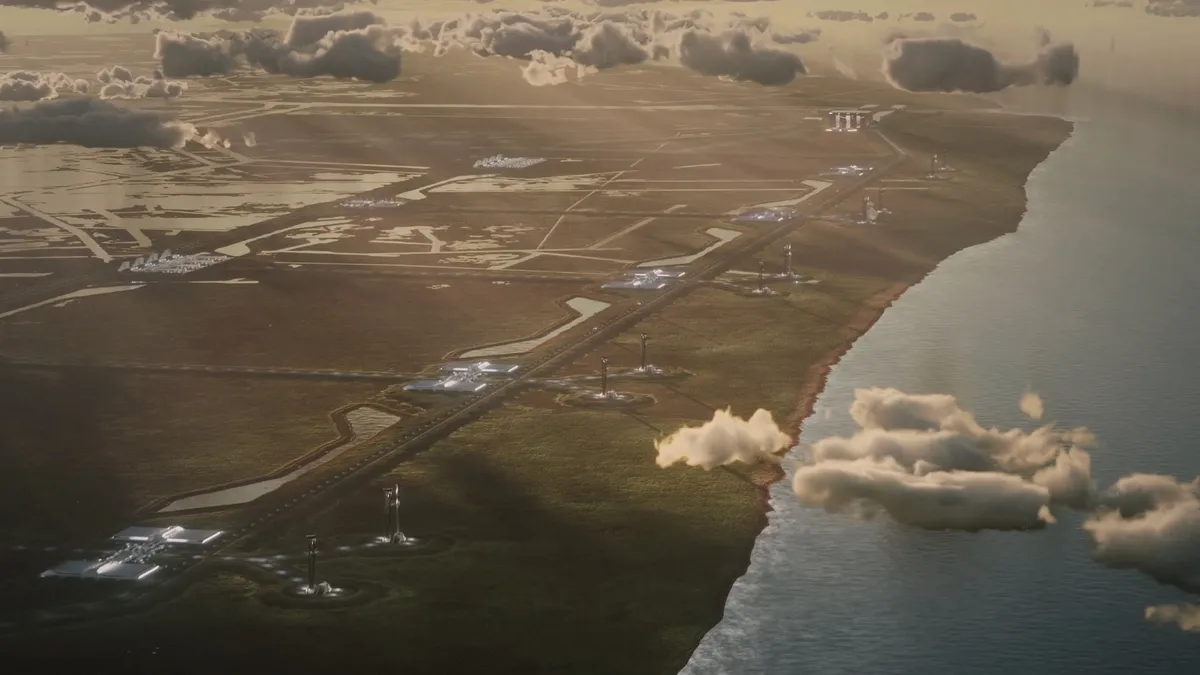
Illustration of SpaceX’s planned Starbase Louisiana site, which the company says will support thousands of Starship launches per year. (Image credit: SpaceX)
Environmental and Regulatory Challenges Ahead
Despite strong state-level support, Starbase Louisiana is expected to face extensive environmental review and public scrutiny.
The proposed site lies within a sensitive coastal region characterized by wetlands, wildlife habitats, and ongoing land-loss challenges. Environmental groups have already raised concerns regarding ecological impacts, launch noise, habitat disruption, and long-term coastal effects.
SpaceX has stated that substantial portions of the property will remain undeveloped and that environmental restoration efforts will accompany construction. Company executives have also emphasized commitments to wetland protection and community engagement.
The environmental review process may prove particularly important because Starship operations involve significantly greater propellant volumes, acoustic loads, and infrastructure requirements than conventional launch vehicles.
Supporting Future Starship Missions
The timing of the Louisiana announcement aligns with a period of rapid expansion in Starship development.
SpaceX is preparing additional Starship test flights and continues working toward capabilities required for NASA’s Artemis lunar exploration program, including orbital propellant transfer and large-scale reusable operations. Starship remains central to NASA’s Human Landing System architecture for future lunar missions.
A successful transition from experimental testing to operational service will require substantially more launch capacity than exists today. Future activities expected to depend on high launch frequency include:
- Deployment of next-generation Starlink satellites
- Orbital propellant depot missions
- Lunar logistics operations
- Human lunar landing missions
- Large-scale commercial payload deployment
- Potential Mars cargo campaigns
The Louisiana facility appears designed around these future requirements rather than near-term launch demand.
Starbase Louisiana is more than a new launch site; it represents a long-term bet that fully reusable heavy-lift launch systems will eventually require infrastructure on a scale closer to major transportation hubs than traditional spaceports. If constructed as proposed, the facility would become one of the largest commercial space complexes ever built and provide SpaceX with the launch capacity necessary to pursue its most ambitious objectives, from expanding Starlink and supporting NASA lunar missions to laying the groundwork for future Mars transportation systems. Whether those ambitions can be matched by regulatory approvals, environmental compliance, and Starship’s technical maturation will determine how transformative the project ultimately becomes.