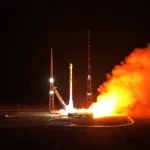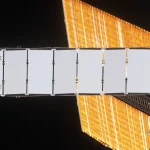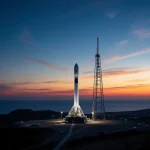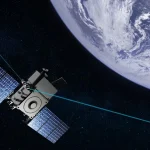
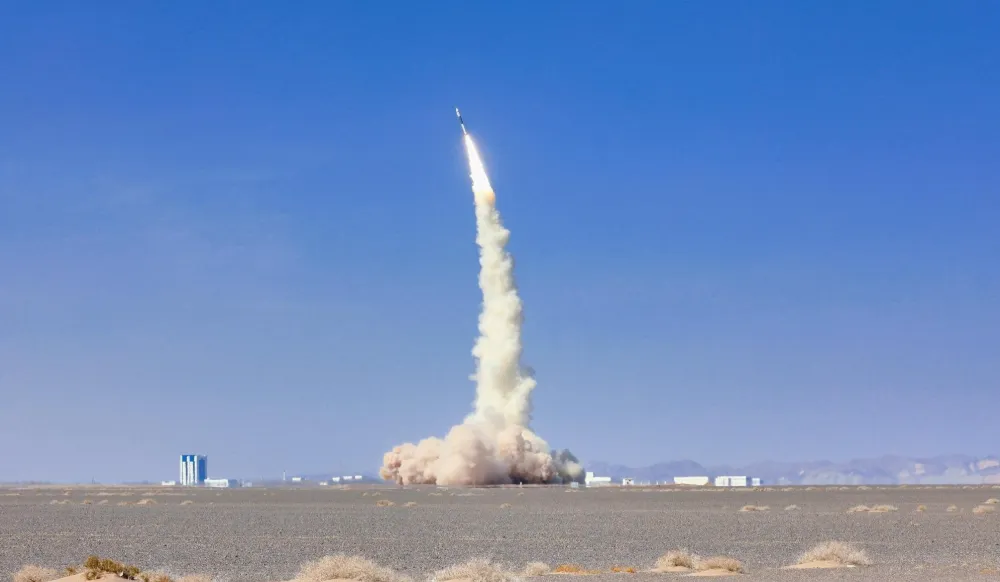
In recent years, rockets around the world have increasingly carried several satellites on a single launch. China’s commercial space sector, for example, recently used a “one rocket, seven satellites” mission to launch the GalaxySpace Lingzhi-09 Thai CubeSat for Thailand’s Geo-Informatics and Space Technology Development Agency. So why are satellites increasingly “riding together” into space? What are the benefits of a multi-satellite launch, and what technical challenges must engineers overcome? Let’s take a closer look.
What is a multi-satellite launch?
A multi-satellite launch is a launch method in which a single rocket carries and deploys several satellites into Earth orbit, either simultaneously or sequentially.
It is an efficient way to use a launch vehicle’s available payload capacity and can reduce the average launch cost per satellite.
Multi-satellite launches generally fall into two categories. One involves sending all of the payloads to the same orbital destination. The other involves delivering different satellites to different orbits during the same mission.
The two approaches place different requirements on the launch vehicle.
For missions in which all satellites are sent to the same orbit, the launch vehicle reaches the target orbit and then releases the payloads one after another after the final propulsion stage completes its major maneuver. The main challenge is ensuring that the spacecraft separate safely without colliding with one another.
For missions in which different satellites need to reach different orbits, the launch vehicle must have the ability to perform additional orbital maneuvers after reaching its initial orbit. This can require an upper stage or orbital transfer system capable of changing the trajectory before releasing individual spacecraft. Such missions are therefore more demanding than a straightforward deployment into a single orbit.
How do satellites safely “get off” the rocket?
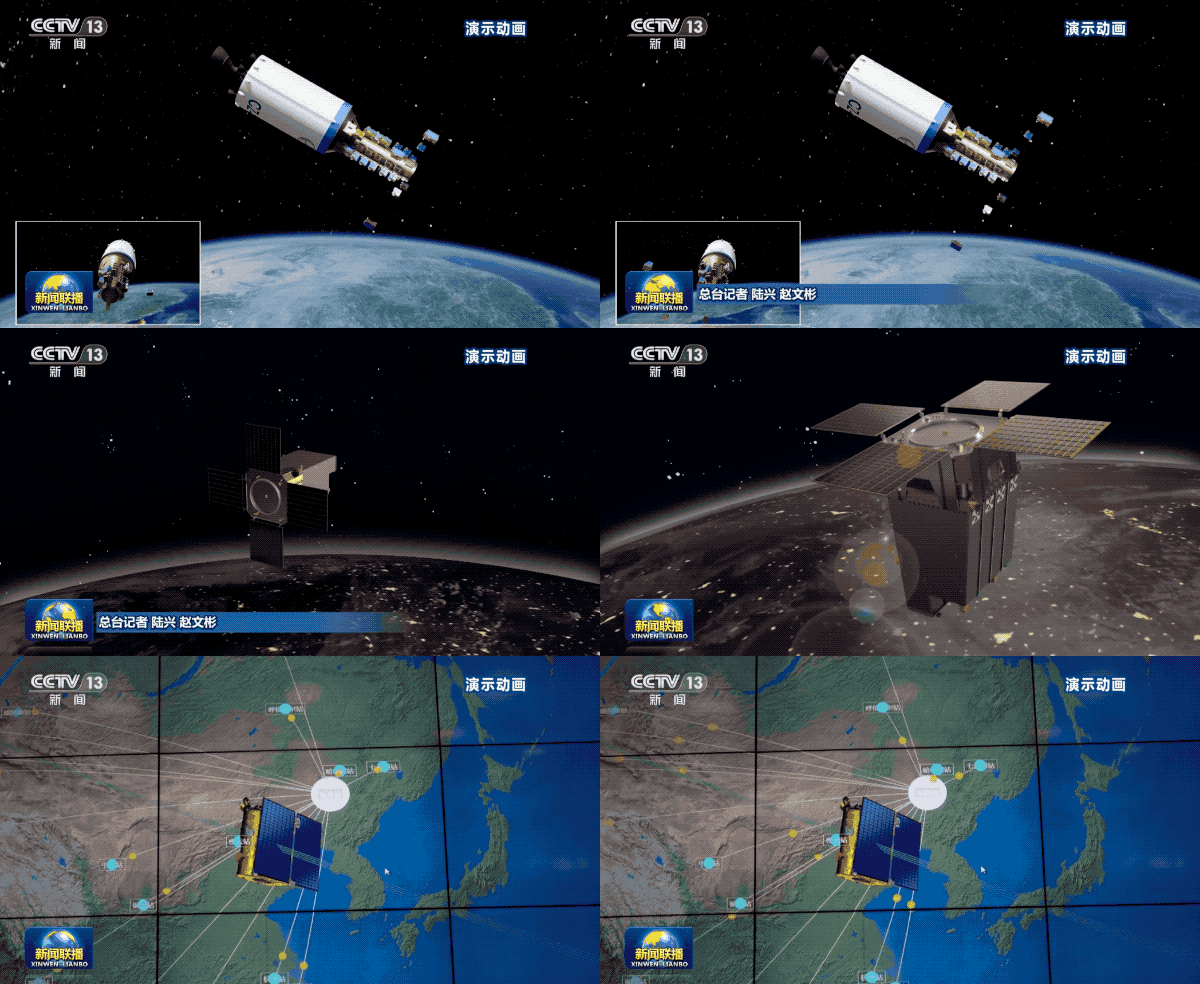
Once a rocket reaches orbit, releasing several satellites safely is not simply a matter of opening a latch. The deployment process has to be carefully planned and controlled.
First, the launch vehicle needs to control the deployment sequence so that each satellite is released at its designated time and position. Engineers also have to control the separation forces and resulting torques to ensure that the spacecraft move away from the launch vehicle and from one another after release.
Separation velocity and direction are particularly important. Each satellite needs enough relative velocity to create a safe distance from the rocket and previously deployed spacecraft, while the direction of separation must be controlled to prevent trajectories from crossing later in the mission.
The deployment system must also release each spacecraft reliably while keeping mechanical shock and unwanted rotation within acceptable limits. After separation, each satellite transitions to its own attitude-control and mission sequence, including initial stabilization, communications and system checks.
For a mission carrying many satellites, these requirements become more complicated because every deployment changes the relative positions of the remaining spacecraft and the launch vehicle. The deployment sequence therefore has to be designed as a coordinated operation rather than as a series of independent releases.
How are multiple satellites tracked after separation?
Ground tracking and communications are also important parts of a multi-satellite mission. The measurement and control plan depends on the satellites’ orbital positions and their relative locations after deployment.
Ground stations need to be able to track the spacecraft and establish communications during the required periods. Depending on the mission architecture, one ground facility may be able to support multiple satellites, provided their positions, visibility windows and communications requirements are compatible.
Mission operators therefore have to determine an appropriate ground-support strategy based on the actual orbital distribution of the spacecraft. As the number of satellites increases, automated tracking, scheduling and mission-control systems can become increasingly valuable.
What are the benefits of a multi-satellite launch?
The most obvious advantage is that it allows a rocket’s payload capacity to be used more efficiently.
In a traditional one-rocket, one-satellite launch, the satellite’s mass is unlikely to match the rocket’s maximum payload capacity exactly. Some of the available capacity may therefore remain unused.
A multi-satellite mission can fill more of that capacity by selecting several spacecraft whose combined mass and mission requirements fit the launch vehicle. The launch opportunity can then be shared among multiple satellite operators, reducing the average launch cost per spacecraft.
This is particularly valuable for small satellites and CubeSats. Many small spacecraft would find it difficult to justify the cost of a dedicated launch as a primary payload. Rideshare gives these spacecraft another route to orbit by allowing them to share a launch with larger or other small payloads.
Why is multi-satellite launch important for satellite constellations?
The other major advantage is faster constellation deployment.
A satellite constellation consists of multiple spacecraft working together to provide a broader service or coverage area. If every satellite had to be launched separately, building a constellation could require a large number of missions and take considerable time.
Multi-satellite launches allow several spacecraft to enter orbit during the same mission. A small constellation may be deployed through only one or several launches, while larger constellations can use repeated multi-satellite missions to accelerate the buildup of the network.
This becomes especially important for large low Earth orbit constellations. Plans involving hundreds or even thousands of satellites require not only a large manufacturing effort but also a sustained launch cadence. Carrying multiple satellites per mission can substantially reduce the number of launches required to deploy a given fleet.
However, faster deployment does not mean that every satellite can simply be released at the same point and immediately begin operations. Constellation operators still have to manage orbital planes, deployment sequences and, where necessary, satellite propulsion for final orbital adjustments.
What technical challenges increase as the number of satellites grows?
Multi-satellite launch improves payload utilization, but it also increases the complexity of mission planning.
Launch providers have to coordinate payload interfaces, separation systems, deployment sequences and orbital requirements for multiple spacecraft. Satellites must also be compatible with the launch vehicle’s mechanical, electrical and environmental conditions.
For constellation operators, the challenge extends beyond the launch itself. Dozens or hundreds of similar spacecraft may need to be assembled, integrated, tested and prepared for launch on a recurring basis. This places greater importance on standardized satellite designs, repeatable AIT processes and efficient ground operations.
In other words, the economics of multi-satellite launch are closely linked to the ability to manufacture and operate satellites at scale. A cheaper launch does not automatically translate into a cheaper constellation if spacecraft production, testing or commissioning remain bottlenecks.
From “one rocket, one satellite” to “space ridesharing”
Multi-satellite launch has become an important part of the modern space transportation model. By sharing a launch vehicle, satellite operators can make better use of available rocket capacity, reduce average launch costs and gain more opportunities to reach orbit.
For satellite constellations, the approach also provides a practical way to accelerate deployment. At the same time, safely releasing multiple spacecraft requires precise control of separation timing, force, torque and relative trajectories, supported by coordinated ground tracking and mission operations.
As satellite fleets continue to expand, multi-satellite launch will remain an important tool for making access to orbit more efficient while enabling increasingly large and complex satellite networks.
For satellite manufacturers and constellation operators preparing for multi-satellite missions, efficient AIT, environmental testing and launch-site integration are critical to keeping deployment schedules on track. If you are planning a satellite manufacturing, AIT or testing project, contact STARPATH GLOBAL to discuss your requirements and explore a suitable solution.