Russia’s effort to build a sovereign low-Earth-orbit broadband constellation has suffered a setback after the apparent loss of one operational Rassvet satellite and growing concerns that two additional spacecraft may soon reenter the atmosphere, raising questions about the pace and reliability of the country’s emerging Starlink competitor.
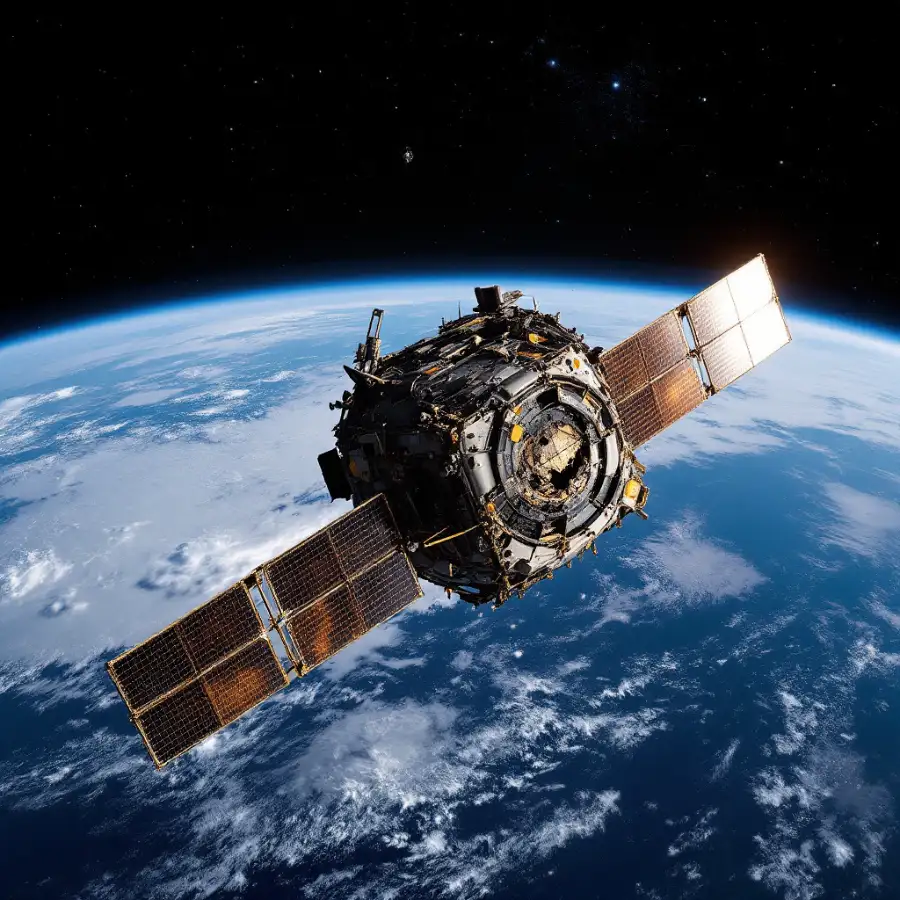
According to orbital tracking data cited by multiple industry observers, one Rassvet-3 communications satellite launched earlier this year has already reentered the atmosphere after failing to raise its orbit. Two more satellites from a subsequent launch campaign are reportedly descending toward atmospheric reentry after showing no evidence of orbit-raising maneuvers.
The affected spacecraft are part of the Rassvet broadband constellation being developed by Bureau 1440, a Russian commercial space company backed by IX Holding. The program is intended to provide nationwide and eventually international broadband connectivity through a large constellation of low-Earth-orbit satellites, mirroring capabilities offered by SpaceX’s Starlink network.
Satellite Losses Highlight Early Constellation Risks
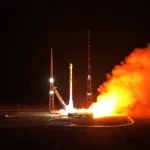
The first reported loss involved a satellite from the initial operational Rassvet deployment launched in March 2026. Tracking data indicated that the spacecraft remained in its insertion orbit rather than executing planned orbit-raising maneuvers, eventually leading to atmospheric reentry.
Industry analysts now report that two satellites from a second batch launched in July may be following a similar trajectory. Neither spacecraft appears to have performed the propulsion burns necessary to reach and maintain operational altitude. As their orbital altitude continues to decrease, the probability of reentry increases significantly.
For any large LEO constellation, successful orbit-raising operations are a critical early mission phase. Satellites are often deployed into relatively low parking orbits to reduce launch costs and minimize long-term debris risks if a spacecraft fails shortly after deployment. Propulsion systems must then gradually raise the satellites into their designated operational shells.
When propulsion systems fail, satellites can quickly succumb to atmospheric drag, particularly at altitudes below approximately 350 kilometers where residual atmospheric density remains substantial.
Ambitious Deployment Goals Remain Intact
Despite the reported losses, the failures affect only a small fraction of Russia’s planned constellation.
Bureau 1440’s roadmap calls for hundreds of satellites to be deployed over the coming decade. Russian officials and industry representatives have previously outlined plans for roughly 250–300 satellites by 2027 and more than 900 satellites by 2035, with commercial broadband services expected to begin before the end of the decade.
The constellation is designed to deliver broadband connectivity across Russia’s vast territory, including remote Arctic regions, sparsely populated Siberian areas, offshore operations, transportation corridors, and government users.
Russia accelerated development of the system after observing the operational impact of Starlink during the Ukraine conflict. Satellite broadband networks have demonstrated their value for military communications, drone operations, emergency response, and resilient infrastructure connectivity when terrestrial networks are unavailable or disrupted.
Manufacturing and AIT Implications
For satellite manufacturers, isolated spacecraft losses are not unusual during the early phases of a constellation deployment program. However, repeated failures involving orbit-raising operations can indicate broader challenges in propulsion qualification, spacecraft integration, software validation, or mission operations.
The incidents are likely to attract increased attention during future Assembly, Integration and Testing (AIT) campaigns.
Satellite operators typically place particular emphasis on:
* Propulsion subsystem acceptance testing
* Thruster firing verification
* Flight software validation
* Power system performance under operational loads
* Telemetry and command-chain reliability
* End-to-end mission simulation before launch
Constellation programs face unique production pressures because spacecraft are manufactured in large batches. A defect introduced during production can potentially affect multiple satellites launched on the same mission, making rapid anomaly investigation essential before subsequent launches proceed.
The current situation may therefore require Bureau 1440 to conduct additional reviews before scaling production rates further.
Competing Against a Mature Starlink Ecosystem
The challenges confronting Rassvet also illustrate the difficulty of building a large-scale broadband constellation.
Starlink has benefited from thousands of satellites, dedicated launch capacity, vertically integrated manufacturing, and years of operational experience. Other global competitors, including OneWeb and regional sovereign constellation projects in Europe, China, and elsewhere, have similarly encountered technical setbacks, launch delays, and spacecraft failures during deployment.
Importantly, satellite losses alone do not necessarily threaten the viability of a large constellation. SpaceX itself has experienced numerous spacecraft failures throughout Starlink’s development, including large batches affected by geomagnetic storms and individual satellites lost due to technical anomalies.
What matters for operators is whether failures remain isolated events or reveal systemic issues affecting spacecraft design, production quality, or operational procedures.
Strategic Importance Extends Beyond Commercial Broadband
The significance of Rassvet extends beyond the commercial communications market.
The constellation forms part of Russia’s broader effort to reduce dependence on foreign communications infrastructure and establish sovereign space-based connectivity capabilities. Government agencies have repeatedly emphasized the importance of domestic satellite communications for national security, transportation, energy infrastructure, and digital development.
As a result, the program is expected to continue receiving political and financial support even if early deployment challenges persist.
The coming launches will therefore be closely watched by industry observers. Successful orbit insertion, orbit-raising operations, and sustained spacecraft performance will be important indicators of whether Bureau 1440 can transition from demonstration missions to reliable large-scale constellation deployment.