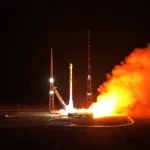

Geespace recently received approval from China’s Ministry of Industry and Information Technology (MIIT) to conduct commercial trials of satellite Internet of Things services, becoming the second private company in China to obtain such authorization.
When MIIT granted its first approval in May, the market focused primarily on the formal opening of satellite IoT services to private companies. Now, three months later, Geespace has also secured approval, raising a more pressing question for the industry: How far is China’s satellite IoT sector from truly achieving large-scale commercial operations?
Why Does This License Matter?
For years, satellite IoT services lacked a clearly defined, independent regulatory category. They were generally governed by rules designed for terrestrial IoT services or conventional satellite communications, leaving compliance boundaries unclear.
In November 2025, MIIT formally issued the Notice on Organizing Commercial Trials of Satellite Internet of Things Services. For the first time, a dedicated policy document specified the scope of the trials, eligibility requirements, approval procedures and operational obligations. Satellite IoT services finally had a clearly defined regulatory and commercial pathway.
The notice requires applicants to satisfy five mandatory conditions:
- Hold licenses for the use of satellite mobile-service frequencies and for operating space radio stations.
- Have their constellation project approved by China’s National Development and Reform Commission.
- Operate an in-orbit satellite system capable of providing services, supported by complete ground-based telemetry, tracking and command, service and management systems.
- Possess comprehensive capabilities for cybersecurity, data security and emergency response.
- Be capable of providing stable, long-term services nationwide.
In other words, obtaining approval for commercial trials requires capabilities across satellites, networks, operations and security. Having a few satellites in orbit is not enough to begin selling services.
The first two requirements concern eligibility. The lengthy application process and substantial financial barriers associated with frequency licensing and project approval are enough to exclude most startups. The remaining three concern service capabilities, requiring operational satellites, ground systems, security safeguards and sustainable operations.
Taken together, these five barriers leave only a handful of Chinese commercial space companies capable of qualifying. Geespace’s approval therefore indicates that it has already established a meaningful foundation for constellation deployment and operation.
More importantly, in both approvals, MIIT emphasized that commercial satellite IoT trials would help the sector achieve economies of scale. For the industry, this suggests that the focus of competition will gradually shift from constellation deployment itself to network operations, customer acquisition and sustained service capabilities.
Why Geespace?
Why was Geespace able to secure this “license”?
First, the company has already made the transition from building a constellation to delivering services.
Geespace currently operates 64 satellites in orbit, with 100% in-orbit reliability, and is advancing commercial applications across intelligent connected vehicles, marine fisheries, construction machinery, energy and water conservancy.
From this perspective, MIIT is initially opening commercial trials to companies that already possess genuine network service capabilities.
The two approved companies have different strengths. After receiving its approval, HEAD Aerospace brought in China Mobile as a strategic investor in July 2026. China Mobile Capital became its largest shareholder with a 39.85% stake. The company’s future expansion is therefore likely to rely heavily on China Mobile’s distribution channels and customer resources.
Geespace, meanwhile, has already established a foothold in the high-value connected-vehicle market within its own industrial ecosystem. In 2023, it became the first company to achieve mass production and factory installation of in-vehicle satellite communication technology. More than 20,000 units have since been delivered.
Geespace also worked with China Unicom to complete the industry’s first in-orbit technical validation of LEO satellite connectivity for connected vehicles, laying the groundwork for LEO satellite applications in connected vehicles, emergency communications and other critical scenarios. Beyond intelligent connected vehicles, Geespace’s LEO satellite IoT constellation, GEESATCOM, is expanding into a broader range of industries.
The Real Challenges Facing Satellite IoT
A license resolves the issue of market access. However, satellite IoT must still overcome at least three major challenges before it can achieve meaningful scale.
First, the road to large-scale adoption remains long.
The satellite IoT value chain is still at an early stage of development. The number of satellites currently in orbit is limited, while system capacity and availability remain insufficient. For massive device connectivity, terminal prices, power consumption, deployment expenses and maintenance costs continue to constrain growth.
According to industry estimates, terminal costs must fall from the current $15–$20 to below $10—or even $5—before large-scale adoption can truly begin.
Second, the business model remains unproven, and much of the market has yet to be developed.
Once approved, licensed companies can legally conduct pilot commercial operations and sign multiyear service contracts. But permission to charge customers does not necessarily mean customers will be willing to pay.
The industry has yet to complete the full commercial cycle from project validation to stable and recurring service revenue.
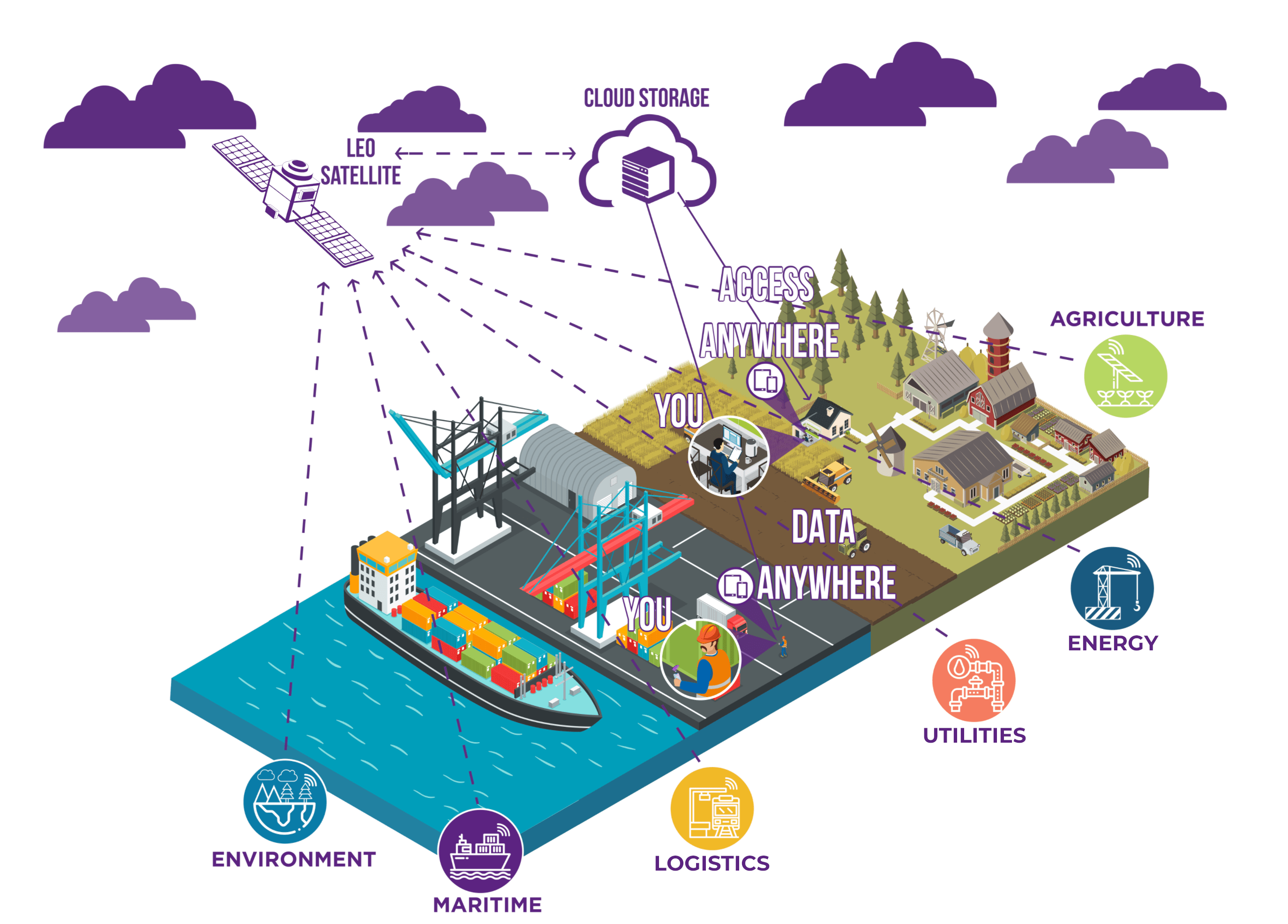
Satellite IoT Applications
Satellite IoT applications are inherently fragmented. Industries such as marine fisheries, construction machinery, energy pipeline networks and emergency communications differ significantly in their requirements, ability to pay and deployment timelines. No single solution can meet the needs of every industry.
Third, the industry must determine whether individual projects and use cases can develop into scalable markets.
More fundamentally, satellite IoT applications are inherently fragmented. Marine fisheries, construction machinery, energy pipelines and emergency communications all have different requirements, purchasing power and deployment schedules. No single universal solution can serve every industry.
Most customers in traditional industries also have a limited understanding of potential applications and a relatively low willingness to pay. Companies must therefore educate the market before they can sell their services, further extending the time required to establish a viable commercial model.
Where Does Geespace’s Advantage Lie?
In addition to its constellation scale and proven industry applications, Geespace’s key competitive advantage lies in its end-to-end, independently controlled value chain. This covers constellation system design, satellite development and mass production, constellation operations, chips, communication modules, terminals and industry applications.
The value of this closed-loop, full-value-chain capability is reflected primarily in three areas.
The first is cost control. Satellite IoT requires a large number of connected terminals. If satellites, chips, modules and terminals all depend heavily on external suppliers, both costs and delivery schedules will become increasingly difficult to manage as deployment expands.
An integrated value chain gives Geespace greater control over pricing and delivery at every stage while reducing its dependence on external suppliers.
The second is product iteration speed. Constellation deployment is only the first step in satellite IoT. Companies must continuously coordinate and adjust satellites, terminals, networks and industry applications. The more complete the value chain, the more quickly a company can adapt its products to real-world requirements.
The third is large-scale delivery capacity. The ultimate size of the satellite IoT market will depend on whether satellite network capabilities can be rapidly deployed across vehicles, vessels, construction equipment and energy infrastructure through standardized chips, modules and terminals.
Geespace’s recently unveiled full-stack open-source ecosystem for its LEO communications constellation represents an effort to open terminal hardware, standardized communication modules, proprietary satellite communication chips, communication protocols and satellite system resources to industry partners.
From a business perspective, this initiative is not merely about opening its technology. It can also help Geespace build broader ecosystem connections and a larger user base, further expanding terminal deployments and applications and creating a virtuous cycle of growth.
Who Will Be the Third Company?
With two companies now approved, the industry is moving from policy experimentation toward substantive implementation. The satellite IoT market is beginning to open, and a third and fourth company will inevitably gain market access in the future.
What conditions will these later entrants need to meet?
Measured against MIIT’s five entry requirements—frequency authorization and space radio station licenses, National Development and Reform Commission approval, an operational in-orbit satellite system, security capabilities and the ability to provide long-term services—only a small number of companies currently qualify.
However, the license itself is merely the starting point. The real competition begins after approval.
International experience offers a useful reference. Iridium generated $870 million in revenue in 2025, supported by recurring payments from 2.53 million subscribers. Capital markets ultimately value such companies according to their ability to generate recurring service revenue.
Competition among satellite IoT companies will increasingly resemble competition among telecommunications operators. What matters will be the number of paying customers, the volume of recurring revenue and the number of industry applications that have established viable commercial models.
This also points to a broader industry shift. Over the past several years, the industry’s central focus was constellation deployment: companies that launched their satellites and completed network deployment first gained an early advantage.
Now, with a clearer regulatory pathway and a growing pool of orbital infrastructure, the industry is beginning to shift toward large-scale applications.
The Next Competitive Frontier: 6G
China’s State-owned Assets Supervision and Administration Commission of the State Council recently convened a 6G Future Industry Development Conference attended by 31 centrally administered state-owned enterprises.
The meeting called for faster efforts to address technological gaps, achieve fundamental breakthroughs in key technologies and components, build a secure and stable 6G industrial and supply chain, and accelerate the establishment of viable 6G business models.
Alongside the approval, Geespace disclosed that it is conducting IoT NTN technology trials and accelerating both the development and commercial deployment of 6G satellite communication technologies.
Building on the large-scale commercial foundation established by Phase I of GEESATCOM, the company is also conducting preliminary research into 6G technologies to support future large-scale commercial applications.
Outlook
Geespace completed the deployment of its 64-satellite network in 2025. In 2026, MIIT began authorizing commercial trials of satellite IoT services.
From policy and constellations to satellites and terminals, the foundations for commercializing satellite IoT in China are gradually taking shape.
The real test, however, still lies ahead. The next—and most important—question for satellite IoT is how to build a sustainable commercial business.