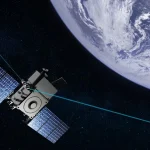

Very low Earth orbit, or VLEO, is not a new type of orbital geometry. It is simply the lower portion of low Earth orbit, where satellites fly closer to Earth and encounter a comparatively denser residual atmosphere. Commercial space companies are paying renewed attention to this regime for a straightforward reason: Earth observation satellites can operate closer to their targets, while communications links can be shorter.
Traditional commercial LEO satellites commonly operate at altitudes of several hundred kilometers, while some projects in China are now targeting altitudes below 300 kilometers. Lowering a satellite by only 100 or 200 kilometers may sound modest, but it can substantially change atmospheric drag, atomic oxygen exposure, aerodynamic torque, orbital lifetime and ground-contact windows. Satellite platforms, propulsion systems, solar arrays, materials, payloads and operational concepts all have to be redesigned accordingly.
The clearest near-term VLEO opportunities lie in dedicated satellite platforms, low-drag configurations, electric propulsion, atomic oxygen protection, environmental testing and autonomous operations. High-resolution Earth observation, low-latency communications and data services could eventually create much larger markets. China already has experimental satellites that have completed VLEO flight tests, while a growing number of companies are preparing for their first in-orbit demonstrations.
1. What Is VLEO? First and Foremost, It Is an Engineering Environment
There is no universally accepted altitude boundary for terms such as “ultra-low Earth orbit,” “very low Earth orbit” and VLEO.
China Aerospace Science and Industry Corporation’s VLEO integrated communications and remote-sensing constellation uses an altitude threshold below 300 kilometers. Some European Space Agency programs describe altitudes below 450 kilometers as VLEO, while Chinese academic discussions often focus on the 100–350 kilometer range.
From the standpoint of orbital mechanics, these satellites remain in low Earth orbit. What distinguishes VLEO from higher LEO regimes is that engineering constraints such as residual atmospheric drag, atomic oxygen exposure and the need for active orbit maintenance become much more significant.
The most obvious advantage of flying lower is distance. For an optical camera with otherwise unchanged geometry, ground sampling distance can be approximated as decreasing with orbital altitude. Conversely, if the required ground resolution remains unchanged, there may be room to reduce aperture size, focal length and overall instrument size.
Communications can also benefit from shorter propagation distances, reducing free-space path loss and latency.
Coverage, however, does not increase for free. With the same field of view, a lower-flying satellite generally covers a narrower ground swath during each pass, while communications windows with individual ground stations also become shorter. Achieving high revisit rates and broad coverage may therefore require more satellites, more ground stations or more capable inter-satellite links.
Table 1: Performance benefits and engineering trade-offs of VLEO. Source: Author’s analysis based on publicly available information.
2. Drag Is What Really Pulls a VLEO Satellite Down
Even at very low orbital altitudes, an extremely thin atmosphere remains.
A satellite traveling at roughly 7.8 kilometers per second experiences aerodynamic drag that can be approximated by:
D ≈ 1/2 · ρ · v² · Cᴅ · A
Here, ρ is local atmospheric density, v is the satellite’s velocity relative to the atmosphere, Cᴅ is the drag coefficient and A is the effective frontal area.
The most important terms are atmospheric density and the square of velocity.
Between 100 and 350 kilometers, atmospheric density can vary by several orders of magnitude. It also changes substantially with solar activity, geomagnetic conditions, local time, latitude and season. As a result, the same satellite may experience dramatically different orbital decay rates during quiet solar conditions and periods of intense solar activity.
VLEO platforms therefore need low-drag shapes, minimal frontal area, highly accurate atmospheric models and attitude-and-orbit control systems capable of autonomously determining when drag compensation is required.
Propulsion is the second major challenge.
Conventional electric propulsion systems continuously compensate for drag using onboard propellants such as xenon or krypton. Satellite lifetime is ultimately constrained by propellant mass, available electrical power and thruster durability.
Atmosphere-breathing electric propulsion offers another approach. It attempts to collect residual atmospheric particles, ionize them and expel them as propellant, potentially reducing dependence on finite onboard propellant reserves.
But major questions remain. Intake efficiency, ionization of mixed atmospheric gases, atomic oxygen erosion and variations in atmospheric supply caused by solar activity all require much more long-duration in-orbit data.
3. VLEO Is Creating a New Protection and Environmental-Testing Supply Chain
One of the most underestimated risks in VLEO is atomic oxygen.
Atomic oxygen is neither an oxygen ion nor the same phenomenon as total ionizing dose or single-event effects. It consists of neutral oxygen atoms present in the upper atmosphere. Because satellites collide with these atoms at relative velocities of several kilometers per second, atomic oxygen can continuously oxidize and erode certain polymers, adhesives and organic coatings while degrading thermal-control and optical surfaces.
Affected components can include multilayer insulation, polyimide films, flexible solar-array substrates, cable coverings, composite resins and some optical surfaces. Silver interconnects can also suffer oxidation.
Flying lower does not mean every exposed surface degrades at the same proportional rate. Real service life must account for orbital altitude, solar activity, attitude, ram direction, shielding and cumulative atomic oxygen fluence.
Engineering protection is also much more complicated than simply applying a coating.
Inorganic barrier layers such as SiOₓ, Al₂O₃ and ITO can resist atomic oxygen, but pinholes, folds, cut edges, assembly scratches and micrometeoroid damage can expose the underlying polymer. Atomic oxygen can then penetrate beneath the coating and cause undercut erosion. Silicon-containing or POSS-modified polymers can instead form silicon-rich protective layers when exposed.
This is creating a new supporting supply chain covering mission-specific fluence calculations, atomic-oxygen-resistant materials and coatings, continuous protection around complex edges, atomic oxygen beam testing, witness-sample calibration, post-thermal-cycle and post-flexing retesting, and in-orbit environmental monitoring.
For VLEO spacecraft, protective performance must be optimized together with low-drag surfaces, thermal control and electrical conductivity. A single material performance data sheet is no longer enough.
4. What Business Opportunities Could VLEO Create? Five Areas Stand Out
The first is dedicated satellite platforms and aerodynamic configurations.
VLEO satellites require slimmer, lower-drag shapes. Solar arrays, antennas and payload apertures must also be designed around frontal area and aerodynamic torque constraints.
Platform suppliers are therefore selling more than a structural bus. They are providing an integrated combination of propulsion, attitude and orbit control, power, thermal management and mission autonomy.
The second is electric propulsion and high-specific-power spacecraft power systems.
Hall-effect and ion propulsion systems must continuously counteract drag while operating at low thrust for extended periods. If atmosphere-breathing electric propulsion can demonstrate sufficient in-orbit lifetime, it could fundamentally change the relationship between onboard propellant reserves and satellite lifetime.
Related opportunities include power processing units, atmospheric intakes, cathodes or electrodeless discharge systems, thrust measurement equipment and long-duration qualification testing.
The third is protective materials and environmental testing.
VLEO turns atomic oxygen from one environmental consideration among many into a potentially central spacecraft lifetime constraint.
Suppliers capable of integrating materials, coatings, defect control, manufacturing inspection and equivalent environmental testing will be more valuable than those offering only a material specification sheet.
The fourth is compact high-resolution payloads and onboard AI.
For optical Earth observation, a shorter imaging distance directly improves imaging geometry or allows a smaller aperture to achieve the same target ground resolution.
Synthetic aperture radar can also benefit from improved link budgets at shorter ranges. But SAR systems must still balance antenna dimensions, transmit power, bandwidth, swath width and imaging modes. The conclusions for optical payloads cannot simply be applied unchanged to radar systems.
Shorter ground-contact windows also increase the value of onboard processing. Satellites may need to perform data screening, compression, target recognition and mission replanning in orbit so that the highest-value information can be prioritized for downlink.
The fifth opportunity is satellite operations and data services.
This includes atmospheric-density forecasting, high-dynamic orbit determination, high-speed downlink during short contact windows, automated orbit maintenance and constellation replenishment scheduling.
Ultimately, the commercial product may not be the satellite itself, but data products sold to customers in disaster response, surveying and mapping, agriculture, energy and urban management.
Table 2: Five commercial opportunities that could emerge first in VLEO. Source: Author’s analysis based on publicly available information.
5. Which Companies Are Already Involved? Start With In-Orbit Evidence
C-SPACE: QianKun-1 Has Already Conducted VLEO Flight Tests
C-SPACE developed the QianKun-1 satellite, which was launched in 2023.
The company has continued to publish orbital ephemeris data, while public information indicates that the satellite has conducted extended operations, orbit maintenance and key technology demonstrations at altitudes of around 300 kilometers, approximately 268 kilometers and 250 kilometers.
This represents one of the more substantial VLEO flight records among commercial satellite companies in China.
C-SPACE is also working with TEDA Holding on a VLEO ultra-high-resolution satellite constellation. The first phase is planned to deploy eight satellites by 2027, with a longer-term target of 48 satellites.
Yidong Aerospace: Its Propulsion System Already Has VLEO Flight Heritage
Yidong Aerospace has disclosed that its EHT-1000 wide-range miniature Hall-effect propulsion system flew aboard QianKun-1 and was used for orbit maintenance during VLEO operations.
Public information from an in-orbit firing test in 2023 reported an operating point of approximately 280 watts and measured thrust of around 18 millinewtons.
CASIC Space Engineering: Chutian-001 Completed Three Types of Key Experiments
CASIC Space Engineering Development Co., Ltd. received authorization to use frequencies for a VLEO technology demonstration satellite as well as a space radio station license.
The Chutian-001 satellite, launched in 2024, subsequently completed three categories of experiments covering overall VLEO satellite technologies, high-resolution intelligent remote sensing and integrated space-environment monitoring.
Its payloads included an atmospheric-density measurement instrument and an atomic oxygen detector.
DFH Satellite: A New VLEO Platform Has Been Unveiled, but Detailed Mission Data Remain Limited
In August 2026, DFH Satellite unveiled a new-generation VLEO satellite platform designed to address atomic oxygen erosion, orbital decay and in-orbit control.
The company said the platform had undergone long-duration in-orbit flight verification and supports autonomous orbit correction and mission planning.
6. More Companies Are Lining Up, but Most Are Still Waiting for Their First Demonstration Satellite
Shanghai Taiyi Weixing is focusing on intelligent remote sensing at altitudes of 200–300 kilometers. In 2026, the company and Shanghai Jinqiao launched a nationwide solicitation for hosted-payload demonstrations aboard a VLEO satellite.
Dongcha Shikong is planning a 576-satellite integrated AI constellation combining low Earth orbit and very low Earth orbit spacecraft. The company has said it intends to launch two experimental satellites in 2026.
Taiyu Space is planning a hybrid LEO and VLEO constellation. Its existing onboard AI payload technology has previously flown in space.
A Beijing-based company established in 2025 under the name Ultra-Low Orbit Technology is targeting operation of a satellite constellation for real-scene 3D mapping. At present, the clearest publicly available evidence concerns the company’s establishment and project direction rather than operational spacecraft.
Shanhai Xingyao is entering the market through atmosphere-breathing propulsion and has completed prototype ignition testing under simulated VLEO environmental conditions.
Payload and operations suppliers are also beginning to emerge.
Xingji Guangyao states that development of its high-resolution VLEO camera, designed to achieve 0.27-meter resolution from an altitude of 270 kilometers, began in April 2026. This represents a clearly defined product roadmap, although it is not yet an in-orbit achievement.
Under Shanghai’s key technology R&D program, Shanghai Paxing is working on intelligent attitude and orbit control for VLEO spacecraft, while Shanghai Zhigui Power is developing Hall-effect electric propulsion for orbit maintenance.
Satellite operations company Aerospace Yuxing has also disclosed a patent concept intended to improve the tracking success rate of high-speed VLEO downlinks during periods of high solar activity by using multi-band ground stations.
Atomic-oxygen-resistant polymers, inorganic coatings and environmental-testing facilities are another part of the supply chain worth monitoring.
However, a company should not be classified as a “VLEO satellite company” merely because one of its materials is advertised as atomic-oxygen resistant. Actual participation in the VLEO supply chain depends on specific material grades, coating systems, defect-control processes, mission-fluence testing and a demonstrated record of deliveries to space customers.
Table 3: Representative Chinese VLEO players and their publicly demonstrated levels of maturity. Source: Author’s analysis based on publicly available information.
7. Three Things About VLEO That Are Easy to Overestimate
First, higher resolution does not automatically make an entire satellite cheaper.
Additional propulsion power, protective materials, operational complexity and constellation-replenishment costs may offset savings achieved by reducing payload size.
Second, failed spacecraft and debris in VLEO generally have shorter orbital lifetimes, reducing the risk of long-term debris accumulation compared with higher orbital regimes. But this does not mean operational risk disappears.
Frequent orbit maintenance, shorter spacecraft lifetimes, replenishment requirements and higher launch cadence can create a different set of costs.
Third, planning a constellation of several hundred satellites does not mean a company already has hundreds of customer orders.
A sustainable commercial model ultimately depends on why customers need more timely or higher-resolution data and how much they are willing to pay for it.
At a minimum, five forms of evidence should be examined when evaluating a VLEO company: whether it has long-duration orbital data; whether its propulsion system can handle worst-case drag conditions; whether its materials and coatings have been tested for cumulative fluence and defects; whether its payload advantages can be converted into commercially valuable data products; and whether constellation replenishment remains economically viable after spacecraft failures or rapid orbital decay.
What makes VLEO particularly interesting is that it forces the commercial space industry to rethink the spacecraft as an integrated system.
The most important question today is not which company can announce the largest constellation. It is which company can keep satellites alive and operating reliably at altitudes of 200–300 kilometers — and then turn clearer, more timely data into products that customers are willing to buy repeatedly.
As China’s rapidly expanding space manufacturing ecosystem brings more satellite capacity to the global market, international customers can increasingly access competitively priced satellite imagery, payloads and other space products through STARPATH GLOBAL. For Earth observation projects, more resolution is not always better—or more economical. Based on your specific industry and application, we can help identify the right imagery and resolution to meet actual requirements without paying for unnecessary capability. New to satellite remote sensing? Apply for our FDE program to turn your requirements into a practical solution.
References
[1] Science and Technology Daily and the Chinese Academy of Sciences, “Exploring Very Low Earth Orbit: Seizing the High Ground by Going Lower,” May 22, 2025.
[2] China Aerospace Science and Industry Corporation (CASIC) and the State-owned Assets Supervision and Administration Commission of the State Council, “China Launches Development of an Integrated VLEO Communications and Remote-Sensing Constellation,” July 17, 2023; ESA, Very Low Earth Orbit Capabilities.
[3] GB/T 40519-2021, Design Requirements for Atomic Oxygen Protection of Spacecraft.
[4] NASA-HDBK-6024, Spacecraft Polymers Atomic Oxygen Durability Handbook, Change 2, 2022.
[5] C-SPACE, QianKun-1 ephemeris announcements; Zhejiang Daily reports on QianKun-1.
[6] Tianjin Economic-Technological Development Area, “Tianjin VLEO Ultra-High-Resolution Constellation Project Passes Expert Review,” March 4, 2025.
[7] Ministry of Industry and Information Technology, “License Issued to CASIC Space Engineering Development Co., Ltd. for a VLEO Technology Demonstration Satellite,” May 17, 2024.
[8] Hubei Daily, “CASIC Continues to Achieve Satellite Technology Breakthroughs in Wuhan,” 2025.
[9] China Academy of Space Technology, “DFH Tianxuan | Next-Generation VLEO Satellite Platform: An Intelligent, Lightweight Platform for Commercial Space,” August 21, 2026.
[10] Official website of Shanghai Taiyi Weixing Aerospace Technology Co., Ltd.; Shanghai Jinqiao, “Call for Payloads: Jinqiao Launches Nationwide VLEO Satellite Hosted-Payload Demonstration Program,” July 10, 2026.
[11] Xinhua Finance, “Dongcha Shikong Unveils Integrated Computing and AI Constellation,” July 19, 2026.
[12] Official website of Beijing Taiyu Space Exploration Technology Co., Ltd., accessed August 31, 2026.
[13] 3sNews, “Academician Liu Xianlin Launches a VLEO Real-Scene 3D Satellite Constellation and Takes Stake in New Company,” April 16, 2025.
[14] Science and Technology Daily, “China’s First Commercial VLEO Atmosphere-Breathing Electromagnetic Propulsion System Accelerates Deployment in Chengdu, Sichuan,” October 31, 2025; Red Star News, May 11, 2026.
[15] Shanghai Municipality’s 2025 Key Technology R&D Program, “Aerospace and Marine” Project List; China National Intellectual Property Administration, CN116208221A.
[16] ECSS-E-ST-10-04C Rev.1, Space Environment, 2020.
[17] Public information from Yidong Aerospace; The Paper, “Wide-Range Hall-Effect Propulsion System Successfully Ignited Aboard QianKun-1 VLEO Satellite,” August 8, 2023.
[18] Official website of Xingji Guangyao (Beijing) Technology Co., Ltd., company milestones, 0.27 m @ 270 km VLEO high-resolution camera project, accessed August 31, 2026.