What truly determines whether the commercial space industry can operate at scale is often found in the parts of the value chain that remain out of sight.
Few people pay much attention to the telemetry, tracking and control (TT&C), thermal management, refurbishment and inspection, and ground support work that takes place before launch, after launch, and after a reusable rocket returns. Yet these functions form the foundation of commercial spaceflight.
If the foundation is weak, even the most impressive structure built on top of it will eventually fail.
This article looks at some of the less visible but critical segments of the commercial space industry.
1. TT&C: The Nerve Center After a Satellite Reaches Orbit
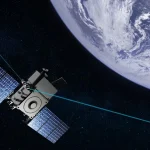
Launching a satellite is only the beginning of its operational life. Once in space, questions immediately arise: Is the spacecraft functioning normally? Has it reached the correct orbit? Does its attitude need adjustment?
The answers come from ground-based telemetry, tracking and control systems.
A TT&C system can broadly be divided into two components: the TT&C platform, responsible for functions such as orbit determination, resource scheduling and mission simulation; and the ground station network, which involves global station deployment and gateway construction. The former relies primarily on algorithms and software, while the latter depends on physical infrastructure.
What creates a competitive moat in this segment?
First, accumulated expertise in algorithms. High-precision orbit determination, collision-warning models, resource-scheduling algorithms and similar capabilities require large volumes of in-orbit data for validation and continuous improvement. They cannot be built simply by writing a few lines of code.
Second, ground-network coverage. Establishing stations around the world requires coordination across different countries and takes considerable time. Once such a network has been built, it becomes a significant physical barrier to entry.
2. Thermal Management: The Lifeline of Space-Based Computing
Space-based computing has become one of the hottest areas of the space industry in 2026. But there is a fundamental question that receives far less attention: once GPUs are operating in orbit, where does all their heat go?
On the surface, competition in space-based computing appears to be about computing power. At a deeper level, however, another question may prove just as important: who can dissipate more heat with less mass?
In the vacuum of space, heat cannot be removed through convection. Adding more thermal-control hardware, meanwhile, increases spacecraft volume and mass. The competitive moat here therefore lies in system integration.
Thermal control is not a single technology. It is an integrated engineering system involving materials, fluid loops, radiators, structural design and other technologies.
Companies capable of building lightweight and efficient thermal-management systems will have an advantage in increasing the deployment density of computing satellites. Thermal management could therefore become one of the most important enabling technologies for future space-based computing.
3. Refurbishment and Inspection: The Threshold for Rocket Reuse
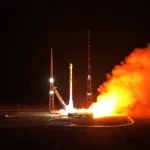
Zhuque-3 has successfully completed recovery, but the real test has only just begun.
After a rocket returns to the assembly facility, it must undergo a series of procedures, including nondestructive testing, structural repair, component replacement, life-cycle testing and fatigue testing.
China has yet to establish a mature technical system for reusable launch vehicle refurbishment. Inspection and refurbishment are therefore the gatekeepers of reuse: they determine whether recovering a rocket can actually translate into economical reuse.
The competitive moat in this segment comes from control over standards and the accumulation of operational data.
4. Space-Grade Core Components
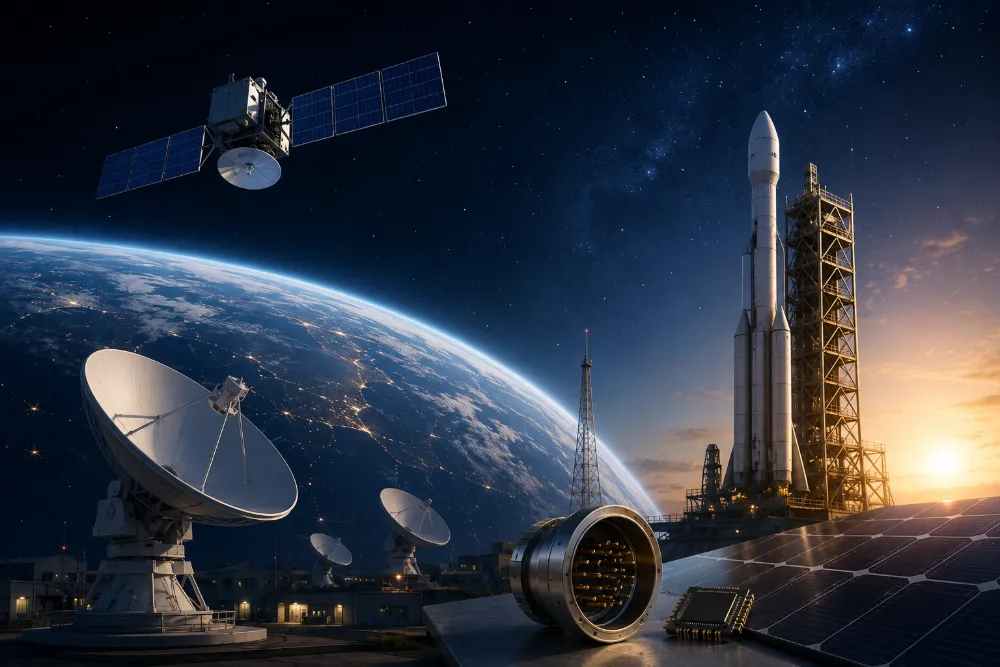
The rocket and satellite supply chains include companies that manufacture extremely small products: a connector component the size of a grain of rice, a composite payload fairing, or a chip no larger than a fingernail. These products may attract little attention, but they can play critical roles throughout the space industry.
Take payload fairings as an example. The degree to which a composite fairing can be made lighter directly affects a launch vehicle’s payload capacity. Even a one-kilogram reduction can translate into meaningful launch-cost savings. Yet composite manufacturing processes, thermal-protection design and reliable separation mechanisms all require years of engineering experience.
The moat in this segment is created by a combination of qualification, technology and market position. For suppliers of critical space-grade components, the strongest barrier is often not a patent. It is the lengthy space-grade qualification and certification process that other companies cannot easily enter or bypass.
5. The Key Takeaway
On the surface, commercial space competition appears to revolve around rocket recovery, satellite constellations and space-based computing. But the companies that ultimately go furthest may be determined by much deeper and less visible parts of the value chain.
TT&C determines whether a satellite can be effectively managed after reaching orbit. Thermal management determines whether computing systems can operate continuously in space. Refurbishment and inspection provide the foundation for high-frequency rocket reuse. Core components, meanwhile, help define the cost and performance limits of the entire supply chain.
These segments share several characteristics: high technical barriers, long qualification cycles and advantages that become extremely difficult to circumvent once established.
The spotlight may be on rockets and satellites, but some of the industry’s strongest moats are hidden where few people are looking.
For international companies looking to participate in China’s rapidly expanding commercial space ecosystem, these less visible parts of the supply chain can also represent valuable opportunities—from satellite components and ground systems to testing equipment, payloads and complete spacecraft solutions. STARPATH GLOBAL helps international customers identify suitable Chinese space products, suppliers and technical solutions for specific mission requirements. Contact us to discuss your project and explore potential solutions from China’s space supply chain.