NASA has stacked the fourth of five major assemblies on each of the twin solid rocket boosters for Artemis III and completed installation of all four RS-25 engines on the mission’s Space Launch System core stage at Kennedy Space Center. The processing milestones come as a five-month review of the Artemis II Orion heat shield confirmed that a steeper reentry trajectory reduced Avcoat char-loss sites by more than 90% compared with Artemis I.
Inside Kennedy’s Vehicle Assembly Building in Florida, teams completed mating the center segments of the two five-segment boosters and began placing the forward-center segments above them. Once that work is complete, only the forward assemblies will remain before both booster stacks reach their full configuration on Mobile Launcher 1.
Each SLS booster consists of five motor segments plus forward and aft hardware. The pair supplies more than three-quarters of the rocket’s thrust during the first two minutes of flight. Completing four of the five segment positions brings the boosters close to the point at which the core stage can be lifted vertically and installed between them.
Photographs taken near the base of Mobile Launcher 1 also show that the Tail Service Mast Umbilicals are missing their quick-disconnect plates. The condition could be associated with routine refurbishment following Artemis II or a modification responding to hydrogen-leak issues encountered during that mission’s ground processing. NASA has not publicly confirmed the reason.
The umbilicals connect ground systems with the SLS core stage and route liquid hydrogen and liquid oxygen into the rocket during fueling. They must disconnect rapidly at liftoff while preventing cryogenic propellant leakage, making their interfaces a recurring focus during launch-pad testing and refurbishment.
All Four Artemis III Engines Installed
Elsewhere in the Vehicle Assembly Building, technicians completed installation of all four RS-25 engines on Core Stage-3, the SLS core stage assigned to Artemis III. Teams can now proceed with the remaining propulsion, electrical and avionics outfitting required before the stage is transferred to Mobile Launcher 1 and positioned between the boosters.
The four engines—E2054, E2057, E2048 and E2052—previously flew on Space Shuttle missions and were refurbished for SLS. Each produces nearly 500,000 pounds of thrust and operates for more than eight minutes during ascent. Together with the solid rocket boosters, they will propel Orion and its four-person crew into low Earth orbit.
Artemis III is planned for 2027 as a crewed demonstration mission rather than a lunar landing. Orion will conduct rendezvous and docking operations with one or both commercial Human Landing System test vehicles being developed by SpaceX and Blue Origin. NASA intends to use the mission to reduce technical and operational risks before attempting a crewed lunar landing on Artemis IV in 2028.
Hardware for that following mission is also advancing. NASA’s Pegasus barge has delivered the Artemis IV core-stage boattail to Kennedy, providing the final major structure needed for the Core Stage-4 engine section.
The boattail mounts beneath the engine-section barrel and forms the aerodynamic structure surrounding the four RS-25 engines. The engine section has been undergoing processing at Kennedy for several years, and arrival of the boattail allows integration work to move into its next phase.
Trajectory Change Cuts Orion Char Loss by More Than 90%
The rocket-processing work follows confirmation that NASA’s mitigation for the Orion heat-shield problem encountered during Artemis I performed as intended on Artemis II.
Artemis II launched on April 1, 2026, becoming the first crewed Artemis mission and the first flight to carry humans around the Moon since Apollo 17 in 1972. Because its heat shield had already been manufactured and installed when the Artemis I damage was fully understood, NASA elected not to replace it. Instead, the agency changed Orion’s atmospheric-entry profile.
The heat shield consists of 186 blocks of Avcoat, an ablative material that protects the crew module by heating, decomposing and gradually eroding during reentry. During Artemis I, gases generated beneath the charred surface could not vent efficiently through the insufficiently permeable material. Pressure accumulated within the Avcoat and caused pieces of its outer layers to crack and separate through a process known as spallation.
NASA flew Artemis II on a steeper, non-skip entry trajectory. The approach shortened the time Orion remained in the thermal conditions associated with the Artemis I damage mechanism, although it exposed the spacecraft to a more concentrated entry environment and reduced the available distance between atmospheric entry and splashdown.
After nearly five months of analysis, the Artemis Safety Advisory Panel said inspectors found only nine spallation sites on the Artemis II heat shield. Artemis I had more than 100, meaning the trajectory change reduced the number of observed sites by more than 90%.
The result validated NASA’s decision to retain the installed heat shield and avoid the delay that would have accompanied removal and remanufacturing. It also confirmed the underlying analysis of how entry trajectory affected gas accumulation inside the Avcoat.
The operational cost is reduced landing flexibility. A skip entry allows Orion to generate lift and briefly climb within the upper atmosphere, extending its downrange travel and giving mission planners a wider selection of recovery zones. Eliminating that maneuver shortens the distance from entry interface to splashdown and limits NASA’s ability to adjust the landing area for weather or other constraints.
For Artemis III and subsequent spacecraft, NASA has modified the Avcoat manufacturing process to produce material with more consistent and greater permeability. The revised material is intended to vent gases before pressure can build and cause spallation, allowing Orion eventually to recover the wider targeting range offered by skip entry.
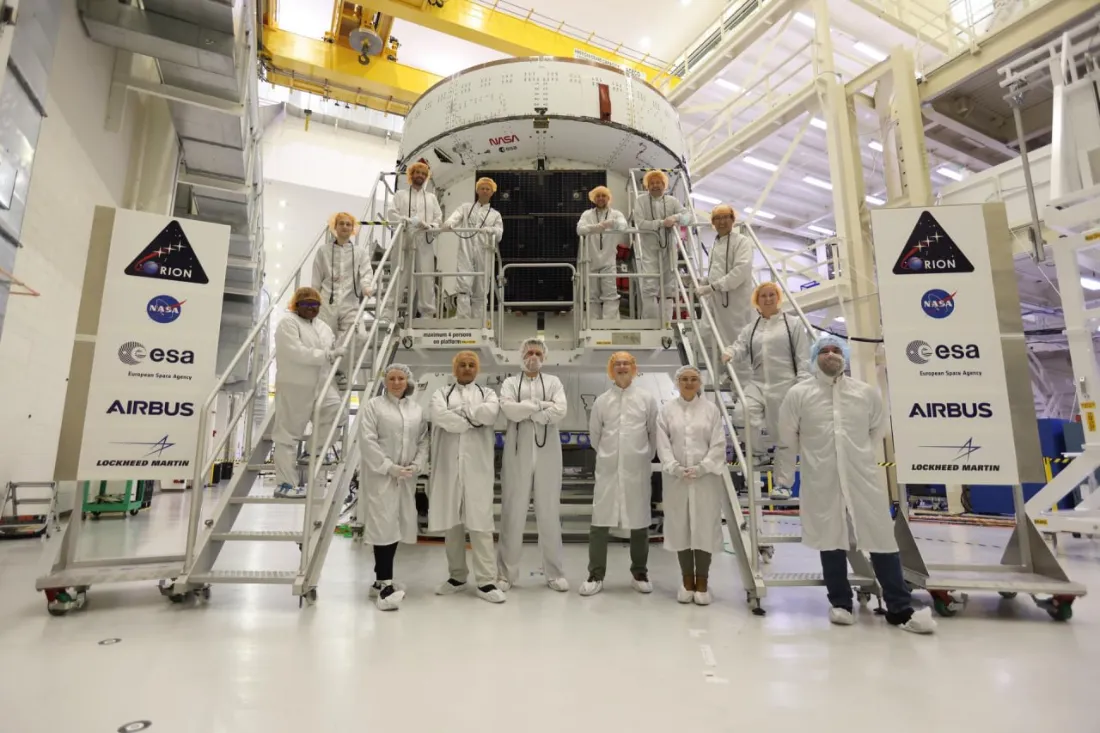
Although Artemis III will return from low Earth orbit rather than at lunar-return velocity, it will be the first mission to fly the revised Avcoat production standard. Completion of the booster segments, installation of the four core-stage engines and confirmation of the heat-shield mitigation now place the focus on final SLS outfitting, Orion integration and preparation of the commercial docking targets needed for the 2027 flight.