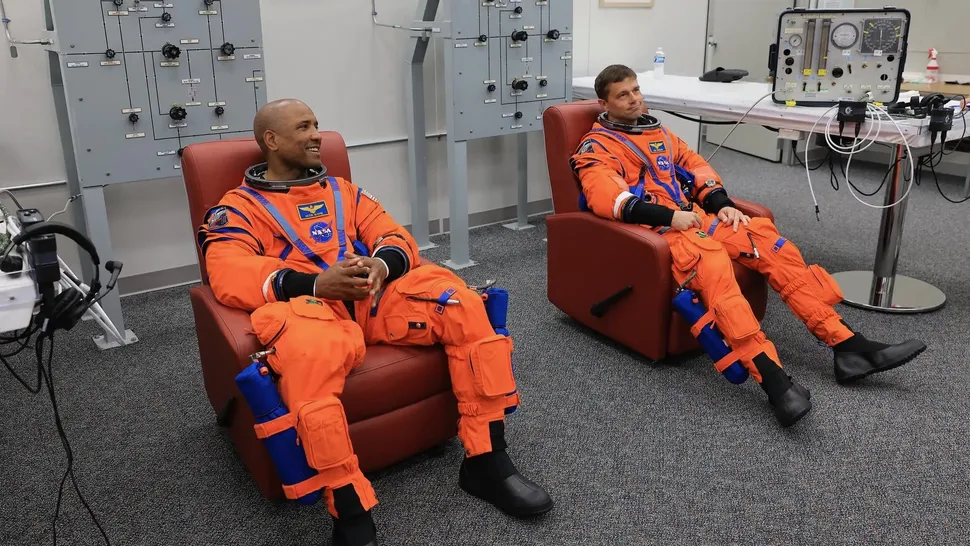
NASA will transition Artemis II commander Reid Wiseman and pilot Victor Glover to emeritus status at Johnson Space Center in September, retaining their technical and operational experience as the agency prepares for Artemis III in 2027 and its planned return to the lunar surface with Artemis IV in 2028.
The change follows the astronauts’ 10-day Artemis II mission with NASA mission specialist Christina Koch and Canadian Space Agency astronaut Jeremy Hansen. The crew launched aboard Orion on the first crewed flight of NASA’s Space Launch System rocket, traveled around the Moon and splashed down on April 10, 2026.
Artemis II was the first human mission beyond low Earth orbit since Apollo 17 in 1972. NASA said the flight also carried its crew farther from Earth than any previous human spaceflight mission.
Under NASA’s emeritus program, former active-duty personnel with specialized technical and professional knowledge can continue supporting the agency as consultants. Wiseman and Glover will be able to train and mentor astronauts, flight controllers and engineers while pursuing other professional opportunities.
Their experience is particularly relevant to subsequent Artemis flights because Artemis II provided the first crewed operational assessment of Orion in deep space. Lessons from the mission cover spacecraft systems, crew procedures, life support, communications, navigation and human performance outside low Earth orbit.
NASA Administrator Jared Isaacman said the agency expects both astronauts to share their Artemis II experience as teams prepare for Artemis III and later missions.
Glover will transfer his knowledge of Orion and its spacecraft systems to future crews and programs while supporting aerospace, leadership and public-service initiatives inside and outside NASA. He recently retired from the U.S. Navy and began a full-time administrative leadership position at California Polytechnic State University in San Luis Obispo on September 1.
At Cal Poly, where he earned an engineering degree in 1999, Glover will advise university President Jeffrey Armstrong and other senior leaders. His work will focus on education, research, workforce development, strategic partnerships and philanthropy in fields including aerospace, aviation, artificial intelligence, autonomous systems, cybersecurity and national defense.
Before Artemis II, Glover served as pilot of SpaceX’s Crew-1 mission, the first operational Crew Dragon flight for NASA’s Commercial Crew Program. He spent 168 days aboard the International Space Station between November 2020 and May 2021.
Wiseman will remain available to share his spaceflight and leadership experience ahead of Artemis III. NASA now plans to conduct Artemis III in low Earth orbit to test rendezvous and docking between Orion and commercial human landing systems, an operational step intended to reduce risk before attempting a crewed lunar landing on Artemis IV in 2028.
Wiseman previously spent 165 days aboard the International Space Station during Expedition 41 in 2014. He later served as chief of NASA’s Astronaut Office from 2020 to 2022, temporarily leaving flight-eligible status because the office chief participates in astronaut assignment decisions. He returned to active flight status before NASA announced the Artemis II crew in April 2023.
Wiseman has not disclosed plans for a full-time position outside NASA but said he intends to continue supporting future missions and programs through the emeritus program.
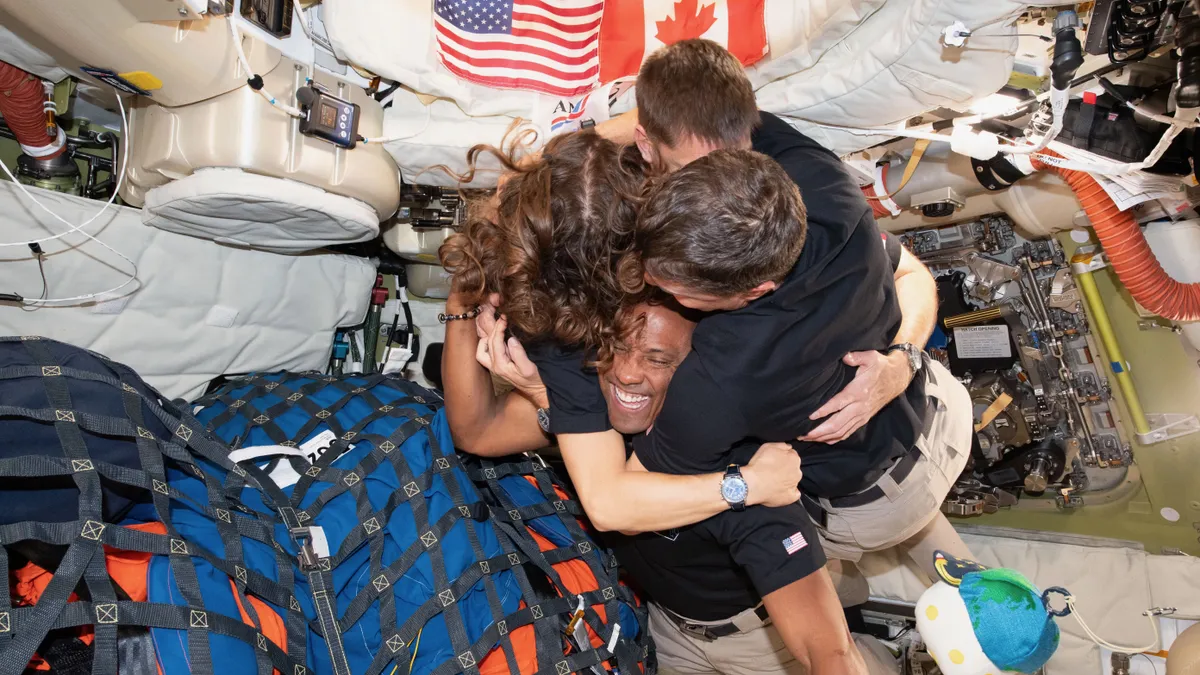
From left: The Artemis II crew — NASA astronaut Christina Koch, Canadian Space Agency astronaut Jeremy Hansen, and NASA astronauts Reid Wiseman and Victor Glover — take time out for a group hug inside the Orion spacecraft on April 6, 2026. (Image credit: NASA)
The transition means three of Artemis II’s four crew members have now announced changes to their active-service status. Hansen completed his Artemis II duties on September 2 and retired as a colonel in the Royal Canadian Air Force. He has transferred to reserve status and plans to work with 3 Canadian Space Division while continuing to support the Canadian government and the Canadian Space Agency.
Hansen has also accepted the position of honorary national president of the Air Cadet League of Canada. Further details about his government and space-related work are expected later.
Koch, the Artemis II mission specialist, remains an active NASA astronaut, with no change to her status announced.
The four astronauts continued making public appearances following the mission and received the Congressional Space Medal of Honor from President Donald Trump on August 28. Hansen became only the second non-American to receive the award.
Although Wiseman and Glover are leaving active astronaut status, their emeritus appointments preserve access to knowledge gained during the first crewed SLS and Orion mission. That experience will feed directly into preparations for Artemis III’s docking demonstration and the planned Artemis IV lunar landing.