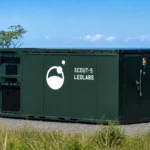
WASHINGTON — The Pentagon’s Office of Strategic Capital (OSC) has issued a conditional loan commitment of $150 million to commercial space tracking provider LeoLabs to finance the expansion of its global radar network, as reported on Wednesday, Nov. 4, 2026.
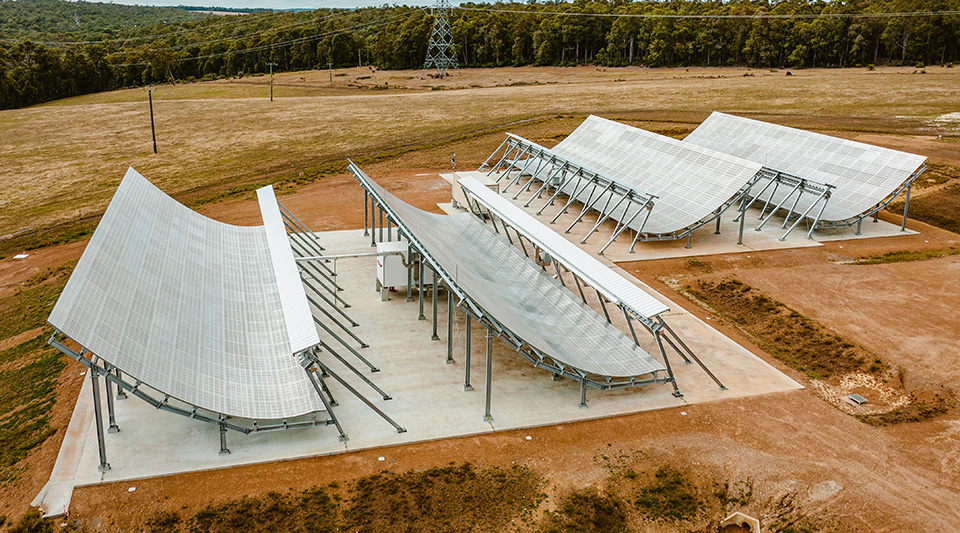
Under the financing arrangement, the federal loan commitment is structured to be matched by private co-investment, unlocking up to $300 million in total capital for the space domain awareness company upon formal transaction closing.
Defense Debt Financing Strategy and Capital Precedents
The debt commitment underscores an expanding push by national security officials to utilize federal credit programs rather than traditional procurement contracts to scale critical aerospace industrial capacity. Established to crowd in commercial debt and equity financing for strategic defense supply chains, the OSC agreement marks the Pentagon’s second major space industrial loan within a two-week span. The financing follows the office’s recent $150 million loan commitment to Stoke Space to construct a second dedicated launch pad at Cape Canaveral Space Force Station.
Phased-Array Architecture and Scout-S Mobility Specifications
The $300 million combined capital infusion will directly finance the serial manufacturing, production scaling, and global deployment of LeoLabs’ multi-mission phased-array radar systems:
- Scout Modular Systems: Funds the fabrication and field rollout of containerized Scout radars, expanding on a $20.7 million U.S. Space Force contract to deploy transportable S-band radar units for tactical space domain awareness.
- Persistent Orbital Coverage: Expands the company’s fixed planetary sensor network tracking active spacecraft, collision threats, and uncooperative space debris across low Earth orbit (LEO) and very low Earth orbit (VLEO) down to centimeter scale.
Due Diligence Timeline and Global Network Scaling
The transaction remains subject to final financial and regulatory due diligence before funds are disbursed. Once formalized, the private-public capital deployment will accelerate site installations across allied territories through 2027 and 2028, establishing continuous orbital radar tracking to protect commercial constellations and military assets from emerging orbital threats.