The company’s next-generation reactor is designed to run much hotter than current systems. A hotter reactor needs a much smaller radiator, which makes up most of the mass of a space fission power system. Raising the temperature at which heat is rejected lets the same-size radiator shed roughly six times as much heat. The constraint is not nuclear physics but materials. Today’s power conversion hardware already sits at the edge of what nickel-based superalloys tolerate over a long mission, so going hotter means moving to refractory alloys of tungsten, molybdenum, tantalum, rhenium and niobium. Many of the component shapes and materials SpaceNukes needs cannot be bought from any supplier.
“Our next-generation reactor is a bet on temperature,” said Andrew Phelps, CEO of SpaceNukes. “What stands between us and that is not the nuclear physics. The physics is in good shape, and it was proven in 2018. The limit is metal.” The facility at 150 Central Park Square is led by Omar Mireles, director of manufacture and materials, who heads the Generation 2 program. Mireles spent 13 years as a research engineer and principal investigator at NASA’s Marshall Space Flight Center, where he led the $25 million Refractory Alloy Additive Manufacturing Build Optimization project.
“Additive manufacturing is used only for specific circumstances,” Mireles said, citing highly complex parts made from difficult-to-form materials with low production rates and design flexibility that can be optimized to the manufacturing process. He said those lessons were learned in the liquid rocket engine community over two decades and are now being applied to SpaceNukes. “We are manufacturing aerospace components at aerospace-quality standards. This building is where we learn to make them.”
The Los Alamos facility complements SpaceNukes’ integration and test facility in Medina, Ohio, led by chief engineer Marc Gibson. The company is now building hardware to test components for its Generation 2 reactors at the Ohio facility. The grand opening featured remarks from Phelps and Mireles, a ribbon cutting and tours, with guests including staff from the office of Sen. Martin Heinrich, D-N.M., Los Alamos National Laboratory and its Feynman Center for Innovation, the Los Alamos County Council and space industry partners.
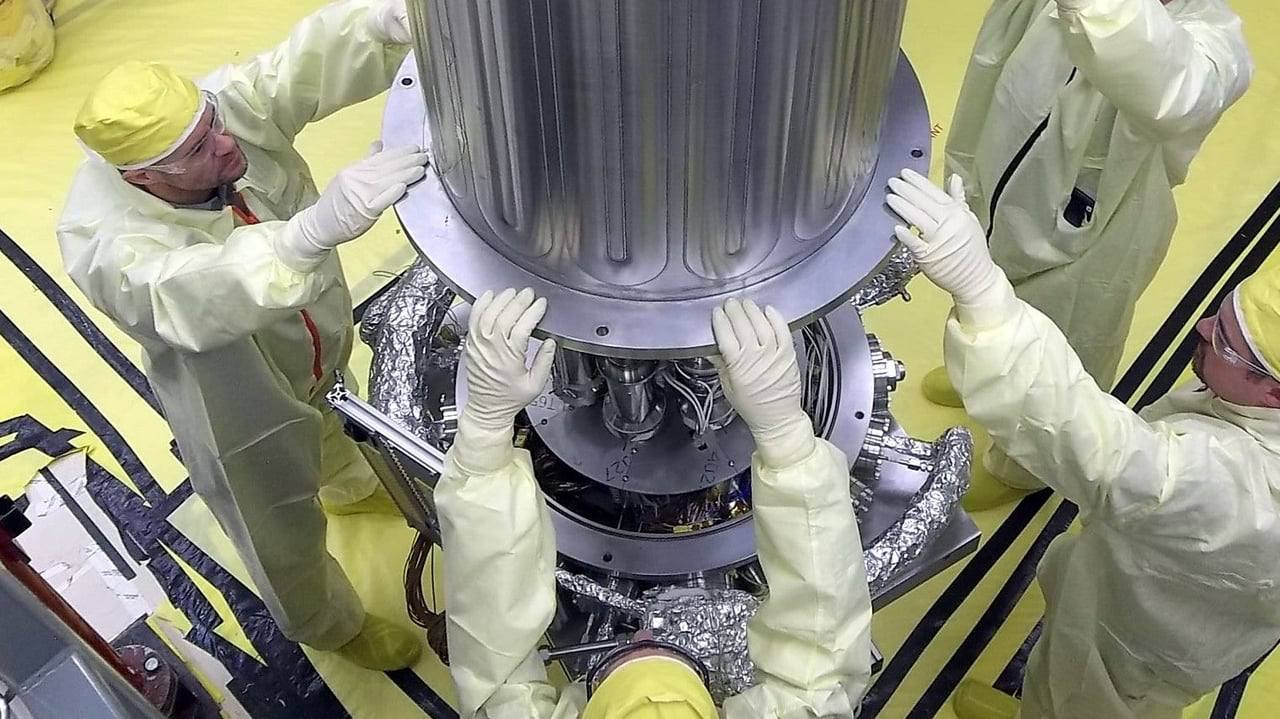
The opening follows SpaceNukes’ Oct. 21 announcement of an agreement with the Defense Advanced Research Projects Agency, under its Fast Capacitance program, to design, build and ground-test an actively controlled Kilopower reactor with Los Alamos National Laboratory. SpaceNukes has roughly 15 full-time employees, more than $50 million in contracts and agreements with the Department of War and NASA, two completed Space Force design reviews and a Los Alamos National Laboratory license for the reactor technology its founders invented there. In March 2018, the team ran a space reactor at full temperature and power for 28 hours, the first time this had been done in the United States in 50 years, taking it from concept to full power in three years for less than $20 million.
The facility opening comes as SpaceNukes works to fly a nuclear reactor by 2028.