Musk disclosed the plan during appearances at The New York Times’ DealBook event and the TomorrowX Summit. The rooftop units are meant to address the signal penetration problem that has long affected high-frequency mobile service in urban areas, where masonry and concrete can block indoor reception. The device extends an idea SpaceX floated in July, when it proposed small, low-power femtocell-style base stations attached to existing Starlink dishes as an inexpensive way to spread its mobile service.
SpaceX’s push rests partly on spectrum it holds. Its terrestrial holdings include roughly 15 MHz of unpaired nationwide AWS-3 airwaves, about 40 MHz of AWS-4, around 10 MHz in the H-Block and about 14 MHz of paired spectrum in the 800 MHz band. That is not enough to support a full mobile service in urban markets on its own, which has made an MVNO arrangement with AT&T, T-Mobile or Verizon the most attractive route. All three have so far declined such a deal, leaving SpaceX to lean on its space-based 2 GHz mid-band spectrum as the backbone for a U.S. cellular network while the 800 MHz licenses, which SpaceX agreed in October to buy, carry signals into buildings.
SpaceX is seeking to lease at least 80,000 cell tower sites across the country, a commitment that would run to roughly 6 billion dollars at an estimated 75,000 dollars per site, and it has won FCC approval to launch as many as 15,000 second-generation satellites capable of connecting directly to ordinary smartphones. Musk said SpaceX will begin launching a second version of its direct-to-cell constellation next year, with about 40 times the bandwidth of the current generation. “That’s where the 800 megahertz band that we bought comes into play, with a network of very small ground stations,” he said.
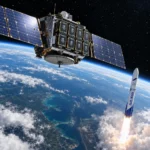
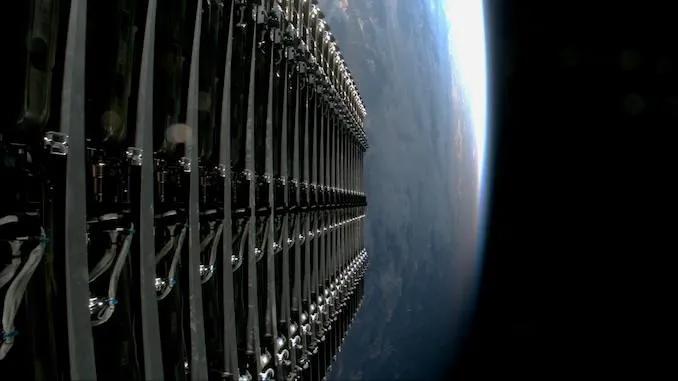
The current direct-to-cell fleet, roughly 650 satellites, is essentially the company’s V2 Mini broadband craft fitted with a cellular payload and serves messaging and emergency traffic through partners such as T-Mobile. The V2 direct-to-cell satellites carry larger phased-array antennas and are designed for Starship launches beginning in 2027, with peak speeds of around 150 Mbps under good conditions and support for voice, data and video on unmodified phones.
The rooftop microcell plan signals that SpaceX intends to compete for urban subscribers rather than confine Starlink Mobile to rural and emergency use. Building a terrestrial network dense enough to serve cities would require substantial capital spending on tower leases and ground equipment, and the company’s inability so far to secure an MVNO deal with a major carrier leaves it dependent on its own spectrum and satellite capacity. Gwynne Shotwell, SpaceX’s chief operating officer, said in August that she expects the coming Starlink Mobile network to win “quite a few” customers from the three national carriers.
The next milestones include the start of second-generation direct-to-cell launches next year, V2 direct-to-cell satellites designed for Starship launches beginning in 2027, and SpaceX’s pursuit of at least 80,000 tower site leases and an MVNO arrangement with a major carrier.