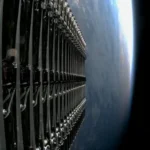
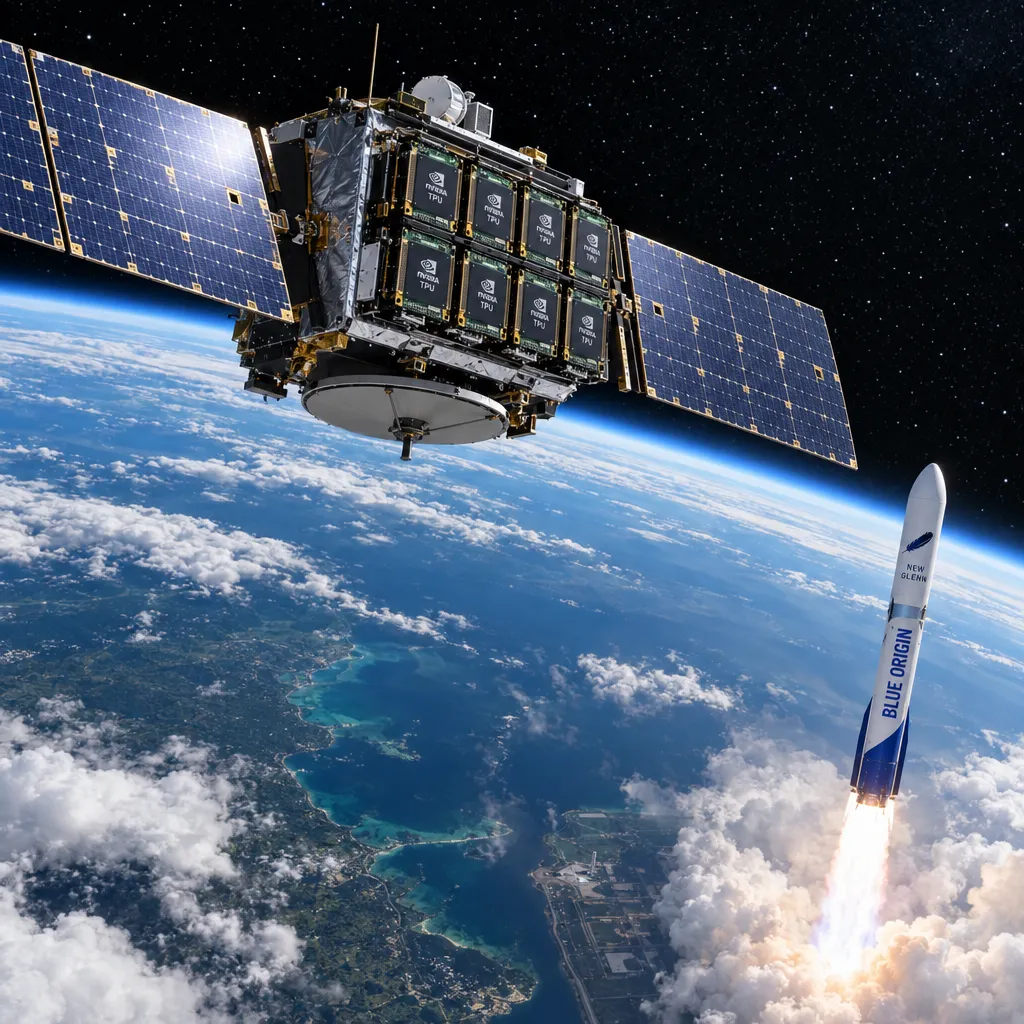
Project Suncatcher is described by Google as a long-term moonshot exploring how an interconnected network of solar-powered satellites, each carrying its Tensor Processing Units, could expand machine learning compute in orbit. The agreement with Blue Origin marks the program’s first dedicated heavy-lift launch and what Google calls a milestone on its research roadmap.
The mission is designed to deploy satellites into sun-synchronous orbit, with each satellite carrying computing capacity at roughly the scale of a data center rack. Jordan Charles, Senior Vice President of New Glenn at Blue Origin, said the mission reflects the kind of work the vehicle was built to support. “Project Suncatcher represents the ambitious missions New Glenn was built to support,” Charles said. “Its heavy-lift capacity and large payload volume give customers the flexibility to bring new capabilities to orbit. We’re proud to work with Google to explore space-based computing and its potential to expand the space economy.”
Travis Beals, Senior Director of Project Suncatcher at Google, framed the agreement as central to the program’s progress. “Project Suncatcher is a long-term moonshot to scale AI infrastructure in space by tapping into the abundant solar power in orbit,” Beals said. “This dedicated launch with Blue Origin represents a crucial milestone on our roadmap as we expand the boundaries of what’s possible for the future of compute.” The two companies announced the agreement jointly on November 19.
Blue Origin manufactures and operates rocket engines, reusable launch vehicles, lunar landers, and satellite systems. Both companies position the Suncatcher launch as a step toward demonstrating whether solar power in orbit can support large-scale machine learning compute.
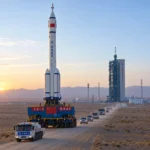
The agreement sets Blue Origin’s New Glenn as the launch vehicle for Project Suncatcher’s first dedicated heavy-lift mission, targeted for the first quarter of 2029, when the satellites carrying Google’s Tensor Processing Units are to be deployed into sun-synchronous orbit.