
Author: starpathwp-production
-
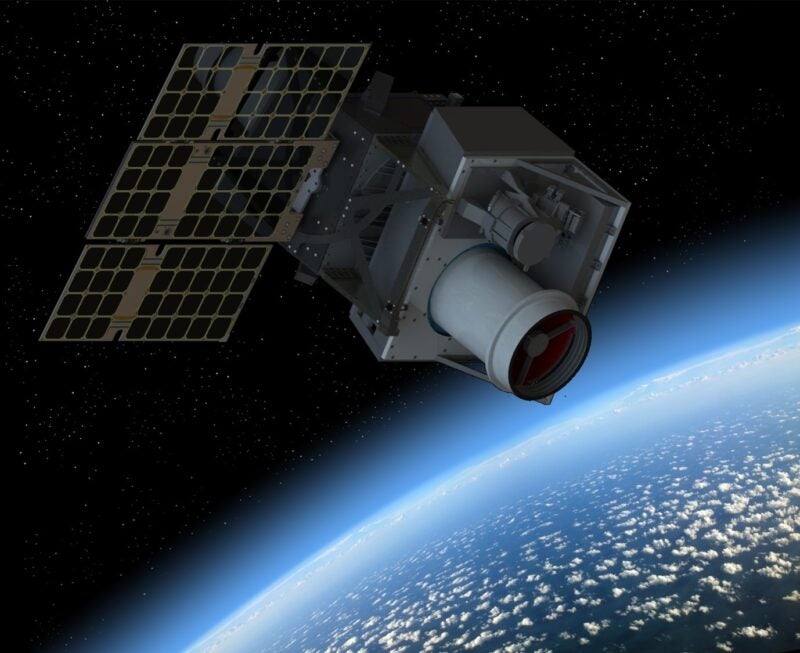
Blue Canyon Technologies Tapped to Build QETSSat Encryption Satellite
Loft Orbital awarded a contract to small satellite manufacturer Blue Canyon Technologies (BCT) to develop and build the YAM-4 spacecraft bus for the Canadian Space Agency (CSA) and Honeywell‘s Quantum Encryption and Science Satellite (QEYSSat) mission, BCT announced August 5. BCT will build the satellite using its new X-SAT Venus-Class bus design, which can carry…
-
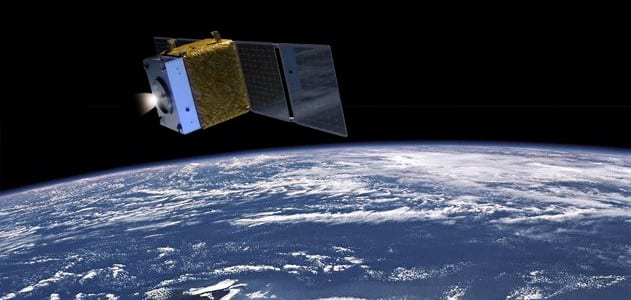
Benchmark Space Systems Merges Tech with Tesseract, Signs Green Propulsion Deal with Spaceflight
Benchmark Space Systems, an in-space propulsion systems supplier coming off of a recent capital fundraising round of more than $3 million, has just secured technology partnerships with Tesseract Space and Spaceflight Inc. Under a permanent licensing partnership, Benchmark will integrate Tesseract Space intellectual property, assets, and staff to expand the development, deployment and support of…
-
Astronics Completes Successful Antenna Test Flight With Collins Aerospace
Astronics’ Ku-band tail-mounted antenna technology successfully completed a test flight. The technology was used on a Collins Aerospace KuSAT-2000 satcom terminal for their LuxStream business jet connectivity solution. During the test flight, the KuSAT-2000 Tail-Mounted Antenna system reached download speeds of 25 Mbps in the U.S. and 15 Mbps globally, using SES satellites. Approximately 12…
-

The Arctic to serve as a key region for Space Force operations
During an Atlantic Council virtual event, US Air Force Secretary Barbara Barrett, along with Chief of Space Operations Gen. John “Jay” Raymond and Air Force Chief of Staff Gen. David Goldfein, laid out operational plans for The Arctic, a vast region encompassing more than 2.5 times the landmass of the continental United States. This area is a…
-

SpaceX clears big hurdle on next-gen Starship rocket program
Credit: Video frame from live stream by @SpacePadreIsle. A prototype rocket for a massive reusable vehicle SpaceX is designing to fly people to the moon and Mars took off from a launching stand in South Texas on Tuesday, flew to a height of roughly 500 feet, then made a controlled descent to a nearby landing…
-
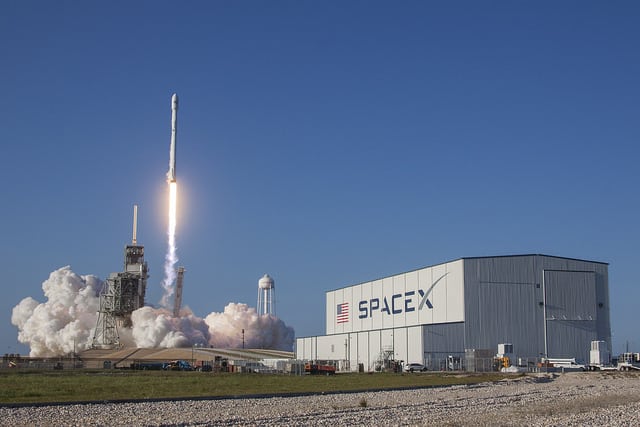
SpaceX, ULA Will Launch SES’ C-band Clearing Satellites
ULA’s Atlas 5. Photo: ULA SpaceX and United Launch Alliance (ULA) will launch up to five C-band satellites for global operator SES, which will use the spacecraft for its accelerated C-band clearing plan with the FCC, according to the terms of new launch contracts announced August 5. In order to meet the FCC’s deadline to…
-

Eutelsat’s 2020 Performance Grabs Analysts’ Attention
Industry analysts from Berenberg Bank and Jefferies put European satellite operator Eutelsat under the microscope this week, issuing reports that largely praised the company for its recent acquisition of BigBlu Broadband, and its efforts to generate strong cash-flow. Sarah Simon, a satellite equity analyst at Berenberg Bank, said she was “impressed” by Eutelsat’s cash-flow generation…
-

Photos: Atlas 5 rocket catapults into space with Mars rover
Carrying a $2.7 billion NASA mission to Mars, a United Launch Alliance Atlas 5 rocket took off July 30 from Cape Canaveral and fired into a summer sky powered by four powerful solid rocket boosters and a kerosene-burning main engine. The Atlas 5 blasted off from pad 41 at Cape Canaveral Air Force Station at…
-
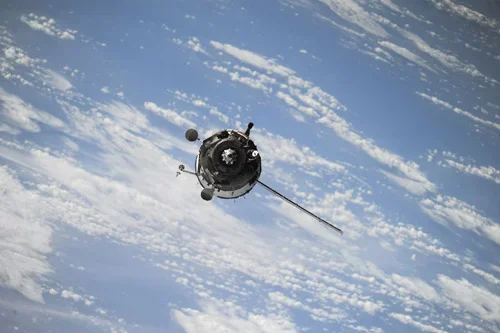
Xi officially announces commissioning of BDS-3 navigation system
Chinese President Xi Jinping, also general secretary of the Communist Party of China (CPC) Central Committee and chairman of the Central Military Commission, officially announced the commissioning of China’s BeiDou Navigation Satellite System (BDS-3) on Friday. Xi made the announcement while attending the completion and commissioning ceremony for the newly completed BDS-3 at the Great…
-

China’s Mars probe completes first orbital correction
China’s Tianwen 1 Mars probe carried out its first mid-course correction on Sunday morning, according to the China National Space Administration. The spacecraft’s main orbital-control engine was activated at 7 am for 20 seconds to fine-tune the spacecraft’s trajectory. When the correction was made, Tianwen 1 had been in space for more than 9 days…