
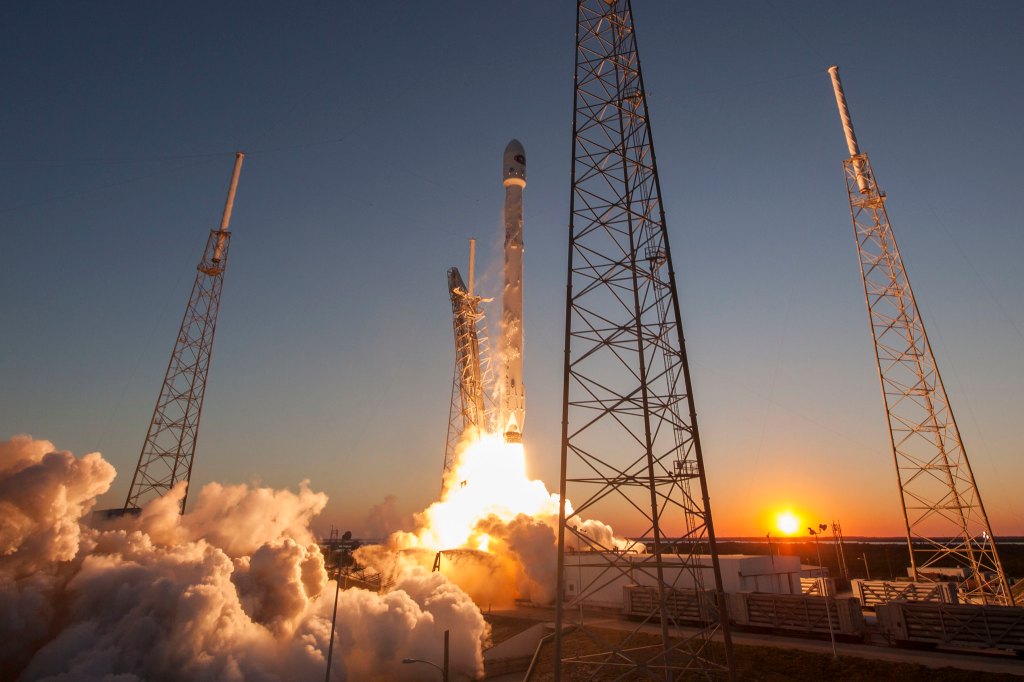
This meant DSCOVR’s spent stage was stuck orbiting around the Earth and Moon for the past seven years. Unfortunately, there are not many stable orbits around the Earth and the Moon. The Moon does a pretty good job slinging unwanted debris out around the Sun or crashing into itself. This final option will be the fate of the spent SpaceX stage.
When will SpaceX’s second stage crash into the Moon?
According to Bill Gray and a team of observers collecting extra data, SpaceX’s second stage is expected to crash into the Moon on March 4, as first reported by Ars Technica.
This isn’t a perfect prediction – the object is tumbling, and while it’s well understood how the Earth, Moon, and Sun’s gravity will affect it, the projections of the light hitting it (which can affect orbits in space) are less understood. Gray writes, “these unpredictable effects are very small. But they will accumulate between now and 2022 March 4.”
What does this mean for orbiting Moon missions
Luckily, only a handful of missions orbit the Moon, so a collision is improbable. However, this will be a rare occurrence for missions like NASA’s Lunar Reconnaissance Orbiter (LRO) to study the effects of a lunar impact.
Many mission’s spent stages have been used to impact the Moon in the past. Most notably during Apollo, NASA would impact both the S-IVB (Saturn V third stage) and Lunar Module’s ascent stage into the surface. Then seismometers would record the “moonquakes” that would occur.
In a response to Space Explored, NASA’s LRO team said they will not be in place to observe the impact but they will attempt to locate the creator once overhead. More observations will be needed to fine-tune the time and location of impact, hopefully, observations can be made from ground-based observatories.