Space technology startup Applied Atomics has emerged from stealth mode, unveiling plans to develop a new orbital mobility infrastructure platform backed by more than $500 million in demand commitments from prospective customers and partners.
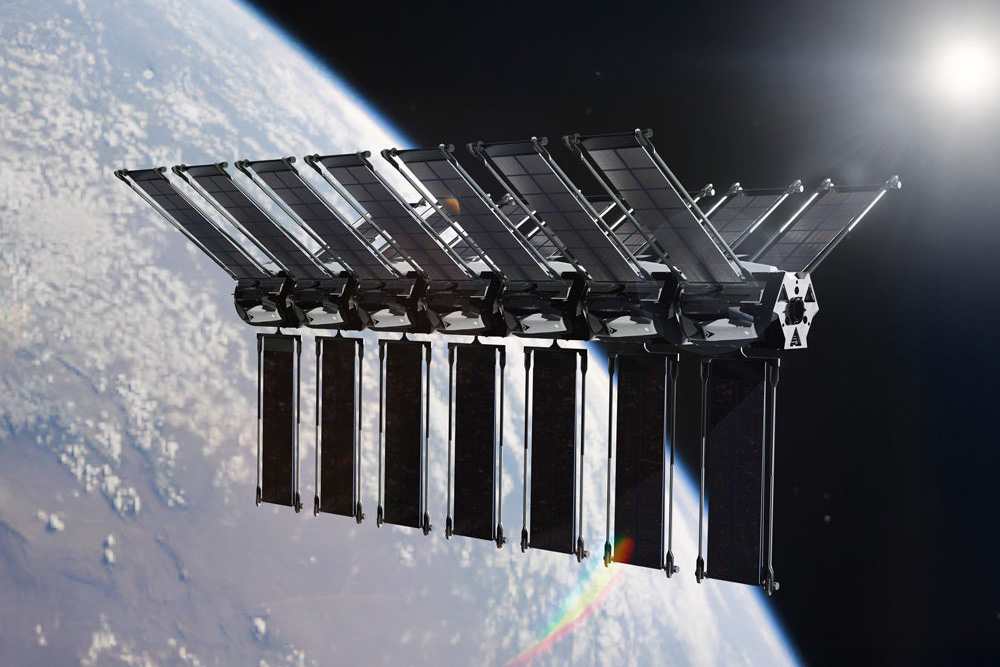
The company announced on June 11 that it has secured over $500 million in Letters of Intent (LOIs) and Memoranda of Understanding (MOUs) related to its proposed Star Reacher Network, a system designed to support transportation, logistics and operational mobility in space after launch.
Applied Atomics said the platform is intended to address one of the growing challenges facing the space industry: moving spacecraft, payloads and infrastructure efficiently once they are already in orbit.
Building an Orbital Mobility Network
The Star Reacher Network is being developed as a mobility infrastructure layer for post-launch space operations.
According to the company, the system combines multimode propulsion technologies, artificial intelligence-enabled mission planning and orbital logistics capabilities to support a range of future space activities.
Applied Atomics said the goal is to overcome traditional trade-offs between speed and efficiency in space transportation, enabling more flexible movement of assets across different orbital regimes.
The company believes growing demand for satellite servicing, orbital logistics, national security missions and space infrastructure deployment will require dedicated mobility systems capable of supporting increasingly complex operations.
Funding and Industry Support
Alongside the demand commitments, Applied Atomics announced the completion of a $4 million oversubscribed pre-seed financing round led by Oxford Science Enterprises.
The company said it has also established partnerships across the United States, Europe and the United Kingdom as it advances development of its technology platform.
Backing From NATO and Airbus
Applied Atomics has attracted support from several organizations involved in advanced technology development.
Among them is NATO DIANA, the innovation accelerator established by NATO to identify and support dual-use technologies with potential defense and commercial applications across the alliance’s 32 member countries.
The company said it was selected by NATO DIANA for its Resilient Space Operations challenge from a field of more than 3,600 applicants worldwide.
In addition, Airbus Defence and Space selected Applied Atomics as one of three companies participating in its inaugural Launchpad residency program, which focuses on ventures developing emerging space technologies.
Future Demonstrations Planned
Applied Atomics said it expects to announce additional milestones in the coming months, including a second orbital demonstration mission, new strategic partnerships and expanded mobility capabilities.
Ashley Modeste Johnson, Founder and Chief Executive Officer of Applied Atomics, said future growth of the space economy will depend on improved mobility infrastructure.
“The biggest constraint in space is no longer getting there, it’s how we move once we’re there.”
“The future space economy, from national security missions and orbital logistics to satellite servicing and infrastructure deployment, depends on mobility.”
“We believe that the freedom of movement in space will become one of the defining infrastructure challenges of the century, and Applied Atomics is being built to solve it.”
Growing Demand for In-Orbit Services
The announcement reflects increasing industry interest in technologies that support operations beyond launch, including satellite servicing, orbital transportation, debris management and in-space infrastructure deployment.
As satellite constellations expand and governments and commercial operators pursue more ambitious space missions, companies are exploring new approaches to improve mobility and logistics in orbit.
Applied Atomics said the Star Reacher Network is intended to become part of that emerging infrastructure ecosystem, providing services that could help support the next generation of commercial and government space operations.