Blue Origin advance the growing portfolio of space robotics technologies that support lunar exploration, in-space operations and future deep-space missions. As part of the broader exploration systems roadmap, Blue Origin’s robotics efforts focus on enabling autonomous operations, precision handling and reliable surface and orbital activities in environments where human presence is limited or not immediately feasible. These robotic systems are already integral to the company’s exploration architecture and are designed to support sustained operations beyond Earth orbit.
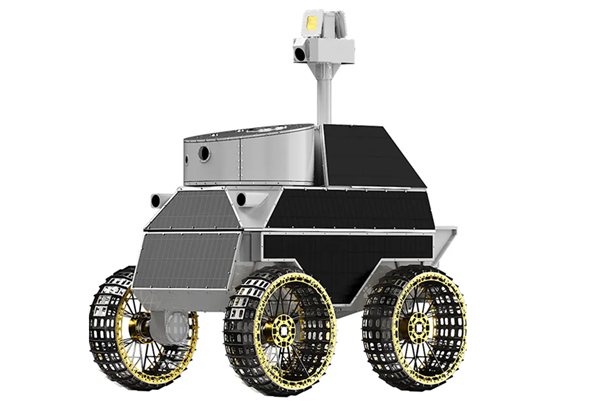
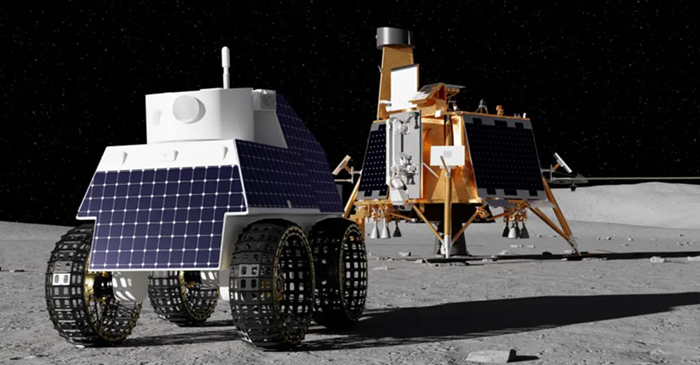
A central element of Blue Origin’s robotics development is the application to lunar surface missions, particularly within the Blue Moon program. Robotic mechanisms are designed to support precision landing, payload deployment and surface interaction on the Moon. These systems are engineered to operate in the lunar environment, accounting for reduced gravity, abrasive regolith, extreme temperature cycles and long-duration exposure. Robotic handling capabilities are intended to support the delivery and placement of scientific instruments, infrastructure elements and cargo, reducing risk while increasing mission efficiency during early surface operations.
Blue Origin’s robotic technologies emphasize autonomous and semi-autonomous control to reduce reliance on real-time human intervention. Precision actuators, sensors and control software are developed to enable accurate positioning, controlled movement and safe interaction with spacecraft structures and surface assets. This approach supports mission scenarios where communication delays or operational constraints require systems to make decisions locally while adhering to predefined safety and performance parameters. Robotics are tightly integrated into Blue Origin’s spacecraft and lander architectures. Mechanical interfaces, power systems, avionics and software are designed together to ensure seamless operation across mission phases. This integration supports tasks such as payload deployment from landers, surface asset positioning and potential servicing or reconfiguration activities once on the lunar surface. The design philosophy prioritizes reliability and repeatability with key requirements for missions that aim to establish sustained lunar presence.
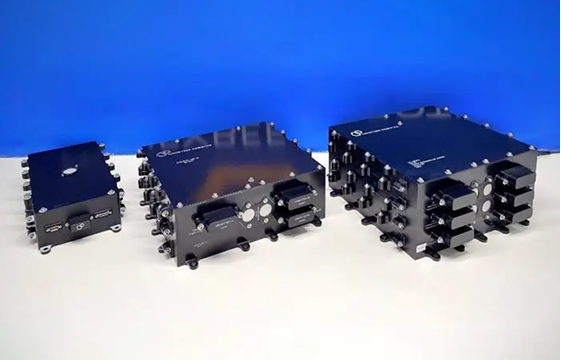
Robotic systems developed by Blue Origin are intended to support cargo logistics and early infrastructure deployment on the Moon. These capabilities are relevant for handling scientific payloads, power systems, habitats and other surface elements required for long-term exploration. By using robotic solutions for these tasks and missions can reduce dependency on crewed operations during initial phases, improving safety and operational flexibility while laying the groundwork for future human activity. Beyond near-term lunar missions, Blue Origin’s robotics technologies are aligned with longer-term exploration goals, including cislunar operations and deep-space missions.
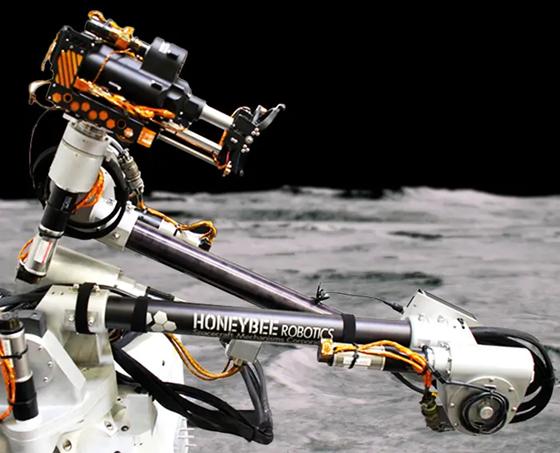
The company’s focus on robust, autonomous robotic systems reflects the need for scalable solutions that can support repeated missions, evolving payload requirements and extended operational lifetimes. These technologies complement Blue Origin’s launch and spacecraft capabilities, forming part of an integrated exploration ecosystem. Through the robotics initiatives, Blue Origin is developing practical systems that address real operational challenges in space exploration. By combining mechanical design, autonomous control and spacecraft integration, the company’s robotics portfolio supports reliable mission execution across lunar and in-space environments. As exploration efforts expand toward sustained operations beyond Earth, these robotic capabilities are positioned to play a foundational role in enabling safe, repeatable and efficient space missions.
About Blue Origin
Blue Origin is a privately funded US aerospace manufacturer and space-services company founded by Jeff Bezos in 2000. The company is headquartered in Kent, Washington. Blue Origin’s core mission is to develop and operate reusable rocket propulsion systems, launch vehicles and in-space systems, aiming to enable increased access to space. The engine portfolio, launch vehicle development and spacecraft ambitions span suborbital, orbital and deep-space applications. Blue Origin has developed a portfolio of reusable liquid-fueled rocket engines, utilizing both hydrogen/oxygen and methane/oxygen propellant combinations, each engineered for multiple flight cycles to reduce operational costs and enhance reliability. The company’s launch vehicle lineup includes the New Shepard, a suborbital rocket designed for crewed and research missions, and the New Glenn, a heavy-lift orbital vehicle capable of delivering large payloads to orbit. These facilities form the backbone of the company’s end-to-end development approach, covering everything from design and assembly to static testing and launch operations. Blue Origin emphasizes propulsion reusability, high efficiency and long-term cost reduction, positioning itself for missions including commercial launches, lunar landers and beyond.