Early analysis points to the aft section of the first stage as the origin of the anomaly, consistent with publicly available video footage. Blue Origin has remained circumspect about the root cause while its investigation continues. While major infrastructure such as the lightning tower was lost, critical systems including the tank farm sustained only limited damage, and post-incident flyover imagery showed many pad facilities escaped with relatively minor impact.
Flight hardware stored in the Horizontal Integration Facility during the anomaly, including three New Glenn second stages and the first-stage booster Never Tell Me The Odds, the first New Glenn vehicle slated to be reflown, has been transported to Blue Origin’s Exploration Park campus. At the pad, crews deployed multiple cranes, including a Demag CC 8800 heavy-lift crawler crane erected over the June 27 to 28 weekend, indicating a reconstruction role. On June 30, the CC 8800 lifted a load spreader toward the tower, though the lift was aborted.
Limp has indicated the Vehicle Access Tower will be dismantled segment by segment, with each section modified on the ground in parallel before reassembly. This clarifies an earlier statement that the tower would be repaired in place, now interpreted as ground-level refurbishment rather than fixes while standing. Portions of the tank farm that were damaged appear to have returned to at least partial operation, evidenced by an active flare stack. The recovery vessel Jacklyn was relocated on June 30, towed to sea by the support ship Harvey Stone with an aft simulator aboard.
Blue Origin has outlined a five-phase recovery plan. Phase 1, site security, and Phase 2, recovery and debris removal, are complete. Phase 3, covering CONOPS design and major repairs, is in progress. Phases 4, systems integration, and 5, flight readiness, remain open. Limp stated the company is continuing to build vehicles at rate in its manufacturing facilities, maintaining flight readiness, and preparing to come back stronger than before.
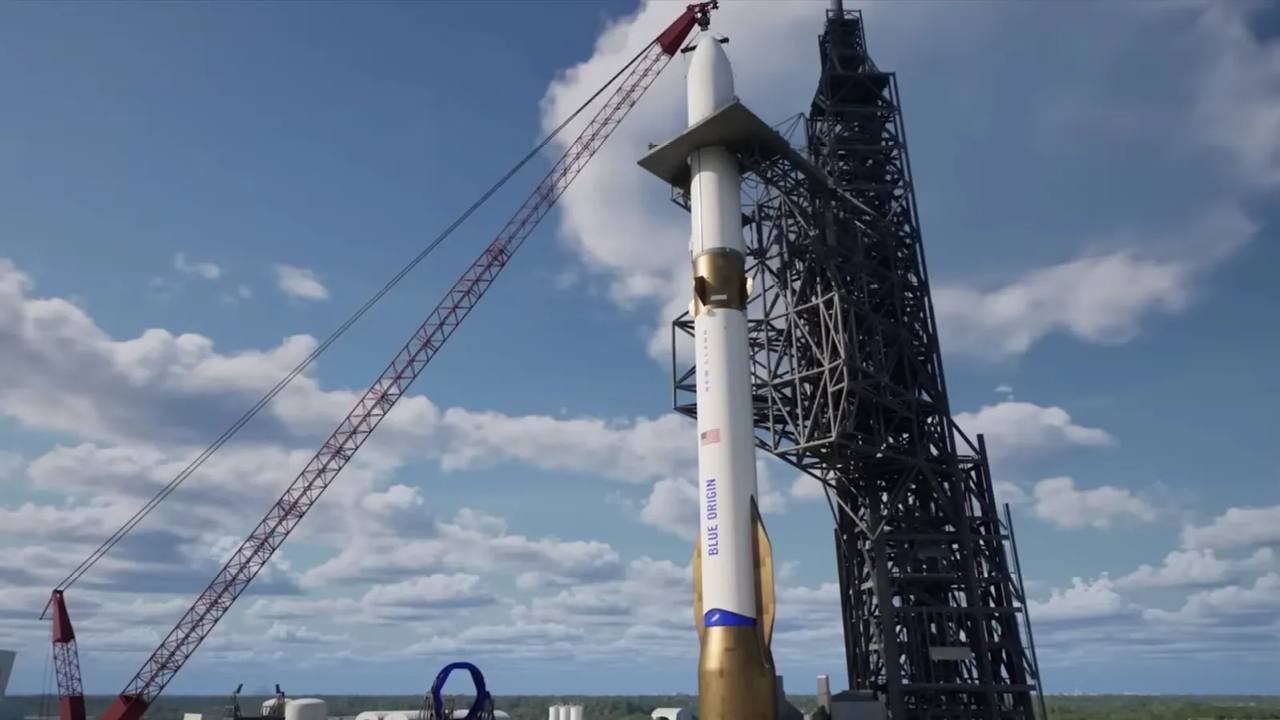
The company is transitioning New Glenn to a hybrid horizontal-vertical integration approach for the current 7×2 configuration of seven first-stage engines and two second-stage engines. First and second stages will continue to be mated horizontally, then transported on a simplified transporter to a new static launch mount area, where a standard crane will lift the stack, rotate it vertical, and place it on the mount. Renders indicate the vehicle will be rotated 90 degrees relative to its previous orientation, aligning umbilical interfaces with the tower and eliminating the need for large swing arms. Payload fairings, with payload already encapsulated, will then be mated to the top of the vehicle by crane.
The accelerated timeline, if maintained, would represent one of the more rapid recoveries from a major pad anomaly in recent launch history.
As reconstruction of Launch Complex-36A advances through Phase 3 and beyond, additional details and imagery of actual hardware are anticipated. Phases 4 and 5, systems integration and flight readiness, remain the outstanding milestones before New Glenn can attempt a return to flight.