Blue Origin’s New Glenn booster completed its second-ever trip to space on Thursday, successfully launching two NASA satellites on a mission to study the Martian atmosphere.
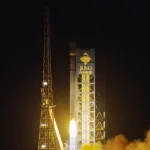
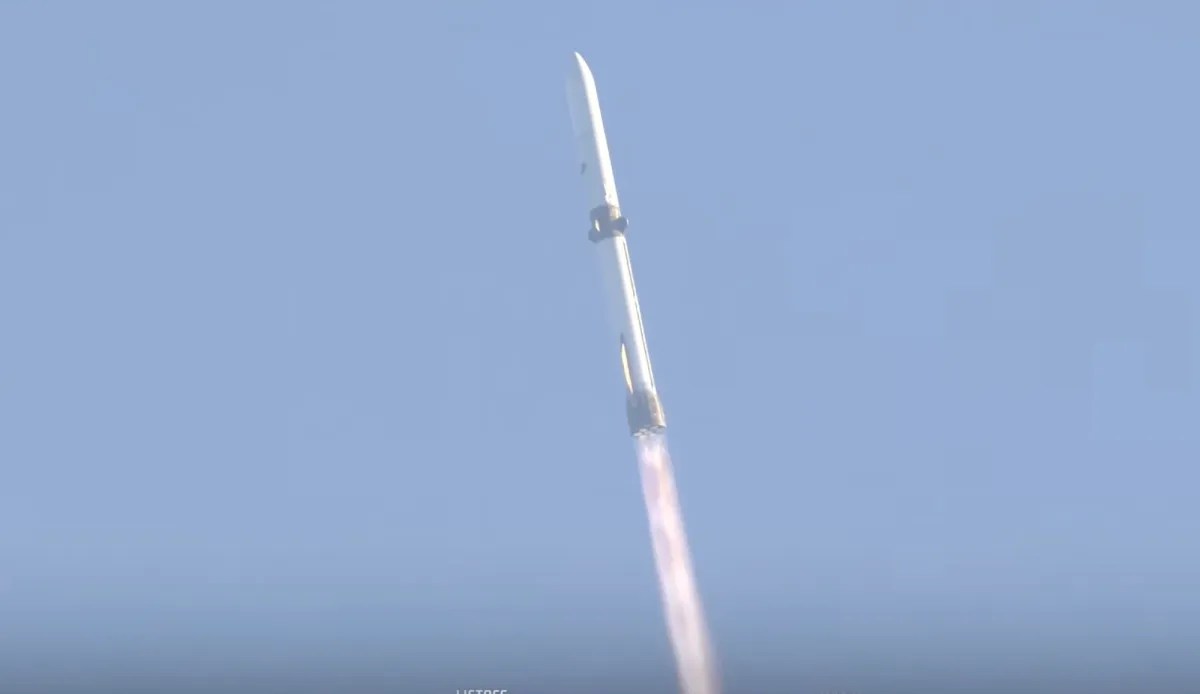
The unmanned rocket lifted off shortly after 4 p.m. EST from Cape Canaveral Space Force Station’s Launch Complex 36, carrying the twin ESCAPADE probes. After stage separation, the reusable booster returned to Earth, touching down on an autonomous drone ship in the Atlantic about nine minutes and 20 seconds after launch.
During ascent, New Glenn reached speeds of roughly 4,700 mph and climbed to nearly 330,000 feet before its first-stage engines shut down and the second stage carried the payload deeper into space.
The launch — part of the NG-2 mission — had faced earlier delays due to poor local weather on Sunday and space weather concerns related to solar flares on Wednesday. Conditions improved Thursday, with forecasters giving better than a 95% chance of favorable weather during the afternoon launch window.
Crowds gathered at Cherie Down Park and Jetty Park watched as New Glenn thundered into the sky, marking another milestone for Blue Origin’s heavy-lift rocket program.
NASA’s twin Escape and Plasma Acceleration and Dynamics Explorers (ESCAPADE) satellites, built by Rocket Lab, will travel to Mars to study how the planet’s thin atmosphere has evolved. The probes will measure interactions among plasma, magnetic fields, and atmospheric particles to better understand how Mars lost much of its atmosphere over billions of years — a key question for future human and robotic exploration.
NASA allocated $75 million for the ESCAPADE mission, including $20 million paid to Blue Origin for New Glenn launch services.