Australian launch and satellite company Gilmour Space Technologies has entered into a long-term strategic partnership with Singapore-based laser communications firm Transcelestial to integrate optical communications technology into future satellite platforms, the companies said on Monday.
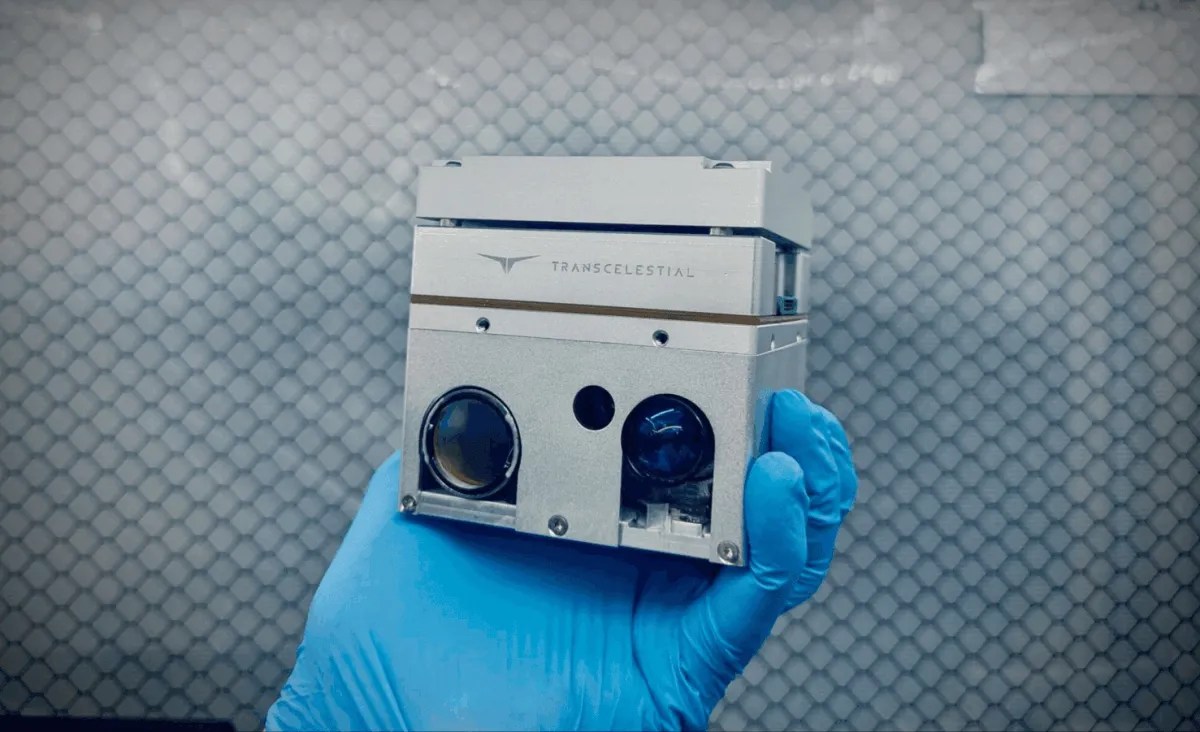
As a first step, Gilmour Space will fly a Transcelestial laser communications terminal on an upcoming mission, supporting an in-orbit demonstration to validate wireless laser data transmission under real operating conditions. The mission will qualify the terminal for integration with Gilmour’s satellite bus and assess its performance in space.
“Satellites are not just sensors in orbit anymore but are becoming full-blown orbital data centers, and the network layer is now falling behind,” said Rohit Jha, chief executive and co-founder of Transcelestial. He said Gilmour’s satellite bus would be among the first globally to be laser-communications enabled by default, positioning it ahead of many existing platforms.
The collaboration comes as satellite operators grapple with a widening gap between the volume of data spacecraft can collect and the speed at which it can be transmitted to Earth, particularly as sensors grow more capable and data workloads become increasingly bandwidth- and latency-sensitive.
Transcelestial’s technology is designed to enable high-speed satellite-to-ground and satellite-to-satellite links using laser communications, offering point-to-point transmission that the company says is resistant to jamming and incorporates post-quantum cryptography for enhanced security.
Delivery of the laser terminal is scheduled for May 2026, ahead of a planned in-orbit demonstration later in the year aboard SpaceX’s Transporter-18 rideshare mission.
Beyond the initial downlink test, the companies said they will explore broader applications of optical communications, including inter-satellite links to support more resilient and lower-latency satellite constellations. The partnership will also assess the feasibility of establishing an optical ground station in Queensland, Australia, and jointly pursuing Australian research and development grants for future demonstration missions.
“One of the key limitations in satellite operations is data transmission from the platform to the ground,” said Mark Grimminck, head of satellites at Gilmour Space. “Laser communication links are one of the clearest paths to relieve that bottleneck, and our collaboration with Transcelestial is about proving how it performs in real operations.”