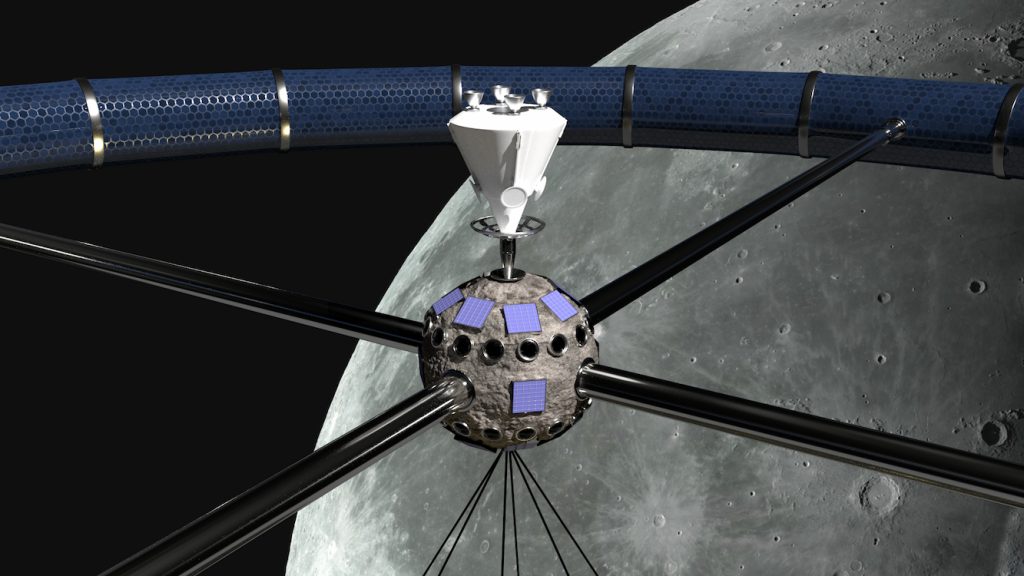
Compared to satellites launched from Earth, lunar-made solar power satellites would require significantly less velocity change to achieve geostationary Earth orbit. This advantage may hold the potential to revolutionize the space industry, allowing for the development of a cislunar transportation system and the establishment of lunar mining, processing and manufacturing facilities.
These advancements are seen as potential contributions to the growth of a two-planet economy, propelling the advent of a spacefaring civilization.
Importantly, the study emphasizes that the GE⊕-LPS concept does not rely on technological breakthroughs with many core technologies for lunar surface operations are already in use or in advanced stages of development on Earth.
By adapting and extrapolating these technologies to the lunar environment, Astrostrom and ESA seek unique deliverables in modular form and remote operations on the Moon’s surface.
Furthermore, the study suggests that lunar-made solar power satellites would not only be more cost-effective than their Earth-developed counterparts but also offer cost-competitive electricity compared to terrestrial power alternatives. This finding underscores the economic feasibility and potential of space-based solar power as a solution to Earth’s increasing energy demands.
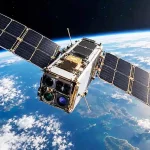
The GE⊕-LPS design draws inspiration from the elegant flight of a butterfly. Its V-shaped solar panels with integrated antennas are arranged in a helix configuration, covering an area of over one square kilometer.
This design allows for the continuous generation of 23 megawatts of energy, with a goal of meeting the energy requirements of future lunar activities and crewed bases.
Through the investigation of the technical and financial feasibility of the GE⊕-LPS concept, this study aims to set the stage for a future of sustainable energy generation from space. Confirmation of the concept’s practicality by ESA’s SOLARIS research and development initiative could pave the way for larger-scale deployment of lunar-made solar power satellites.