Exail, headquartered in La Défense, Paris (France) with manufacturing and R&D centers in Brest and Lannion, develops advanced inertial navigation systems and fiber-optic inertial sensors for aerospace, defense and commercial space operators. Within the satellite domain, Exail’s Astrix series of space-qualified fiber-optic gyroscopes (FOGs) has become a long-standing heritage product line, used across Earth-observation, telecommunications, scientific, navigation and deep-space missions. These gyroscopes serve as core components within satellite attitude determination and control systems (ADCS), providing highly stable angular-rate measurements with long-duration reliability suited for multi-year orbital operations.
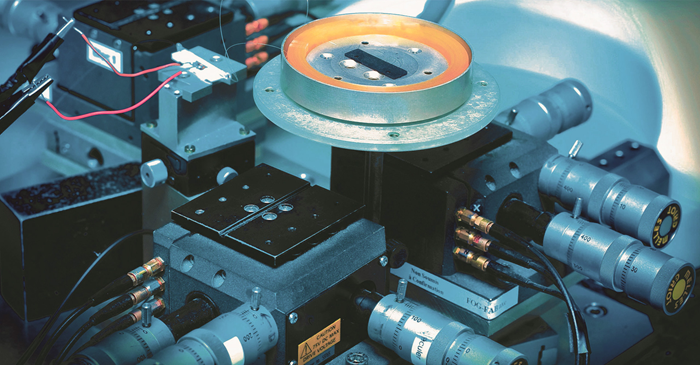
The Astrix® family comprises several fiber-optic gyroscope units—Astrix® NS, Astrix® NS-IMU, Astrix® 90 and Astrix® 200—each designed for different satellite sizes and mission profiles. All models employ Exail’s closed-loop fiber-optic gyroscope architecture, which provides low angular-rate drift, high measurement stability and resistance to magnetic or mechanical disturbances. With no moving parts, the sensors maintain reliability over long-duration orbit operations, supporting spacecraft attitude control and inertial navigation across a wide range of commercial, governmental and scientific missions.
Astrix® NS – Compact Fiber-Optic Gyro for Precision Small-Satellite Attitude Sensing
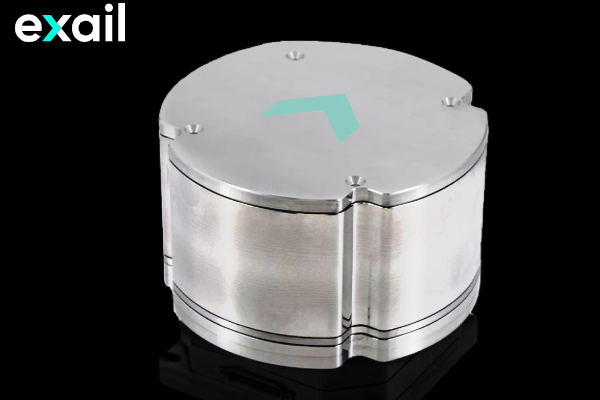
The Astrix® NS is Exail’s smallest fiber-optic gyroscope unit, engineered specifically for nano, micro and small-satellite platforms that require high-accuracy inertial measurements within constrained mass, volume and power budgets. Built around Exail’s closed-loop fiber-optic gyro (FOG) architecture, the Astrix® NS delivers bias stability in the 0.1–0.3 °/h range, angular random walk below 0.005 °/√h and maintains performance over the full thermal environment expected in LEO missions. The unit measures approximately 100 × 100 × 50 mm, weighs about 220 g, and operates below 2 W, enabling direct integration into compact ADCS subsystems without exceeding spacecraft resource limits. The hardware is space-qualified through vibration, shock, radiation and outgassing testing, supporting both open-loop and closed-loop attitude-control configurations. With the combination of precision, environmental robustness and minimal footprint, the Astrix® NS is suited for high-agility CubeSats, microsatellite Earth-observation missions, narrow-swath imaging platforms and distributed-architecture spacecraft requiring stable rate sensing for pointing control, stabilization or formation-flying operations.
Astrix® NS-IMU – Compact Integrated Inertial Unit for High-Accuracy Small-Satellite Navigation

The Astrix® NS-IMU builds on the Astrix® NS gyro package by integrating three closed-loop fiber-optic gyroscopes with a tri-axis MEMS accelerometer suite, forming a complete inertial measurement unit designed for small-satellite platforms with constrained mass, volume and power envelopes. The NS-IMU delivers stable angular-rate and linear-acceleration measurements within a compact housing, providing spacecraft with continuous inertial data for control, guidance and navigation subsystems. The architecture combines the low drift and high stability of Exail’s FOG technology with accelerometers that maintain repeatability across the thermal and vibration profiles common in LEO operations. The unit is radiation-tolerant for multi-year missions and supports both open-loop and closed-loop ADCS designs.
By merging gyro and accelerometer functionality into a single package, the NS-IMU reduces system-level complexity, simplifies interface wiring and lowers total power consumption. This makes it suitable for spacecraft performing precision pointing, agile slewing, robotic manipulation tasks, or operating in GNSS-limited or GNSS-denied environments. The unit’s compact footprint and qualification heritage make it a practical choice for CubeSats, microsats, Earth-observation platforms and constellation spacecraft requiring dependable inertial sensing without the overhead of larger standalone sensors.
Astrix® 200 – Precision Fiber-Optic Gyroscope for Multi-orbit and High-Stability Missions

The Astrix® 200 is Exail’s highest-performance fiber-optic gyroscope, engineered for large spacecraft platforms requiring extremely stable inertial reference data over long mission durations. Designed for geostationary telecommunications platforms, scientific observatories, deep-space missions and high-precision Earth-observation systems, the Astrix® 200 provides inertial reference accuracy suitable for continuous fine-pointing and long autonomous propagation periods. The unit achieves bias stability down to 0.001 °/h, angular random walk below 0.0005 °/√h, and high scale-factor stability across a wide thermal range. Its architecture is built for 15+ years of operational life, with radiation-hard materials and closed-loop FOG design ensuring consistent performance in GEO radiation belts and interplanetary environments. The gyro can be supplied as a single, dual, or quadruple configuration depending on spacecraft redundancy requirements. Astrix® 200 functions as the core inertial sensor for missions where continuous ultra-stable attitude knowledge is essential for payload performance, long-distance navigation and mission longevity.
Advantages of Fiber Optic Gyro Technology for Spacecraft Applications
Exail’s Astrix® product line is built on closed-loop fiber-optic gyroscope (FOG) technology, which offers several inherent benefits for long-duration and precision-demanding space missions. Because FOGs contain no moving parts, they are highly reliable and resistant to mechanical wear, making them suitable for multi-year orbital lifetimes. Their immunity to magnetic fields ensures stable rate measurements even in variable geomagnetic environments, while inherently low bias drift and low angular random walk enable fine pointing accuracy for payloads such as optical imagers, telecom antennas, and scientific instruments. The gyros exhibit strong radiation tolerance, supporting operations in LEO, MEO, GEO and deep-space conditions without significant performance degradation. Additionally, the scalable FOG architecture allows Exail to adapt its inertial units for spacecraft ranging from small satellites to heavy GEO-class platforms. These characteristics reduce the burden on onboard attitude-control loops, enhancing overall pointing efficiency and lowering the frequency of actuator corrections.
Mission Applications and Industry Adoption
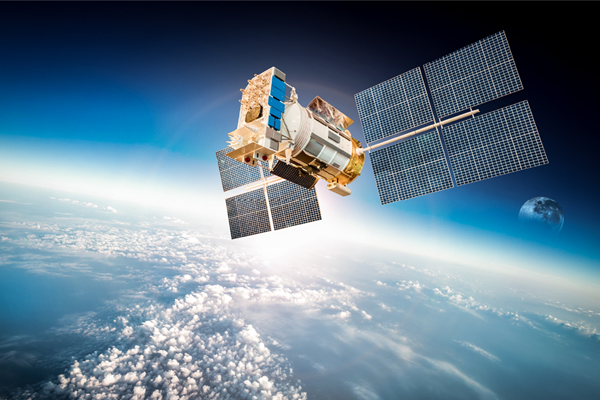
Exail’s Astrix® fiber-optic gyroscopes are integrated across a broad spectrum of global space missions, reflecting their suitability for platforms ranging from CubeSats to large geostationary spacecraft. The gyros support Earth-observation constellations that require stable attitude sensing for imaging and data-collection accuracy, as well as GEO telecommunications satellites where long-term pointing stability is essential for maintaining link quality. Scientific missions make use of the Astrix® units for precision orientation tasks, including astronomy instruments and payloads that require fine-rate measurement over extended durations. The technology is also applied in microsatellite programs, space robotics demonstrations, formation-flying missions, and deep-space exploration, where reliable inertial sensing is critical due to limited access to external navigation cues. This widespread adoption reflects the Astrix® line’s combination of long operational lifetimes, stable measurement characteristics and compatibility with diverse ADCS architectures.
Exail’s Astrix® series of fiber-optic gyroscopes provides a comprehensive inertial-sensing solution for spacecraft ranging from nano-class satellites to large GEO telecom platforms. With variants designed to compact designs (Astrix® NS), integrated IMU needs (NS-IMU), medium-class missions (Astrix® 90), and high-precision long-life spacecraft (Astrix® 200), Exail offers a scalable and flight-proven inertial sensor architecture. The combination of low drift, strong radiation tolerance, thermal stability and long-term reliability makes the Astrix® family a core ADCS component across commercial, defence and scientific missions worldwide.
About Exail
Exail is a European high-technology industrial group headquartered at 30 rue de Gramont, 75002 Paris, France. Exail specializes in producing advanced technologies across multiple domains with maritime and underwater robotics, inertial and navigation sensors, photonics, aerospace solutions and defense-grade systems, addressing the needs of both civilian and governmental clients. The product and service portfolio ranges from unmanned surface and underwater vehicles to inertial navigation systems, specialized optical fibers and airborne/marine navigation hardware. Exail has recorded revenues of approximately €373 million, with activity spread across defense and civil markets, reflecting the dual-use focus and broad technological reach. Through the integrated capabilities from design and manufacturing to system integration and global support, Exail delivers robust, field-qualified solutions worldwide, helping customers tackle complex operational challenges in maritime, aerospace, defense and commercial sectors.