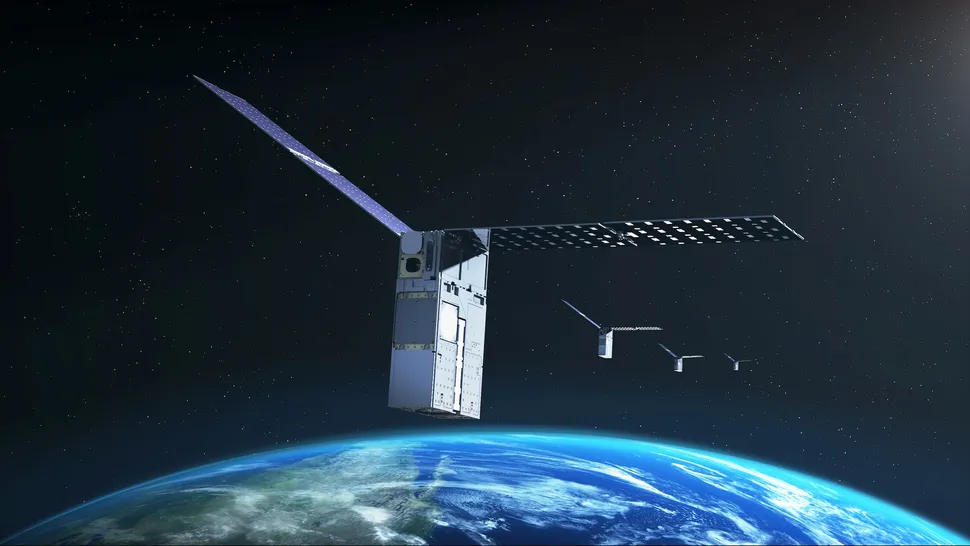
NASA has extended its Starling spacecraft swarm mission through at least 2028 after a successful in-orbit demonstration of a navigation system that allows satellites to determine their position without relying on the Global Positioning System (GPS), marking a significant step toward greater spacecraft autonomy for future lunar and deep-space operations.
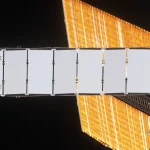
The technology, known as Fast Autonomous Lost-in-space Catalog-based Optical Navigation (FALCON), was tested aboard NASA’s Starling mission, a four-spacecraft CubeSat swarm operating in low Earth orbit. Developed jointly by NASA and Stanford University spinout EraDrive, the system enables spacecraft to estimate their own position by observing other objects in orbit and comparing those observations against an onboard catalog of known space objects.
NASA announced Aug. 17 that the technology demonstration had achieved its objectives, prompting the agency to continue the mission beyond its previously planned end date. According to NASA, the experiment combined EraDrive’s Era-Core flight software and embedded algorithms with Starling’s optical sensors and onboard computing resources to perform autonomous orbit determination without external navigation infrastructure.
Reducing Dependence on GPS in Space
Most spacecraft operating in Earth orbit rely heavily on GPS or ground-based tracking networks to determine their position and trajectory. While GPS signals are routinely used in low Earth orbit, they become increasingly difficult to access at higher altitudes and are unavailable for many deep-space missions. Future exploration architectures involving lunar constellations, distributed science missions, and autonomous spacecraft swarms will require alternative navigation approaches.
FALCON addresses this challenge by using onboard cameras to identify and track other satellites and space objects. By comparing observed objects against a catalog stored onboard, the software can estimate the spacecraft’s orbit without requiring GPS updates or continuous support from ground stations. The approach effectively treats surrounding space objects as navigation references, allowing satellites to operate with greater independence.
NASA officials said the capability could support future lunar satellite swarms, distributed sensor networks, and human exploration missions operating far beyond the reach of traditional terrestrial navigation systems.
Implications for Space Traffic Management
Beyond navigation, the demonstration has implications for space situational awareness and orbital safety.
As low Earth orbit becomes increasingly congested with commercial broadband constellations, Earth observation spacecraft, and government satellites, operators face growing demands for accurate tracking and collision avoidance. Autonomous systems capable of continuously updating their own understanding of surrounding orbital objects could reduce dependence on ground-based tracking infrastructure and improve response times to potential conjunction events.
Roger Hunter, program manager for NASA’s Small Spacecraft and Distributed Systems program at Ames Research Center, said the results could have applications in space-traffic monitoring, collision avoidance, and alternative navigation architectures.
For satellite operators, autonomous orbit determination may also reduce operational costs by decreasing the frequency of ground contacts required for navigation updates. This becomes particularly valuable for large distributed constellations and swarm missions involving dozens or hundreds of spacecraft.
Starling as a Testbed for Distributed Spacecraft Operations
Starling was designed as a technology demonstration mission focused on spacecraft swarms and autonomous operations. The four CubeSats have served as a platform for testing distributed decision-making, inter-satellite coordination, and autonomous networking technologies.
The successful FALCON demonstration adds another capability to a growing portfolio of autonomy technologies being validated in orbit. Such systems are increasingly viewed as essential for future missions in cislunar space, where communication delays and limited navigation infrastructure make continuous human supervision impractical.
From an engineering perspective, demonstrating autonomous navigation on resource-constrained CubeSats is particularly significant. Small satellites have limited power, computing capacity, and sensor payloads compared with traditional spacecraft. Achieving reliable orbit determination using onboard optical observations suggests that similar capabilities could eventually be integrated into larger satellite constellations without substantial hardware additions.
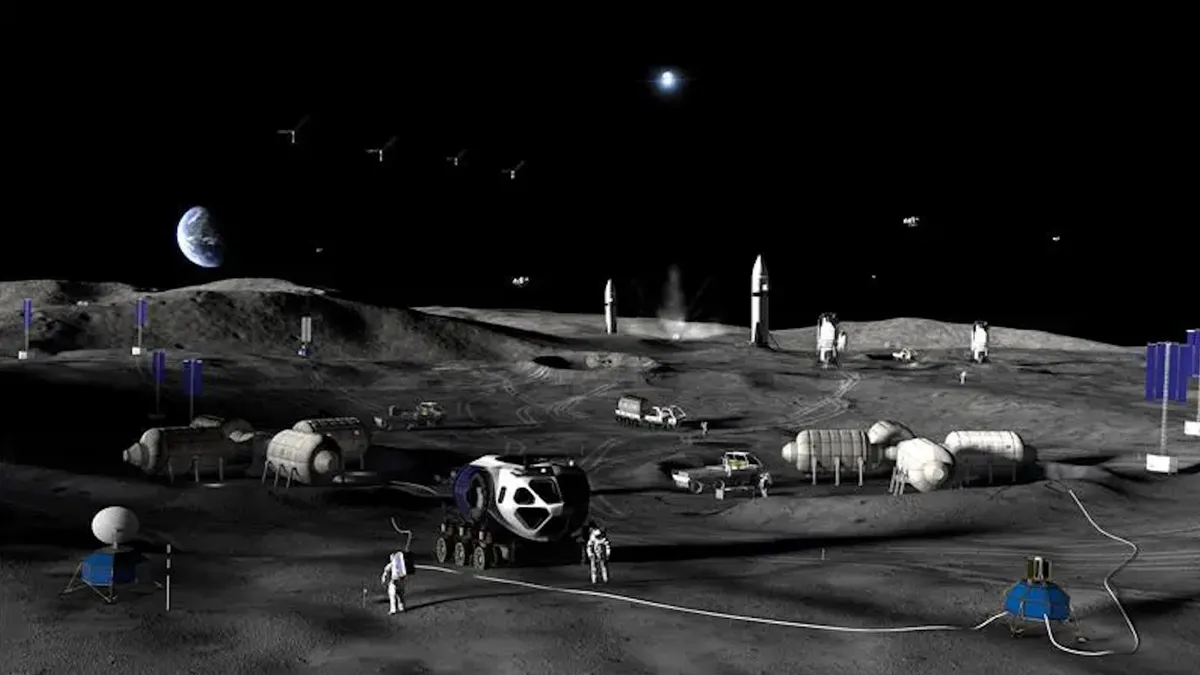
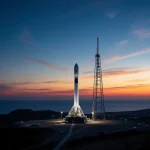
NASA plans a to build a permanent base on the moon over the next decade or so, via a step-by-step approach. (Image credit: NASA)
Part of a Broader Push Toward Autonomous Navigation
The Starling experiment reflects a broader industry effort to develop resilient Positioning, Navigation, and Timing (PNT) capabilities beyond conventional GPS.
U.S. defense organizations have increasingly expressed concern about reliance on a relatively small number of navigation satellites, prompting investment in alternative space-based navigation architectures and autonomous PNT technologies. NASA’s interest is primarily driven by the requirements of future exploration missions, but the underlying technologies have applications across both civil and national security space sectors.
The agency has a long history of developing autonomous navigation systems. Earlier missions such as Deep Space 1 demonstrated optical navigation techniques using celestial objects to determine spacecraft position in deep space. More recently, experimental optical navigation systems have been tested for lunar and interplanetary missions. FALCON extends that heritage by applying autonomous navigation concepts to modern satellite swarms operating in Earth orbit.
Path Toward Lunar and Deep-Space Operations
As governments and commercial operators prepare to deploy communications, navigation, and science spacecraft around the Moon, demand is growing for navigation systems that can function independently of Earth-based infrastructure.
Autonomous optical navigation systems such as FALCON could become a key enabling technology for future cislunar networks, lunar relay satellites, and distributed exploration architectures. By allowing spacecraft to determine their own position using onboard sensors and computing resources, such systems offer a pathway toward more scalable and resilient space operations.
NASA’s decision to extend the Starling mission provides additional time to collect operational data and refine the technology in orbit, potentially accelerating its transition from a demonstration capability to a standard feature of future spacecraft architectures.