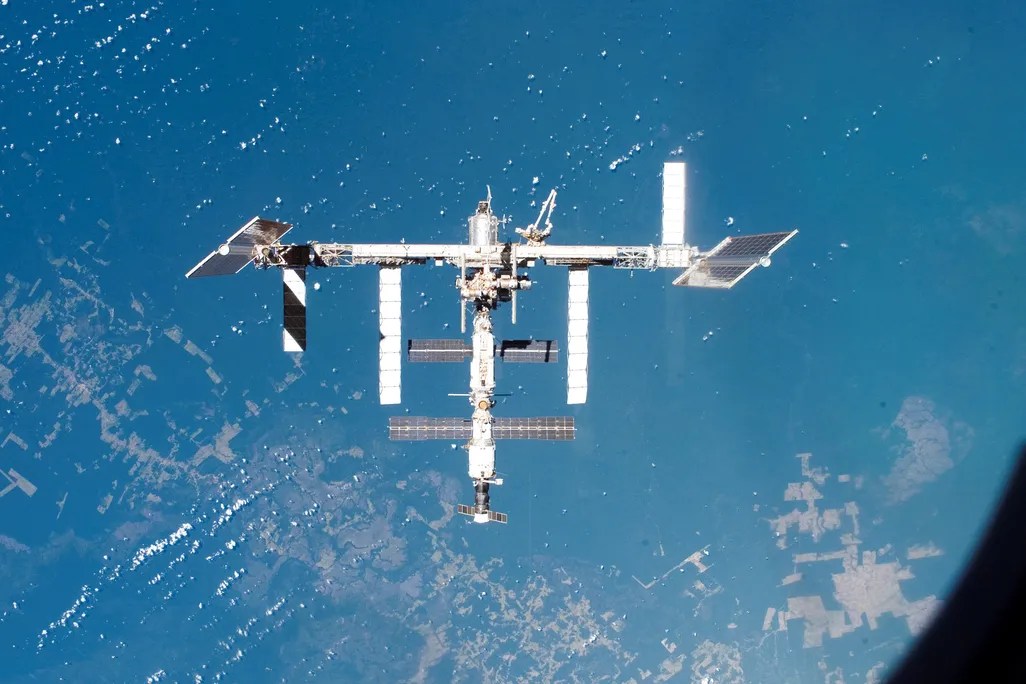
NASA said it will bring SpaceX’s Crew-11 mission back to Earth about a month earlier than planned after a medical situation involving one of the four astronauts aboard the International Space Station (ISS), marking the first medical evacuation from the orbiting laboratory since it began operations.
The U.S. space agency said it would not identify the crew member or disclose details of the medical condition for privacy reasons. The incident occurred on Wednesday and the astronaut is now stable, according to NASA officials.
NASA Administrator Jared Isaacman said the decision to return the crew early does not constitute an emergency deorbit, but was driven by medical limitations aboard the station.
“This was a serious medical condition, but it is not an emergency deorbit,” Isaacman said during a press briefing. “The capability to diagnose and treat this properly does not live on the International Space Station.”
James Polk, NASA’s chief health and medical officer, said the agency concluded further evaluation was best conducted on Earth.
“The medical incident was sufficient enough that we were concerned about the astronaut,” Polk said. “The best way to complete that is on the ground,” where a wider range of diagnostic and treatment tools is available.
Crew-11 includes NASA astronauts Zena Cardman and Mike Fincke, Japan Aerospace Exploration Agency (JAXA) astronaut Kimiya Yui, and Roscosmos cosmonaut Oleg Platonov. The crew launched aboard a SpaceX Dragon spacecraft from NASA’s Kennedy Space Center on Aug. 1, 2025, arriving at the ISS the following day.
NASA said it postponed a scheduled spacewalk on Thursday after the medical issue arose. Following consultations with medical staff and agency leadership, Isaacman said it was in the “best interest of our astronauts” to return Crew-11 to Earth within the coming days.
The early departure is expected to leave only three crew members aboard the ISS for a temporary period. NASA said it is considering moving up the launch of SpaceX Crew-12, currently planned for mid-February, to shorten the gap. During the interim, NASA astronaut Chris Williams will remain on the station alongside two Russian cosmonauts who arrived in late November.
Operating the ISS with a reduced crew could limit scientific activity, according to outside experts.
“That means, basically, the crew members that are there are pretty much just concentrating on making sure the space station can continue to run,” said Don Platt, a space systems expert at the Florida Institute of Technology and a former ISS engineer. “A lot of the science will have to be postponed.”
The early return comes as the ISS recently marked 25 years of continuous human presence, a milestone reached on Nov. 2, 2025.
“It’s amazing that we’ve maintained the ISS for almost 26 years constantly crewed without something like this happening before,” said Jordan Bimm, a historian of U.S. space exploration at the University of Chicago.
NASA said it will continue to coordinate with international partners as it manages crew rotations and medical protocols following the incident.