Los Angeles-based startup Orbital has raised $5 million in a pre-seed funding round to support the development of a space-based computing network aimed at providing artificial intelligence processing capabilities from orbit.
The funding round was led by Speedrun, the startup accelerator operated by Andreessen Horowitz (a16z), and included participation from a broad group of venture capital firms and angel investors, including Basis Set, Human Element, Wayfinder Ventures, Antler, Anti Fund, Ascent Venture Partners, Rubik Ventures, Zero Knowledge Ventures, LYVC, Feld Ventures, New Legacy, FNDR, UpHonest Capital and Asterisk.
The company plans to use the funding to advance development of its orbital data center (ODC) architecture and establish its first satellite manufacturing facility in Los Angeles.
Alternative Approach to Orbital Data Centers
Orbital is entering a rapidly emerging sector focused on deploying computing infrastructure in space to support growing demand for artificial intelligence processing.
Unlike several proposed orbital data center concepts that envision extremely large space platforms, Orbital is pursuing a distributed architecture based on a large network of smaller satellites.
Founder and Chief Executive Officer Euwyn Poon said the company’s approach was shaped by concerns over the complexity and cost of constructing massive orbital facilities.
“When I heard about orbital data centers, I immediately wrote it off,” Poon said.
“Thinking about building a football field size satellite—from a maintenance standpoint, from a stress standpoint, physics standpoint, and the cost of having robots construct the thing in space, that seems like a pipe dream.”
Satellite-Based Computing Network
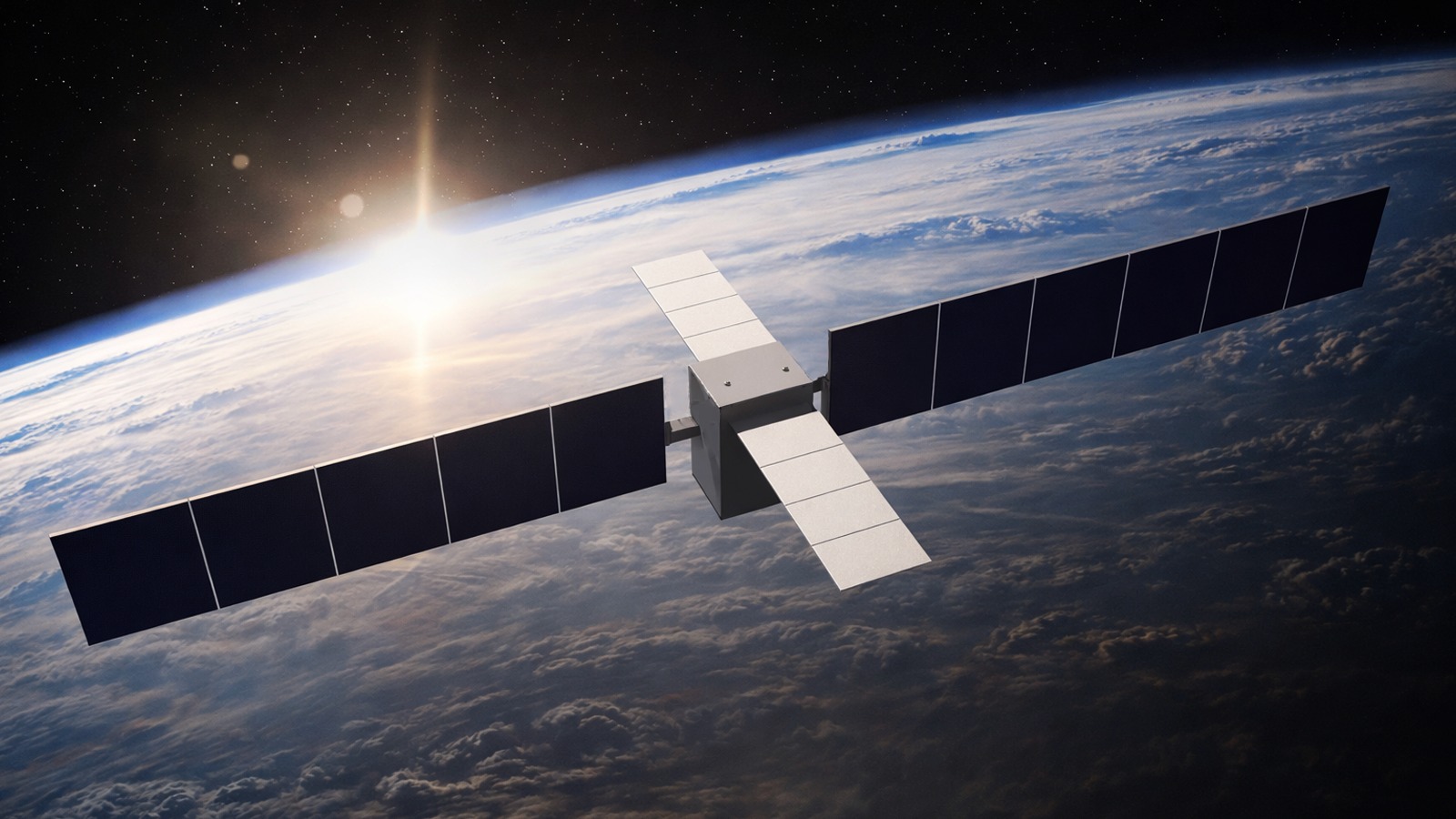
Orbital’s concept relies on a constellation of relatively compact satellites that collectively perform large-scale AI inference workloads while maintaining continuous communications with Earth.
According to the company, each satellite will be approximately the size of a refrigerator and equipped with solar arrays spanning roughly the area of a tennis court.
The satellites are being designed around Nvidia’s Space-1 Vera Rubin GPU architecture and are expected to generate approximately 100 kilowatts of power each.
The spacecraft will be interconnected through optical inter-satellite links, allowing computing tasks to be distributed across the network.
Demonstration Missions Planned
Orbital plans to launch its first demonstration mission in 2027.
The mission will place an Nvidia Blackwell chip aboard a partner satellite to test the company’s thermal management and radiation protection technologies in orbit.
The startup aims to launch its first dedicated spacecraft, known as Orbital-1, in 2028.
Longer term, the company envisions deploying a constellation exceeding 100,000 satellites to create a large-scale orbital computing infrastructure network.
Addressing Future AI Demand
Orbital argues that future growth in artificial intelligence could eventually exceed the practical limitations of terrestrial data center expansion.
According to the company, increasing constraints related to land availability, energy supply and infrastructure development may create demand for alternative computing platforms.
Poon said the challenge facing orbital data center developers is determining the most economically viable approach.
“Our challenge as an industry right now… is to figure out what’s the most economically efficient answer to get to that right product.”
Manufacturing and Automation Strategy
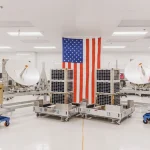
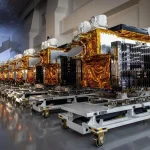
To support its long-term deployment ambitions, Orbital is developing a satellite production facility in Los Angeles.
The company plans to incorporate a high degree of automation into manufacturing processes to reduce costs and increase production volumes.
The announcement highlights growing investor interest in orbital computing and space-based digital infrastructure as companies explore new approaches to supporting future artificial intelligence workloads and data processing requirements.
While significant technical and economic hurdles remain, Orbital joins a growing number of startups seeking to establish computing infrastructure beyond Earth as demand for AI processing capacity continues to expand.