Portugal has signed the Artemis Accords, becoming the latest country to endorse a set of principles aimed at guiding the peaceful and responsible exploration of the Moon, Mars and other destinations beyond Earth, as international interest in lunar missions accelerates.
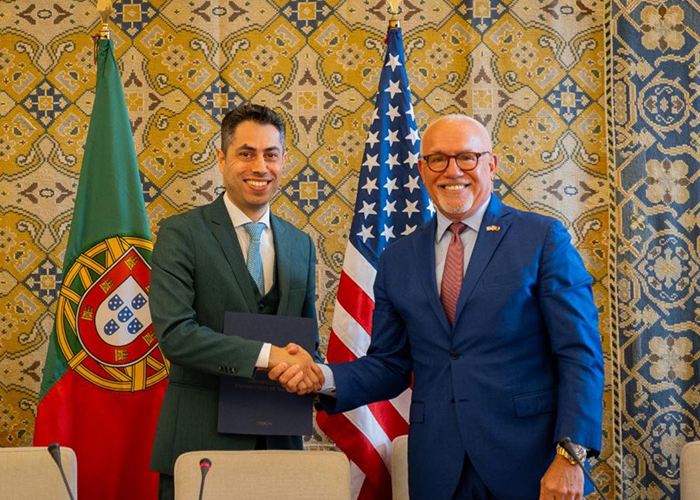
The agreement was signed on Jan. 11 by Portugal’s Secretary of State for Science and Innovation, Helena Canhão, during a ceremony in Lisbon held alongside a bilateral meeting between officials from Portugal and the United States. With Portugal’s entry, the number of signatories to the Artemis Accords has risen to 60.
NASA Administrator Jared Isaacman said Portugal’s participation adds momentum to efforts to establish shared expectations for space activity. “Portugal’s participation strengthens international efforts to establish shared expectations for future activity in space, particularly as interest in lunar exploration continues to grow,” he said.
Launched in 2020 by the United States, the Artemis Accords were initially signed by eight countries and are led by NASA in coordination with the U.S. Department of State. The framework emerged as governments and private companies increased plans for lunar missions, raising questions around coordination, safety and sustainability.
The accords set out non-binding principles covering peaceful exploration, transparency, interoperability, emergency assistance and the open sharing of scientific data. They also address non-interference between missions, the protection of historic sites on the Moon and the development of best practices for sustainable space operations.
Portugal’s space sector has expanded in recent years, including the establishment of the Portuguese Space Agency. Hugo Costa, the agency’s executive director, said the timing of the signing reflects broader developments in human spaceflight. “This moment coincides with a renewed phase of human space exploration, as international partners prepare for a return to the Moon,” he said.
U.S. Ambassador to Portugal John J. Arrigo described the agreement as reinforcing space as a stable and cooperative domain, highlighting the role of shared principles as activity beyond Earth intensifies.
As more countries consider joining, the Artemis Accords are increasingly seen as a common reference point for how nations and their partners may operate in space, particularly as lunar exploration moves from planning stages toward sustained missions and infrastructure development.