Quantum Space has agreed to go public through a merger with special purpose acquisition company (SPAC) Inflection Point Acquisition Corp. VI in a transaction valuing the combined company at approximately $1.2 billion.
The deal includes a $300 million private investment in public equity (PIPE) led by Inflection Point Asset Management and is expected to close in the fourth quarter of 2026. Upon completion, the company is expected to trade on the Nasdaq stock exchange under the ticker symbol “QSPC.”
The proceeds will be used to accelerate production of Quantum Space’s Ranger spacecraft platform and support the development of a planned manufacturing facility in Tulsa, Oklahoma.
Expanding Presence in the Space Mobility Sector
Founded in 2021 and headquartered in Rockville, Maryland, Quantum Space focuses on spacecraft designed to maneuver, refuel, and operate for extended periods in increasingly crowded orbital environments.
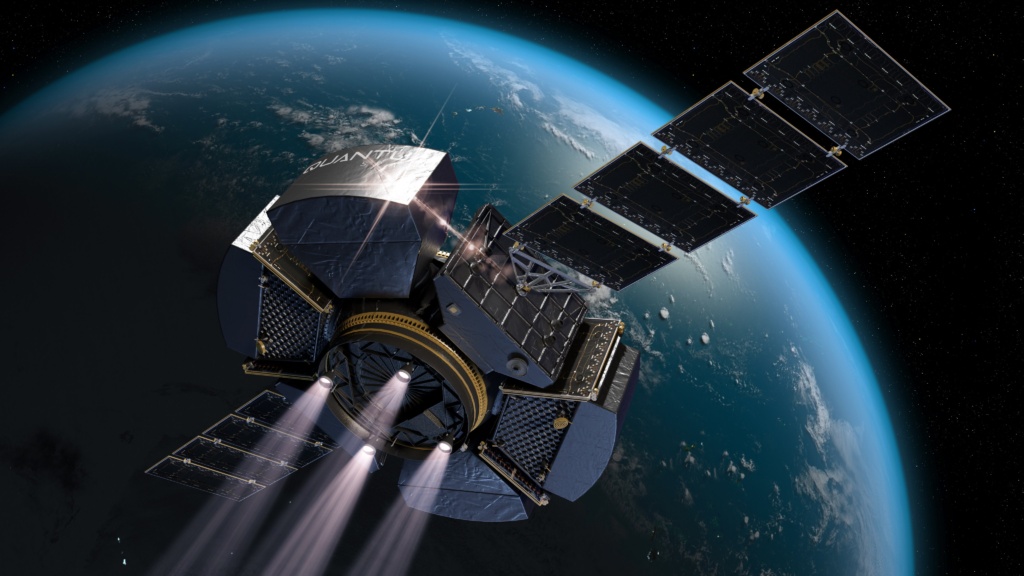
Its flagship Ranger platform is engineered to support missions across low Earth orbit (LEO), medium Earth orbit (MEO), geostationary orbit (GEO), and cislunar space. The spacecraft combines autonomous operations, modular architecture, refueling capability, and a multi-mode propulsion system acquired through the company’s purchase of propulsion specialist Phase Four in September 2025.
Quantum Space says Ranger is designed for mission lifespans of up to 15 years and aims to address growing demand for orbital mobility and servicing capabilities.
Bridenstine Takes the Helm
The company is now led by former NASA Administrator Jim Bridenstine, who was appointed chief executive officer in May 2026. Bridenstine previously led NASA for three years, overseeing the launch of the Artemis lunar exploration program and helping expand partnerships between government agencies and commercial space companies.
Under the leadership transition, former CEO Kerry Wisnosky moved into the role of president.
“We have designed Ranger to satisfy the U.S. Space Force’s Theory of Competitive Endurance — the principle that U.S. spacecraft must be able to manoeuvre, reposition, and persist in orbit under threat,” said Jim Bridenstine, Chief Executive Officer of Quantum Space.
Growing Defense and Government Opportunities
Quantum Space has been expanding its presence in the U.S. national security space sector through contracts and proposals involving the U.S. Space Force, Air Force Research Laboratory, and the Defense Advanced Research Projects Agency (DARPA).
The company is also eligible to compete for task orders under the U.S. Space Force’s Andromeda program, a $6.2 billion initiative focused on developing maneuverable and refuelable spacecraft for geostationary orbit operations.
The growing emphasis on space resilience and orbital mobility has attracted increasing government investment as military and commercial operators seek greater flexibility in orbit.
Founded by Veteran Space Entrepreneur
Quantum Space was founded by Kam Ghaffarian, the entrepreneur behind several prominent aerospace and energy ventures including Axiom Space, Intuitive Machines, X-energy, and SGT, a NASA contractor that was acquired by KBR for $355 million.
“I founded Quantum Space to build a company I believe the United States needs to lead in this contested era,” said Kam Ghaffarian, Founder and Executive Chairman of Quantum Space.
The company has previously raised approximately $80 million in Series A funding and is positioning itself as a key player in the emerging space mobility market.
Competitive Landscape Intensifies
Quantum Space enters a rapidly expanding sector where companies are racing to develop orbital servicing, transportation, and maneuverability technologies.
Among its competitors, True Anomaly raised $650 million earlier this year at a reported valuation of $2.2 billion, while Impulse Space has secured more than $500 million in funding and accumulated a growing contract backlog. Northrop Grumman remains a major player in satellite servicing through its Mission Extension Vehicle program.
Unlike traditional satellite manufacturers or launch providers, Quantum Space is focusing on spacecraft designed to provide long-duration mobility, servicing, and mission flexibility as orbital activity continues to increase.
Market Opportunity
Industry analysts increasingly view space mobility as a critical component of future space infrastructure. Rising satellite deployments, growing commercial activity, and increasing geopolitical competition in orbit are driving demand for spacecraft capable of repositioning, refueling, and supporting other assets.
The Andromeda program and broader U.S. Space Force investments underscore the strategic importance of orbital mobility technologies.
With its planned Nasdaq listing, Quantum Space aims to secure the capital necessary to scale production and compete in a market that is becoming increasingly important to both commercial operators and national security customers.