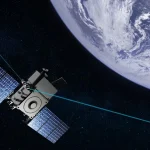
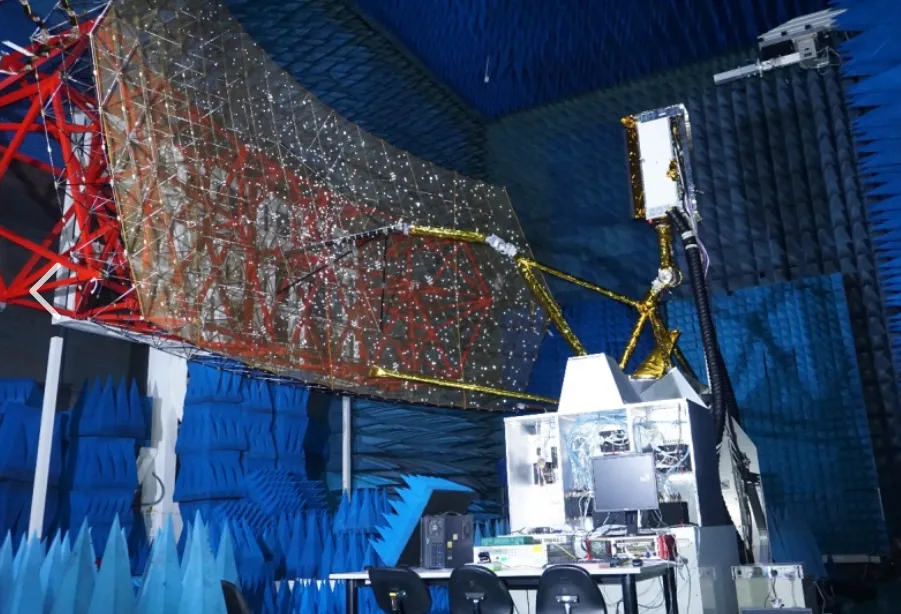
Advances in phased-array radar and synthetic aperture radar (SAR) technologies are not only enhancing Earth observation capabilities but are also becoming a cornerstone of low-Earth-orbit (LEO) broadband communications satellites. A satellite’s phased-array antenna is essentially a phased-array radar operating in communication frequencies. Key radar technologies such as rapid beam steering, parallel subarray operation, and grating lobe suppression directly determine satellite communication throughput and inter-satellite link performance.
For a mega-constellation such as GW, mass production of operational satellites cannot begin immediately. Space programs traditionally follow a “test-first” approach, making technology demonstration satellites an essential precursor to large-scale deployment. By conducting on-orbit validation with a limited number of test satellites, engineers can evaluate phased-array antennas, communications payloads, orbital control systems, and inter-satellite links, identify design shortcomings, and collect real-world spaceflight data before finalizing the configuration of production satellites.
Several major state-owned aerospace organizations and commercial space companies in China have already been tasked with developing GW test satellites. These organizations are expected to become the backbone of future constellation deployment efforts.
China Academy of Space Technology (CAST)
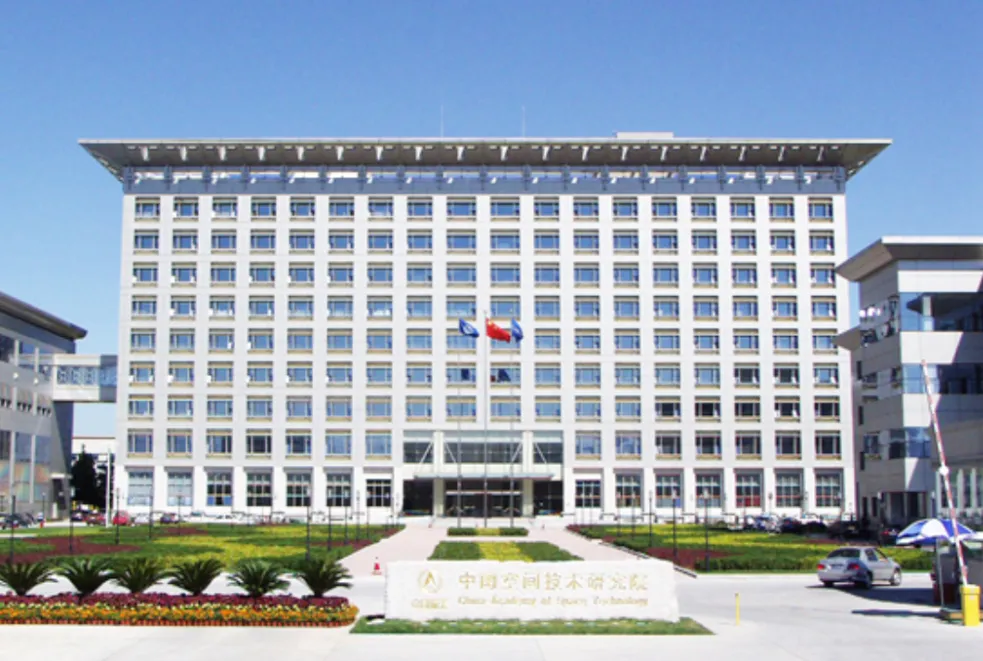
Established in 1968, the China Academy of Space Technology is widely regarded as China’s flagship satellite developer. Under the leadership of its first president, Qian Xuesen, CAST developed Dong Fang Hong-1, China’s first artificial satellite. The launch date of that mission, April 24, was later designated as China Space Day.
CAST possesses end-to-end spacecraft development capabilities, covering system design, subsystem development, assembly, testing, and ground applications. Its portfolio spans human spaceflight, deep-space exploration, navigation, and Earth observation missions, with platforms ranging from large spacecraft to microsatellites.
CAST has conducted two major GW-related test satellite launches:
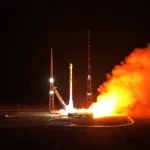
- On July 9, 2023, a Long March 2C rocket with a Yuanzheng-1S upper stage launched Satellite Internet Technology Test Satellites No. 1 and No. 2 from Jiuquan. The satellites entered near-circular orbits at approximately 1,100 km altitude with an inclination of 86.5 degrees.
- On December 30, 2023, another Long March 2C/Yuanzheng-1S mission launched the Inclined Orbit Test Satellite Group 04 A/B/C satellites into near-circular orbits at around 1,104 km altitude and roughly 50 degrees inclination.
The two orbital regimes were selected to evaluate payload performance, including phased-array antennas, under different constellation orbital planes.
Shanghai Academy of Spaceflight Technology (SAST)

Founded in 1961, the Shanghai Academy of Spaceflight Technology is one of China Aerospace Science and Technology Corporation’s three major system design institutes. It is among the few organizations in China that simultaneously develops launch vehicles, satellites, spacecraft, and defense systems.
SAST has established an integrated innovation model combining technology development, manufacturing, and applications. Leveraging mature satellite platforms and large-scale production capabilities, it aims to reduce manufacturing costs while creating value through downstream data applications.
On November 23, 2023, a Long March 2D rocket with a Yuanzheng-3 upper stage launched the Xingwang Inclined Orbit Test Satellite Group 02 A/B/C satellites from the Xichang Satellite Launch Center. The satellites were jointly developed by SAST and the Innovation Academy for Microsatellites.
Operating in near-circular orbits at approximately 1,100 km altitude and 49.96 degrees inclination, the satellites are being used to assess overall spacecraft performance, communications payloads, and phased-array antenna operations in inclined-orbit environments.
Innovation Academy for Microsatellites (Microsat)
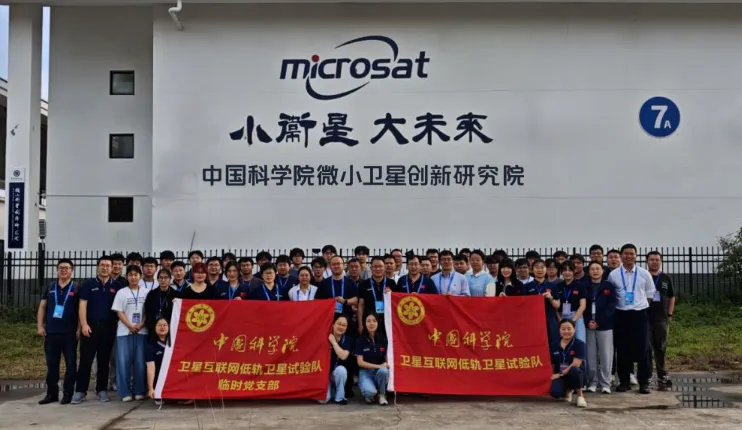
The Innovation Academy for Microsatellites, under the Chinese Academy of Sciences, is China’s third national-level organization with complete satellite development capabilities. Originating from the Academy’s Small Satellite Engineering Center, it was formally established in 2003 and focuses on small, micro, nano, and pico satellite technologies.
The academy operates a multi-site industrial base that includes:
- A Lingang assembly facility capable of handling dozens of ton-class satellites simultaneously.
- A Zhangjiang testing center focused on structural and space environment testing.
- A Songjiang manufacturing plant equipped with pulse production lines designed for constellation-scale production, with a planned annual capacity of up to 300 small satellites.
On December 6, 2023, a Jielong-3 rocket launched the Xingwang Inclined Orbit Test Satellite Group 03 satellite from a sea-based platform. The satellite entered a near-circular orbit at approximately 1,110 km altitude and 86.5 degrees inclination, where it has been used to validate phased-array beam management and communications link technologies in a polar-orbit scenario.
GalaxySpace
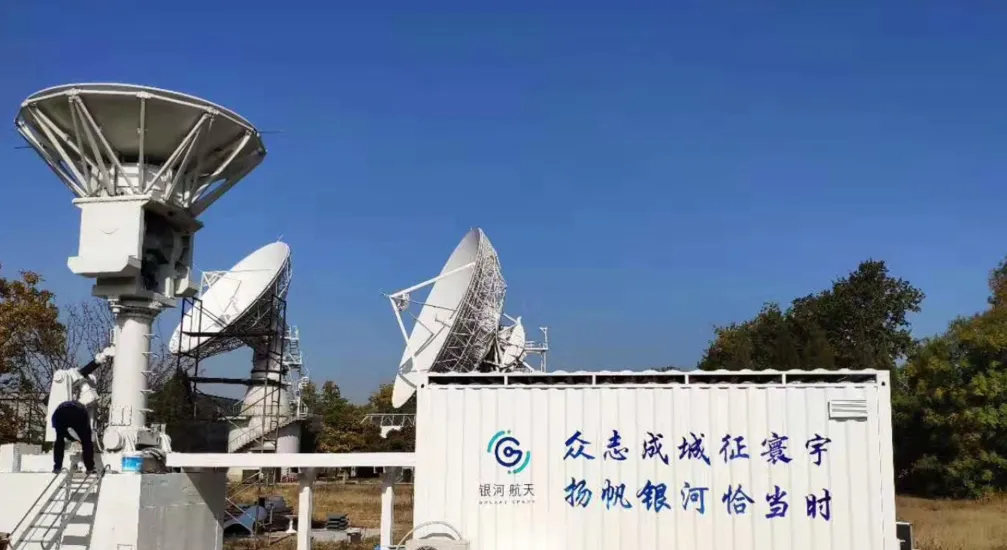
GalaxySpace is one of China’s leading commercial space companies. Founded in 2018 by former Cheetah Mobile president Xu Ming, the company focuses on LEO broadband communications satellites and has independently developed satellite platforms, communications payloads, phased-array antennas, and core onboard equipment.
Its product portfolio includes flat-panel satellite platforms across multiple mass classes. Beyond broadband communications, the platforms can support SAR remote sensing, navigation augmentation, and spectrum sensing missions, enabling end-to-end delivery from individual components to complete satellites.
GalaxySpace’s GW-related test satellite activities include:
- On November 30, 2024, a Long March 12 rocket launched a satellite internet technology test satellite developed by GalaxySpace from the Hainan Commercial Space Launch Site. The spacecraft entered an orbit at approximately 1,000 km altitude with a 50-degree inclination.
- On April 1, 2025, a Long March 2D rocket launched Test Satellites 0001–0004 from the Jiuquan Satellite Launch Center. Several of the satellites were jointly developed by GalaxySpace and Chang Guang Satellite Technology. Some entered low-inclination orbits at around 450 km altitude to explore communications architectures at lower orbital altitudes.
Chang Guang Satellite Technology
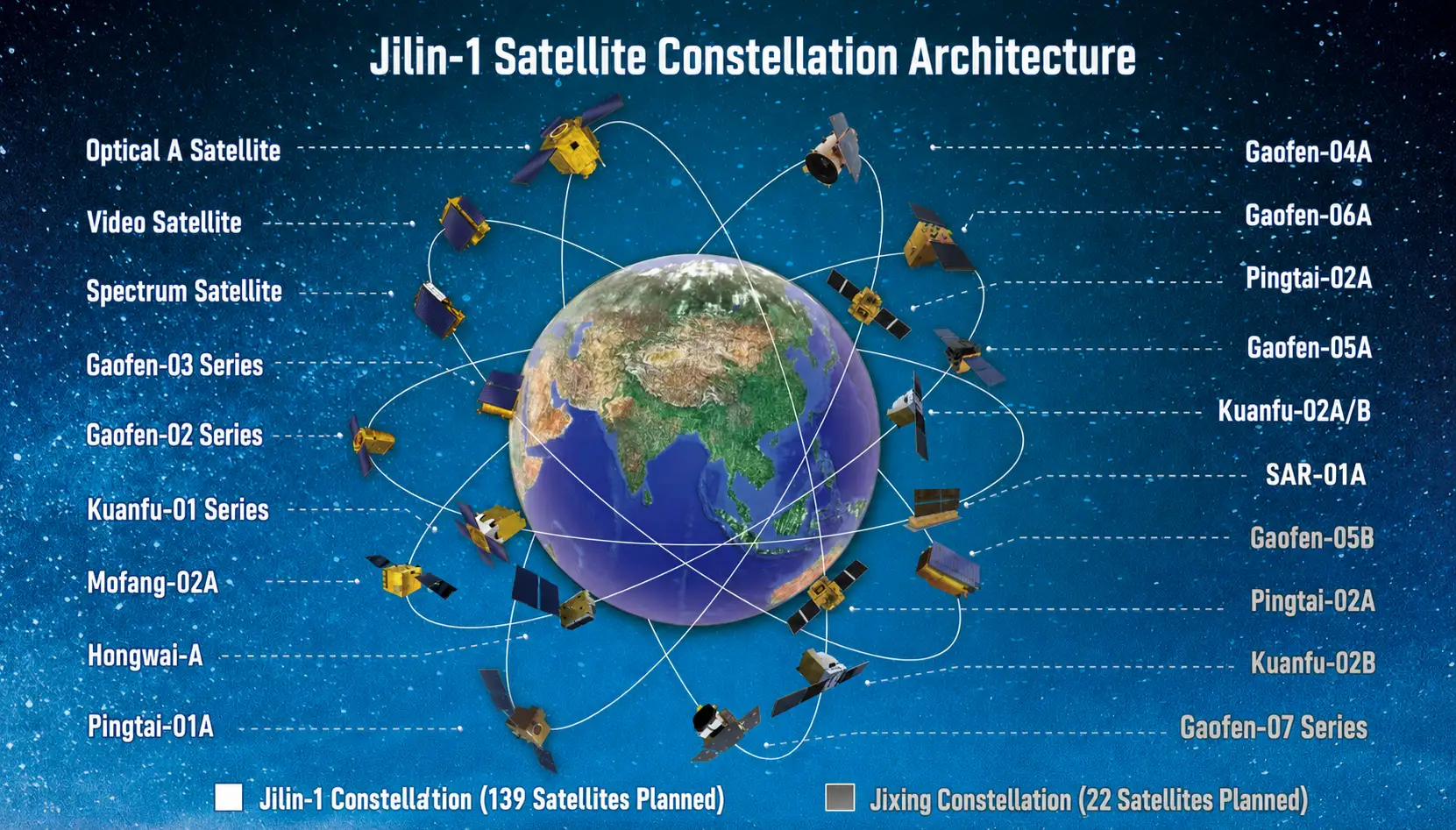
Chang Guang Satellite Technology is best known for operating the Jilin-1 remote sensing constellation. As China’s first commercial remote sensing satellite company, it has established a complete value chain encompassing satellite manufacturing, on-orbit operations, and remote sensing information services.
Leveraging the optical technology heritage of the Changchun Institute of Optics, Fine Mechanics and Physics, the company has built one of China’s largest commercial remote sensing constellations.
The company joined the GW test satellite effort on April 1, 2025, when it partnered with GalaxySpace to develop Test Satellites 0001–0004.
Some satellites in the batch operate at altitudes near 410 km, providing an alternative orbital validation pathway for future broadband internet constellations. The project also reflects a broader trend toward more versatile commercial satellite platforms, where expertise accumulated in optical remote sensing and SAR systems is increasingly being applied to communications satellite development.
Next Phase of Development
China’s GW constellation testing phase highlights growing collaboration between state-owned aerospace organizations and commercial space companies. Test satellites have been deployed across multiple orbital configurations, including 50-degree inclined orbits, 86.5-degree near-polar orbits, and altitudes ranging from roughly 400 km to 1,100 km.
Many of the technologies familiar to the radar industry—such as phased-array beam control and anti-interference techniques—are also central to LEO communications satellites. Data gathered from on-orbit demonstrations will continue to drive improvements in phased-array antennas, inter-satellite links, thermal control systems, power systems, and spacecraft platforms.
Each successful test mission lays the groundwork for the thousands of satellites that will eventually make up the GW constellation. Once the technology validation phase is complete, the program is expected to move into large-scale deployment.