
Tag: Asteroid Belt
-
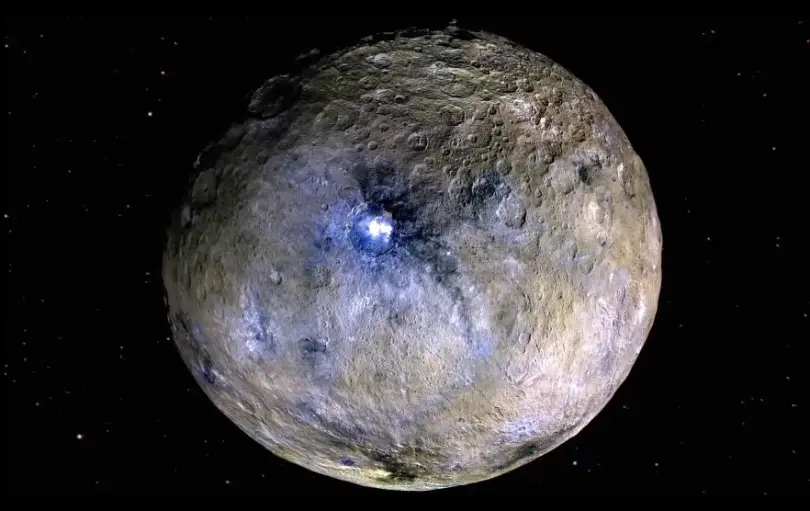
Data from NASA’s Dawn reveals chemical energy source on Ceres
Using data from NASA’s now-retired Dawn spacecraft, scientists have found that Ceres, a dwarf planet and the largest object in the asteroid belt, may have once had a lasting source of chemical energy. The Dawn data revealed evidence of molecules needed to fuel microbial metabolisms on Ceres. While the finding doesn’t confirm that microorganisms existed…
-

NASA’s Dawn spacecraft runs out of fuel in the asteroid belt
NASA’s Dawn spacecraft ran out of fuel Wednesday and stopped transmitting to Earth, ending an 11-year mission that explored the two largest objects in the asteroid belt and set several records in the annals of space history. Dawn failed to contact controllers at NASA’s Jet Propulsion Laboratory in California during an overnight communications opportunity late…
-
Scientists thrilled with closer views of Ceres’ famous salty crater
This mosaic of a prominent mound located on the western side of Cerealia Facula was obtained by NASA’s Dawn spacecraft on June 22, 2018, from an altitude of about 21 miles (34 kilometers). Credit: NASA/JPL-Caltech/UCLA/MPS/DLR/IDA Fresh pictures from NASA’s Dawn spacecraft have provided the sharpest glimpse yet of the bright salt deposits discovered inside a…
-
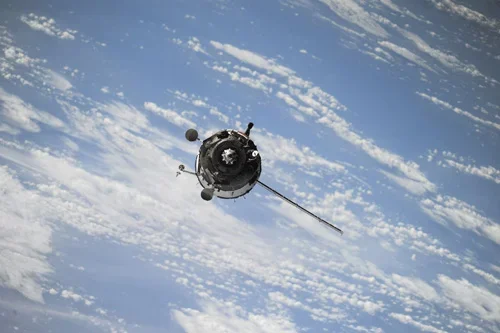
NASA’s Dawn mission gears up for close look at Ceres
This artist concept shows NASA’s Dawn spacecraft above dwarf planet Ceres, as seen in images from the mission. Credits: NASA/JPL-Caltech/UCLA/MPS/DLR/IDA NASA’s Dawn spacecraft will remain at Ceres for the rest of its mission, heading closer to the asteroid belt’s largest resident than ever before to obtain new measurements of ice, salts and a tenuous intermittent…
-
Dawn mission managers await NASA decision on spacecraft’s future
Artist’s concept of the Dawn spacecraft with one of its ion engines firing. Credit: NASA/JPL-Caltech The future of NASA’s Dawn spacecraft, running low on hydrazine fuel and now flying around the dwarf planet Ceres without the help of internal pointing wheels, will be decided in the coming weeks by top space agency managers. Scientists have…
-
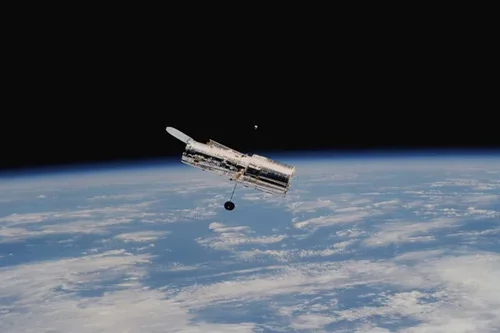
NASA publishes tantalizing close-ups of dwarf planet Ceres
This image from NASA’s Dawn spacecraft shows Kupalo Crater, one of the youngest craters on Ceres. The crater has bright material exposed on its rim and walls, which could be salts. Its flat floor likely formed from impact melt and debris. Kupalo, which measures 16 miles (26 kilometers) across and is located at southern mid-latitudes,…
-
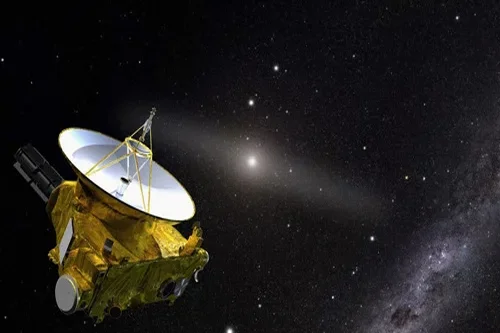
NASA publishes tantalizing close-ups of dwarf planet Ceres
This image from NASA’s Dawn spacecraft shows Kupalo Crater, one of the youngest craters on Ceres. The crater has bright material exposed on its rim and walls, which could be salts. Its flat floor likely formed from impact melt and debris. Kupalo, which measures 16 miles (26 kilometers) across and is located at southern mid-latitudes,…
-
With widespread salts and ices, Ceres in a class of its own
The dwarf planet Ceres turns out to be a world with untold wonders, with vivid bright spots likely made of dried mineral salts and hazes apparently triggered by daytime heating, drawing a comparison to comets and strikingly differentiating it from neighboring bodies in the asteroid belt, according to the latest results from NASA’s Dawn mission.…
-
Dawn gets better look at bright spots on Ceres
This image taken by NASA’s Dawn spacecraft, shows Occator crater on Ceres, home to a collection of intriguing bright spots. Credit: NASA/JPL-Caltech/UCLA/MPS/DLR/IDA NASA’s Dawn spacecraft, nearly halfway through its exploration of the dwarf planet Ceres, has returned its best images yet of a mysterious grouping of bright spots inside a crater on the Texas-sized world,…