
Tag: Chandra X-ray Observatory
-
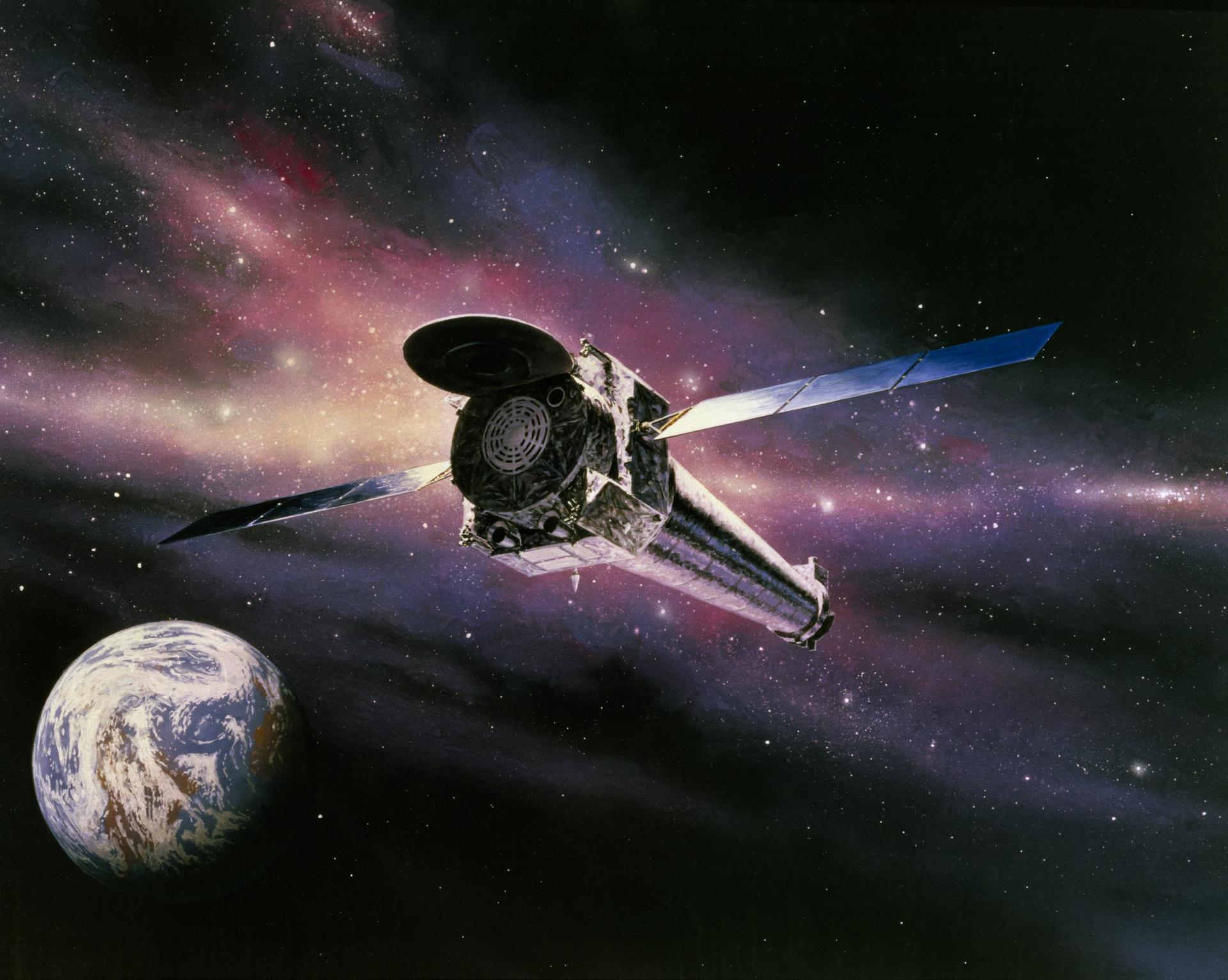
“Not a bluff”—NASA’s budget would shut down long-lived Chandra telescope
NASA launched the Chandra X-ray Observatory 25 years ago this week, opening a new eye on the Universe and giving astronomers vision into unimaginably violent cosmic environments like exploding stars and black holes. But Chandra’s mission may soon end as NASA’s science division faces a nearly billion-dollar budget shortfall. NASA says it can no longer…
-
After encountering glitches, Hubble and Chandra space telescopes make recoveries
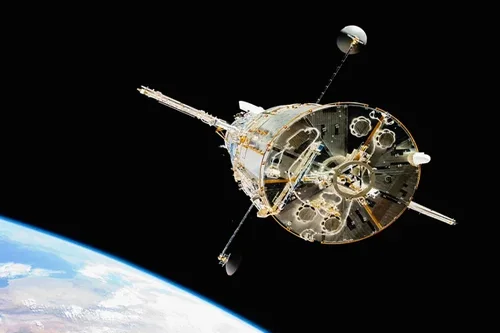
The Hubble Space Telescope hangs in orbit after a 2002 servicing mission. (NASA Photo) Things are looking up for two of NASA’s Great Observatories, the Hubble Space Telescope and the Chandra X-Ray Observatory. Both telescopes had to go out of service this month due to different types of problems experienced by their gyroscopic pointing systems.…
-
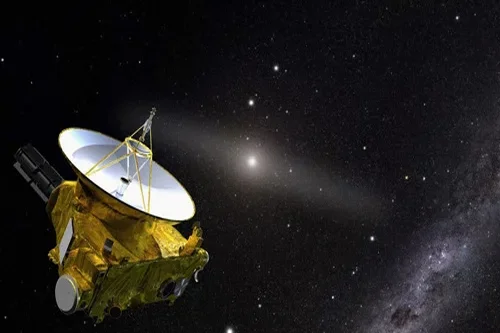
Chandra X-ray telescope is back at work: Engineers trace glitch to 3 seconds of error
An artist’s conception shows the Chandra X-Ray Observatory. (NASA / CXC / SAO Illustration) NASA’s 19-year-old Chandra X-ray Observatory has been returned to its normal pointing mode after a data glitch forced a five-day outage, NASA said today. The bus-sized spacecraft went into safe mode on Oct. 10, bringing science observations to a halt. The…
-
Chandra X-ray telescope experiences a glitch; Hubble troubleshooting continues
An artist’s conception shows the Chandra X-ray Observatory. (NASA / CXC / SAO Illustration) Even as experts worked on ways to get the Hubble Space Telescope back doing science, another one of NASA’s Great Observatories in space — the Chandra X-ray Observatory — went into safe mode as well. NASA said the 19-year-old X-ray telescope put…
-

Andromeda Galaxy gets photobombed by a couple of monster black holes farther out
A combination of X-ray and optical imagery shows the black hole pair known as J0045+41 glowing amid the much closer stars of the Andromeda Galaxy. (X-ray: NASA / CXC / UW / Dorn-Wallenstein et al. Optical: NASA / ESA / J. Dalcanton et al. and R. Gendler) It turns out that even galaxies can be…