
Tag: James Webb
-
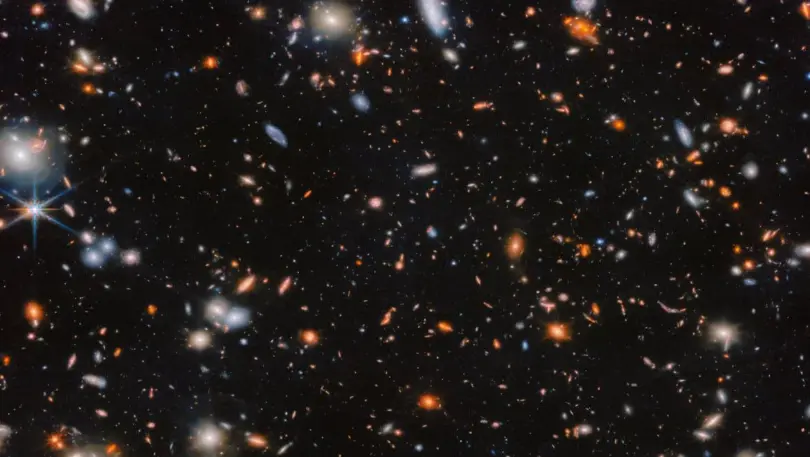
Webb discovers rapidly growing black hole in the very early universe
Using the joint NASA/European Space Agency/Canadian Space Agency James Webb Space Telescope, a group of astronomers has discovered a supermassive black hole within the distant galaxy CANUCS-LRD-z8.6. The galaxy is among the farthest ever observed, with Webb imaging it as it was just 570 million years after the Big Bang. CANUCS-LRD-z8.6 is a part of…
-
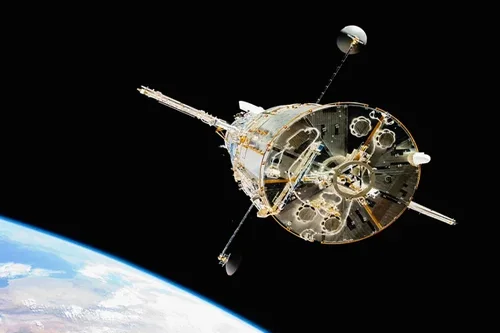
Wide-field surveys versus precise infrared observations: how Rubin compares to JWST
Earlier this year, the new Vera C. Rubin Observatory in Chile officially began scientific operations, becoming the world’s largest and most advanced ground-based telescope. Featuring an eight-meter primary mirror and the world’s largest camera, Rubin promises to deliver exceptional new results and astrophysical research opportunities for scientists worldwide. Meanwhile, situated at the L2 Lagrange point…
-
Webb, Keck observe Titan; find clouds and carbon molecule in northern hemisphere
By combining data from the Keck II telescope and the joint NASA/European Space Agency/Canadian Space Agency James Webb Space Telescope, a group of scientists observed cloud convection in the northern hemisphere of Saturn’s moon Titan — the first time such atmospheric activity has been observed in the region. A majority of Titan’s methane lakes and…
-
Webb identifies surprising carbon-rich ingredients around young star
Using the joint NASA, European Space Agency (ESA), and Canadian Space Agency (CSA) James Webb Space Telescope, a team of international scientists studied a disk of cosmic material surrounding an extremely low-mass star. The results from the investigation show the richest hydrocarbon chemistry ever observed within a protoplanetary disk, which is a disk of gas,…
-
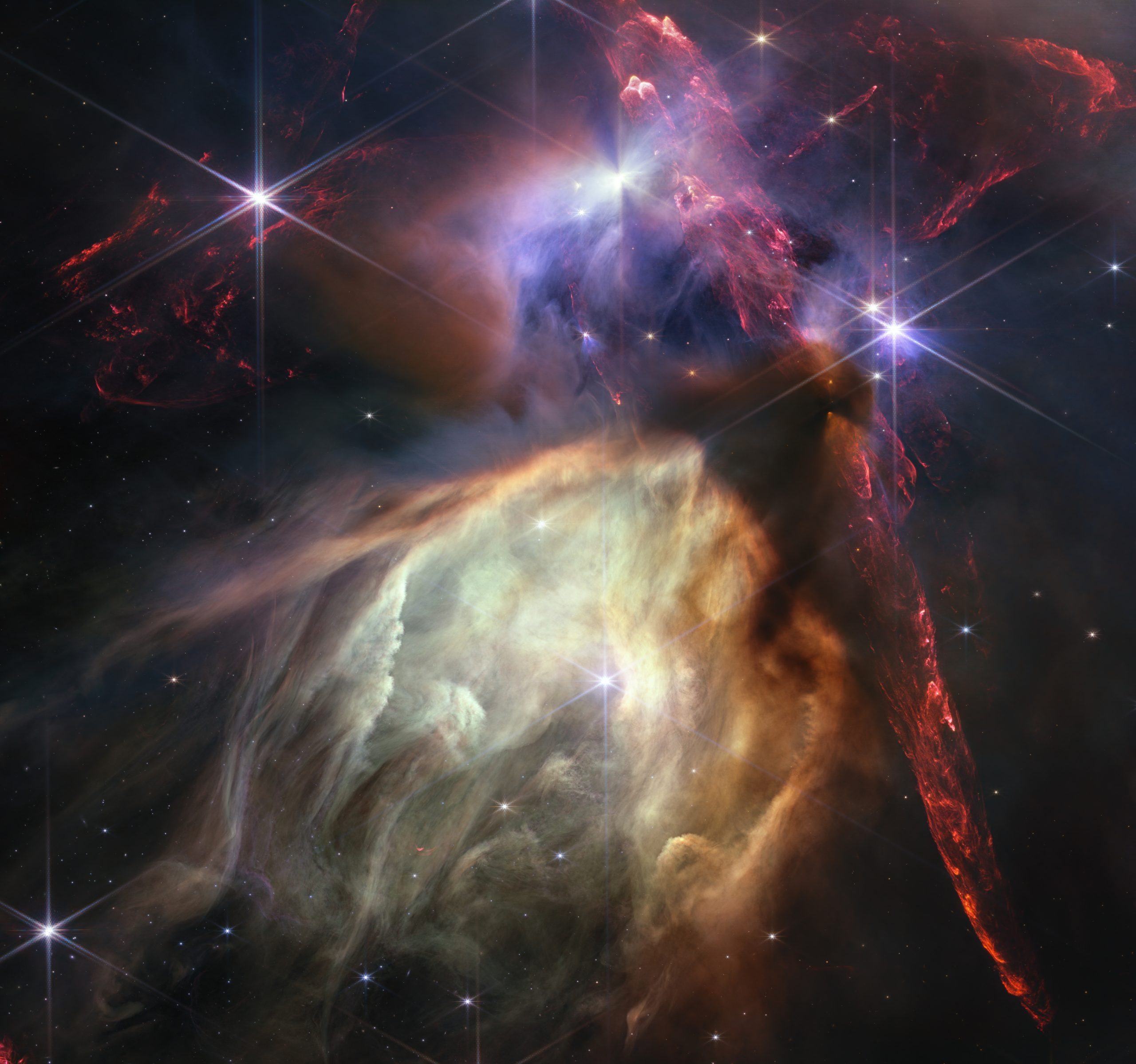
How the Webb and Gaia missions bring a new perspective on galaxy formation
In a feat of galactic archeology, astronomers are using ever more detailed information to trace the origin of our galaxy—and to learn about how other galaxies formed in the early stages of the Universe. Using powerful space telescopes like Gaia and James Webb, astronomers are able to peer back in time and look at some…
-
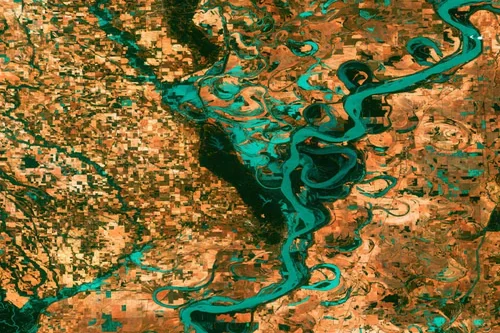
Scientists, using Webb, discover water vapor within a planet-forming disk
Using the joint NASA/European Space Agency/Canadian Space Agency James Webb Space Telescope, a team of scientists has discovered, for the first time, water vapor within a planet-forming disk. The water vapor, which was found within the inner disk of two circumstellar disks around star PDS 70, is allowing scientists to research the ways by which…
-
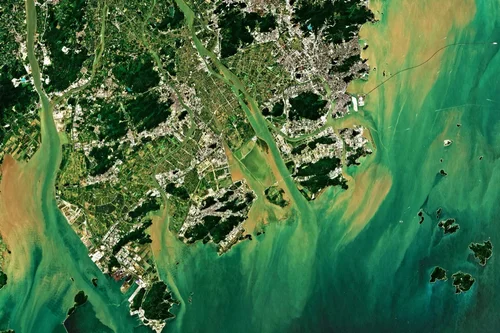
Using Hubble, researchers accidentally discover ejected black hole forcing star creation
Throughout the universe, supermassive black holes can typically be found at the center of massive galaxies that stretch tens of light years across. However, using Hubble, a team of researchers has discovered a supermassive black hole that appears to have been ejected from its galaxy. The black hole, which is around 20 million times more…
-
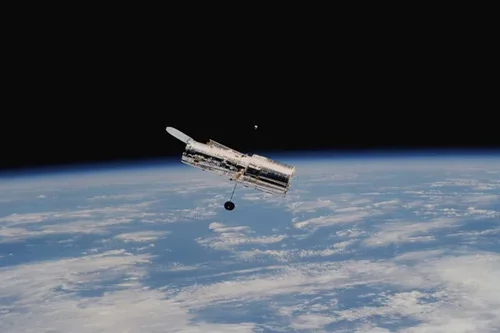
James Webb Space Telescope fully deploys, Northrop Grumman marks sunshield success
At 18:17 UTC on January 8, 2022, the joint NASA, ESA (European Space Agency), and CSA (Canadian Space Agency) James Webb Space Telescope (JWST) successfully deployed the starboard wing of its massive 6.5-meter mirror — marking the end of the observatory’s intense and critical deployment sequence. The feat capped an impressive series of engineering accomplishments,…
-
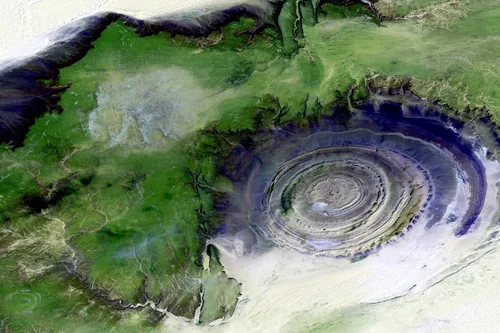
James Webb Space Telescope en route to L2; deployment sequence underway
Following a launch on December 25 atop an Arianespace Ariane 5 rocket, the joint NASA/ESA/CSA James Webb Space Telescope is currently traveling toward the Sun-Earth Lagrange Point 2 (L2), where it is expected to orbit and perform future science observations. Liftoff occurred at 12:20 UTC from the ELA-3 launch complex at the Guiana Space Centre…
-
NASA, ESA, CSA successfully launch the historic James Webb Space Telescope
It is a mission more than 25 years in the making. The revolutionary JWST (James Webb Space Telescope)—a partnership between NASA, the ESA (European Space Agency), and the CSA (Canadian Space Agency)— has launched atop its Ariane 5 rocket from launchpad ELA-3 at the Guiana Space Centre in South America. Liftoff of James Webb occurred…