
Tag: LEO
-

Telesat and MDA Space Achieves Major Milestone for Lightspeed Constellation
Telesat, one of the world’s largest and most innovative satellite operators, and MDA Space, a trusted mission partner to the rapidly expanding global space industry, announced that they have concluded a key phase in the Telesat Lightspeed low Earth orbit (LEO) constellation program with the successful completion of the spacecraft Preliminary Design Review (PDR). The…
-
True Anomaly Successfully Launches and Operates Jackal Satellite in Mission X-2
True Anomaly Inc., the defense technology company developing advanced space superiority systems, announced the successful launch and command and control of its Jackal spacecraft. Nine months after its first flight test, the company’s Jackal AOV was successfully deployed into orbit as part of SpaceX’s Bandwagon-2 rideshare mission from Vandenberg Space Force Base, CA. Mission X-2…
-

Vast Partners With SpaceX to Launch Two Human Spaceflight Missions to the ISS
Vast, the pioneering space habitation technology company building Haven-1, which is expected to become the world’s first commercial station when it launches in 2025, announced that SpaceX’s Falcon 9 rocket will launch up to two Dragon missions to the International Space Station (ISS) in support of Vast’s future bid for NASA’s private astronaut missions (PAM).…
-

Eutelsat Selects Airbus to Build 100 Satellites for OneWeb LEO Constellation Expansion
Eutelsat Group has selected Airbus Defence and Space to build the extension of its OneWeb low Earth orbit (LEO) constellation. Under a contract signed between the two companies, Airbus will build the first batches of the extension, totaling 100 satellites, with delivery targeted at the end of the calendar 2026, ensuring continuity and enhancement of…
-

K2 Space Secures $60M STRATFI Contract for Key MEO Satellite Mission
K2 Space, a team of experts developing large, high capability satellites at the price point and speed of small satellites, has signed a contract with the U.S. Space Force to launch its first Mega Class satellite on a mission code-named “Gravitas.” The contract, with a total value of $60 million, includes government funds, Small Business Innovation…
-

Axiom Space Revises Module Plans to Expedite Independent Axiom Station by 2028
Axiom Space announced that it is revising the Axiom Station module sequence to enable its commercial space station to become an independent orbital platform as early as 2028. Revising the order in which modules will attach to the International Space Station allows Axiom Station to operate as a free-flyer about two years earlier than planned,…
-

Momentus Partners with SpaceX to Deploy Commercial Payloads on Rideshare Mission in 2026
Momentus, a U.S. commercial space company offering satellite buses, technologies, transportation, and other in-space infrastructure services, announced it has signed a contract with SpaceX to join an upcoming Transporter rideshare mission launching as soon as early 2026. Momentus plans to use this port for the launch of its flight-proven Vigoride Orbital Service Vehicle (OSV) to…
-
Trending Satellite On-Board Computers in 2024
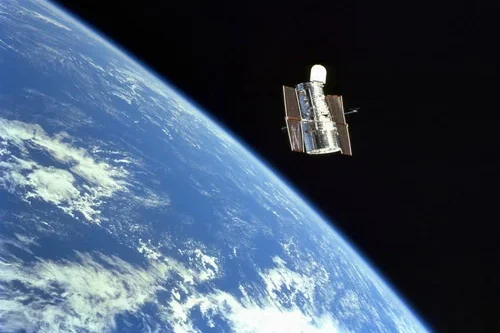
Satellite on-board computers (OBCs) are the central processing units within a satellite that manage and control its operations. They execute software to handle tasks such as communication with ground stations, data processing, system monitoring, and coordination of subsystems like propulsion, power, and attitude control. Designed for reliability in harsh space environments, OBCs ensure the satellite…
-

SES-Led SpaceRISE Consortium to Deliver European Union’s IRIS2 Connectivity System
SES S.A. announces that the SpaceRISE consortium, led by SES, has signed the Concession Contract with the European Commission to design, deliver, and operate the innovative, multi-orbit IRIS2 sovereign connectivity system for 12 years, with the network expected to provide services from the beginning of 2030. Infrastructure for Resilience, Interconnectivity, and Security by Satellite (IRIS2)…
-
Trending GNSS Receivers in 2024
GNSS Receivers are essential instruments in satellite and space applications, engineered to receive and process signals from Global Navigation Satellite Systems (GNSS) such as GPS, Galileo, GLONASS, and BeiDou. These receivers provide precise positioning, navigation and timing (PNT) data, satellite operations, orbital determination, and mission planning. Integral to satellite-based systems, GNSS receivers enable autonomous orbit…