
Tag: NASA
-

Multimedia: Atlas 5 rolled out with TDRS-M
The United Launch Alliance Atlas 5 rocket was transferred from its assembly building to the pad at Cape Canaveral’s Complex 41 today for Friday’s launch of NASA’s Tracking and Data Relay Satellite-M that directly supports the International Space Station and various science missions. Liftoff is planned for 8:03 a.m. EDT (1203 GMT). The rocket was…
-

Preview: NASA science-enabling relay satellite poised for launch
The TDRS-M spacecraft is encapsulated in the Atlas 5’s nose cone for atmospheric ascent. Credit: NASA-KSC TV CAPE CANAVERAL — Resembling a cocooned insect with antennas and appendages tucked snuggly to its body for launch, NASA’s latest communications relay hub will be shot into space Friday to blossom in geosynchronous orbit for routing signals to…
-
Timeline: Atlas 5/TDRS-M ascent events
This is the launch timeline to be followed by the Atlas 5 rocket’s ascent into orbit from Cape Canaveral with NASA’s Tracking and Data Relay Satellite-M. Launch is scheduled for Friday at 8:03 a.m. EDT (1203 GMT). T+0:00:01.1 Liftoff With the RD-180 main engine running, the Atlas 5 vehicle lifts off and begins a vertical…
-

Photos: Atlas 5 rocket assembled to launch data relay satellite for NASA
A United Launch Alliance Atlas 5 rocket that will boost NASA’s Tracking and Data Relay Satellite-M, or TDRS-M, into space arrived at Cape Canaveral on June 26 aboard the Delta Mariner cargo vessel from the production factory in Alabama. Flying in its basic two-stage configuration with no strap-on solids, the Atlas 5 was stacked aboard…
-
AV-074/TDRS-M launch fact sheet
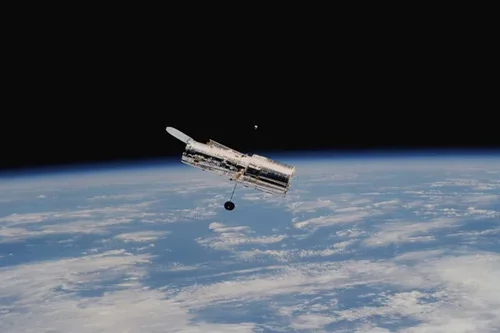
Payload: TRACKING AND DATA RELAY SATELLITE-M NASA geosynchronous communications satellite Relays data from ISS, Hubble and LEO customers Cost: $408 million satellite + $132m launch service Launch Date: Friday, Aug. 18, 2017 Launch Window: 40 minutes 8:03-8:43 a.m. EDT 1203-1243 GMT Launch Site: Cape Canaveral Air Force Station, Florida Space Launch Complex 41 Customer: NASA…
-

From 1979 to 2017: How we’ve changed since the Northwest’s last total solar eclipse
When the daytime sky darkens on Aug. 21, it’ll be the first time in more than 38 years that a total solar eclipse can be seen from the mainland U.S. A lot has changed since Feb. 26, 1979, when the track of totality stretched across Washington, Oregon, Idaho and Montana. But the interest in the…
-
Three spacefliers join International Space Station’s crew after a quick six-hour trip
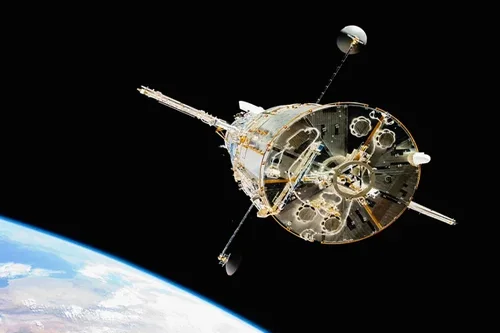
Three fresh crew members arrived at the International Space Station today aboard a Russian Soyuz spacecraft today, just six hours after their launch from Russia’s Baikonur Cosmodrome in Kazakhstan. NASA’s Randy Bresnik, Russia’s Sergey Ryazanskiy and Italy’s Paolo Nespoli bring the station’s crew back to its full strength of six for Expedition 52/53. NASA’s Peggy…
-
Videos: Atlas 5 rocket assembled to launch NASA’s TDRS-M bird
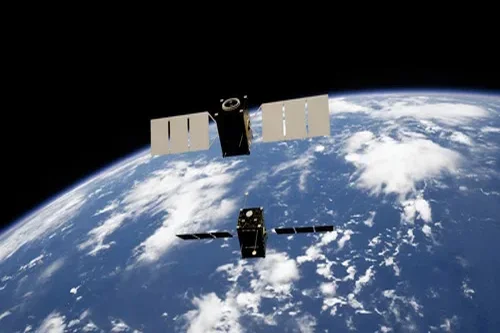
The United Launch Alliance Atlas 5 rocket that will boost NASA’s latest communications relay satellite into space is targeting an Aug. 20 liftoff at 7:56 a.m. EDT (1156 GMT). The Tracking and Data Relay satellite-M, or TDRS-M, will be carried aloft from Complex 41 at Cape Canaveral Air Force Station in Florida, reaching a customized…
-

Augmented reality lets you step through Museum of Flight’s portal and onto NASA’s historic 737 jet
Get ready to cross into an interdimensional portal, because one just appeared at Seattle’s Museum of Flight: It’s transporting visitors into an augmented-reality tour of a historic NASA plane. In a style similar to Pokémon GO, the Museum of Flight’s app places a portal onto the screen of a smartphone or tablet, blended in with…
-
NASA’s next-generation TDRS-M satellite damaged, potentially pushing back launch
A damaged antenna could mean a delay for the launch of NASA’s TDRS-M satellite, shown here at Astrotech Space Operations in Titusville, Fla. (NASA Photo / Glenn Benson) Houston, we may have a problem, and it could come from an antenna that was damaged on Friday during spaceflight closeout activities in Titusville, Fla. The Boeing-made…