
Tag: Phobos
-
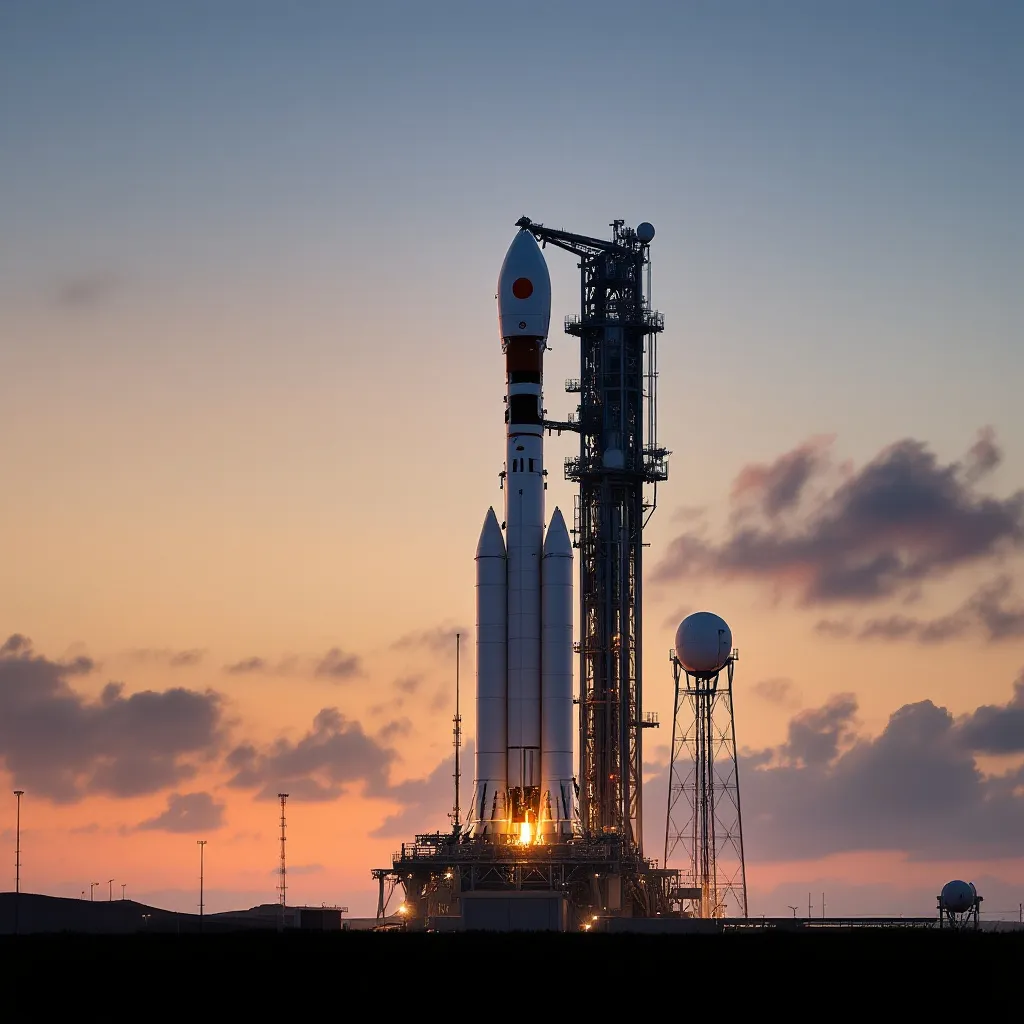
Japan Sets October 20 Launch for Ambitious Mars Moon Sample-Return Mission
Japan has confirmed October 20, 2026, as the launch date for its Martian Moons eXploration (MMX) spacecraft, setting the stage for one of the most ambitious robotic planetary missions yet attempted by the Japan Aerospace Exploration Agency (JAXA). The MMX spacecraft is scheduled to lift off aboard Japan’s H3 rocket at 4:41 a.m. Japan Standard…
-
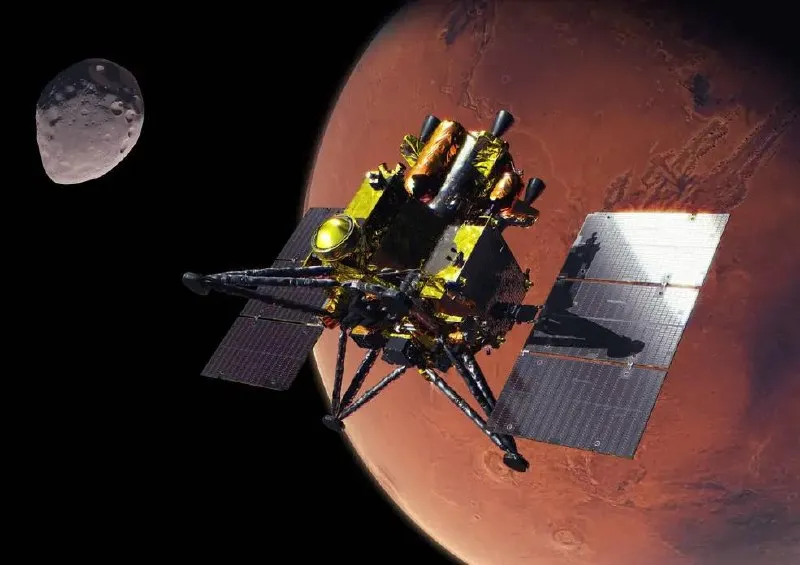
JAXA Sets October 20 Launch for MMX Mars Moon Sample-Return Mission
Japan is preparing to take a major step in planetary exploration with the launch of its Martian Moons eXploration (MMX) spacecraft on Oct. 20, 2026. The Japan Aerospace Exploration Agency (JAXA) said the mission will lift off aboard the No. 10 H3 rocket from the Tanegashima Space Center in Kagoshima Prefecture at 4:41:03 a.m. local…
-
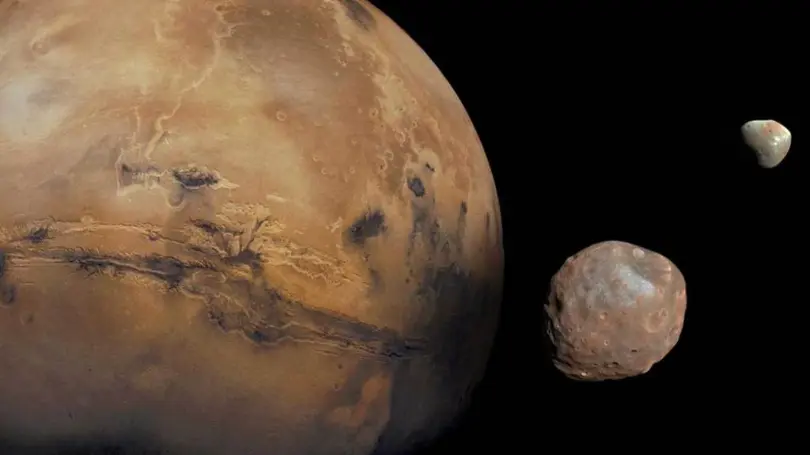
New study provides explanation behind origins of Martian moons Phobos and Deimos
Using supercomputer simulations, a team of NASA scientists recently modeled the destruction of an asteroid around Mars to investigate the possible origins of Mars’ two, mysterious moons — Phobos and Deimos. Since their discovery in 1877 and subsequent investigations by telescopes and Martian spacecraft, scientists have pondered how the two moons came to be, and…
-

IDEFIX Phobos rover sent to Japan ahead of mission to Mars
The Martian Moons eXploration (MMX) mission is JAXA’s lead mission that plans to survey and explore Mars’ two moons, Phobos and Deimos. While the Japanese agency will build the main payload, the German Space Agency (DLR) and the National Centre for Space Studies (CNES) will contribute to the mission. “IDEFIX,” a small secondary payload, will…
-

MAVEN reveals Martian atmospheric time capsule on Phobos as Mars fleet prepares for arrival
Data from NASA’s Mars Atmosphere and Volatile EvolutioN (MAVEN) spacecraft has revealed the unsurprising — yet previously not searched for — presence of Martian atmospheric ions preserved in the top layer of regolith on the planet’s innermost moon, Phobos. The announcement comes as an international fleet of Emirati, Chinese, and American spacecraft are set to…
-
Phobos sample return mission enters development for 2024 launch
Artist’s concept of the Japanese MMX spacecraft near Mars and Phobos. Credit: JAXA Japan’s space agency has approved a robotic mission to retrieve a sample from the Martian moon Phobos for return to Earth to begin full development for a planned launch in 2024, officials said Thursday. The Martian Moon eXploration, or MMX, spacecraft will…
-
NASA confirms contribution to Japanese-led Mars mission
Artist’s concept of the MMX spacecraft at Phobos. Credit: JAXA/NASA NASA announced Thursday it will fund development of a scientific instrument that will fly on Japan’s Martian Moons Exploration mission, a robotic probe set for launch in 2024 to bring back the first samples from Mars’ largest moon Phobos. A neutron and gamma-ray spectrograph developed…
-
Phobos photobombs Mars in Hubble view
This multiple-exposure photo shows 22 minutes’ worth of Phobos’ orbit around Mars. (NASA / ESA / STScI Photo / Z. Levay) Leave it to tiny Phobos to horn in on Mars’ glory in an image captured by the Hubble Space Telescope. The view of the Red Planet and the larger of its two moons, released…
-

NASA spacecraft steers clear of Martian moon Phobos
ESA’s Mars Express spacecraft took this image of Phobos backdropped by the limb of Mars. Credit: ESA/DLR/FU Berlin (G. Neukum) NASA’s MAVEN spacecraft in orbit around Mars maneuvered out of the path of Phobos earlier this week after navigators predicted the spacecraft could run into the Martian moon in the near future, highlighting the challenge…
-

NASA considers SLS launch sequence for human Mars missions in the 2030s
As NASA continues to develop their plans for delivering humans to the Martian system in the 2030s, a Technical Interchange Meeting has outlined two potential hardware launch sequence options for NASA’s upcoming heavy lift rocket, SLS, that would enable the space agency to utilize SLS’s capabilities while realizing human exploration of Mars. Evaluating hardware launch options: *Click…