
Tag: Planets
-
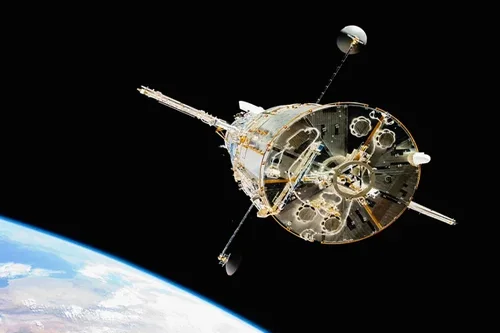
Webb identifies surprising carbon-rich ingredients around young star
Using the joint NASA, European Space Agency (ESA), and Canadian Space Agency (CSA) James Webb Space Telescope, a team of international scientists studied a disk of cosmic material surrounding an extremely low-mass star. The results from the investigation show the richest hydrocarbon chemistry ever observed within a protoplanetary disk, which is a disk of gas,…
-
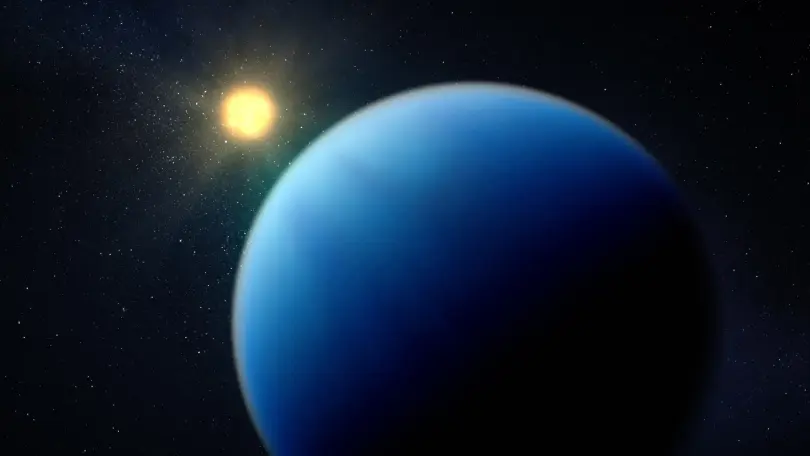
Data from Kepler reveals reason behind shrinking exoplanets
Located throughout the universe, there are billions — possibly even trillions — of exoplanets orbiting around stars of varying shapes, sizes, colors, and more. Like the stars they orbit, exoplanets also come in many different shapes, sizes, and colors, with scientists classifying exoplanets into one of four groups: gas giants, super-Earths, sub-Neptunes, and terrestrial. Interestingly,…
-
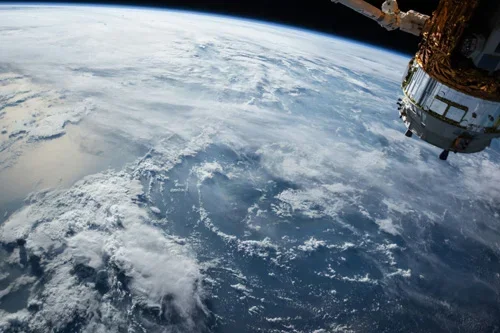
How the ‘Dune’ science-fiction saga parallels the real science of Oregon’s dunes
Timothée Chalamet and Rebecca Ferguson star in “Dune,” a movie based on sci-fi author Frank Herbert’s book. The tale draws in part upon Herbert’s experiences in the Pacific Northwest. (Warner Bros. Photo) The deserts of Abu Dhabi and Jordan play starring roles in the blockbuster sci-fi movie “Dune,” which premieres this week in theaters and…
-

Astronomers offer a solution to Hubble Space Telescope’s case of the disappearing planet
More than a decade ago, Fomalhaut b was considered one of the first exoplanets to be directly imaged — but now it’s vanished, and scientists suspect it was actually nothing more than a huge cloud of dust created by a cosmic smashup. The disappearing act in the Fomalhaut star system, 25 light years away in…
-

New Earth-sized planet ‘rescued’ from Kepler mission’s old data — and it may be habitable
An artist’s conception shows Kepler-1649c orbiting around its host red dwarf star. (NASA / Ames Research Center Illustration / Daniel Rutter) An alien Earth that just might be habitable has been discovered in years-old records, thanks to sharp-eyed astronomers who gave the data a second look. The exoplanet, known as Kepler-1649c, is only 6% wider…
-
NASA’s TESS probe chalks up its first Earth-sized planet in habitable zone, plus a ‘Tatooine’ planet
Astronomers report that NASA’s Transiting Exoplanet Survey Satellite, or TESS, has detected its first Earth-sized planet lying in its parent star’s habitable zone, plus its first planet orbiting two stars. The Earth-sized planet, known as TOI 700 d, is orbiting a cool M-dwarf star a little more than 100 light-years from Earth in the southern…
-

‘Super-puff’ planets add a cotton candy flavor to the search for alien worlds
An illustration depicts the sunlike star Kepler 51 and three giant planets that have an extraordinarily low density. (NASA / ESA / STScI / Hustak, Olmsted, Player and Summers) Readings from the Hubble Space Telescope have shed light on a bizarre class of alien planets that have the density of cotton candy. The “super-puff” planets…
-
Not so far, far away: How the Star Wars galaxy falls short of the real-life search for planets
Luke Skywalker’s home planet, Tatooine, and its two suns are a good example of science echoing Star Wars. Or is it the other way around? (Lucasfilm Photo) Over the past 42 years, filmgoers have seen exotic worlds come to life in a succession of Star Wars movies — a series that is now coming to…
-
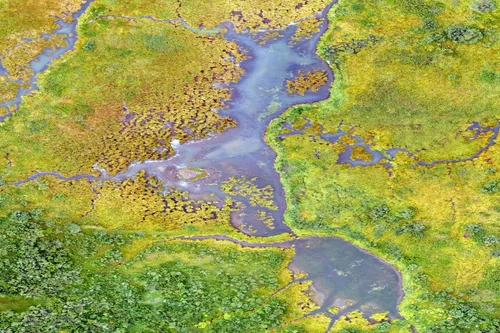
3-D climate modeling could fine-tune the search for faraway signs of alien life
An artist’s conception shows a hypothetical planet with two moons orbiting within the habitable zone of an M-dwarf star. (NASA / Harvard-Smithsonian Center for Astrophysics Illustration / D. Aguilar) Astronomers have identified thousands of stars that have planets, and that number could mushroom even faster when waves of next-generation telescopes come online. But where are…
-
Astronomers spot 20 more moons of Saturn — and want you to help name them
This artist’s conception shows the 20 newly discovered moons orbiting Saturn. (Illustration courtesy of Carnegie Institute for Science. Saturn image courtesy of NASA / JPL-Caltech / Space Science Institute. Starry background courtesy of Paolo Sartorio / Shutterstock.) Saturn has pulled ahead of Jupiter again in the moon discovery race, thanks to a batch of 20…