
Tag: Stars
-
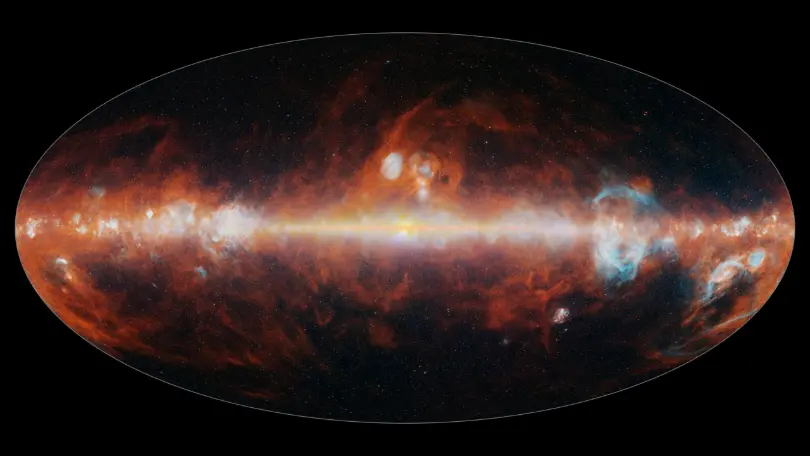
SPHEREx produces first all-sky map, highlights entire universe in infrared light
After launching in March and collecting near-infrared data throughout 2025, NASA’s SPHEREx observatory has completed its first map of the universe. The map, which is comprised of 102 infrared wavelengths, will allow SPHEREx’s team and astrophysicists to research the source of the early universe’s inflation and the distribution of organic molecules throughout the universe. “It’s…
-
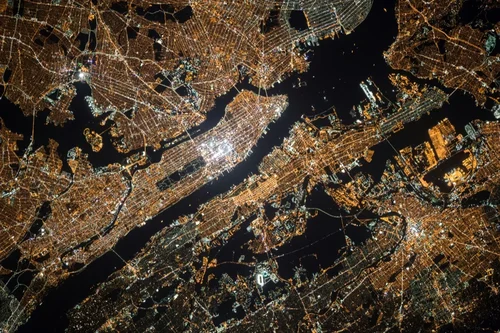
Astronomers use Hubble to discover rare intermediate-mass black hole in Omega Centauri
Using the joint NASA and European Space Agency (ESA) Hubble Space Telescope in low-Earth orbit, an international team of astronomers has discovered a rare black hole within Omega Centauri — the largest and brightest known globular cluster in the Milky Way. Globular clusters are large collections of stars and other cosmic material that can span…
-
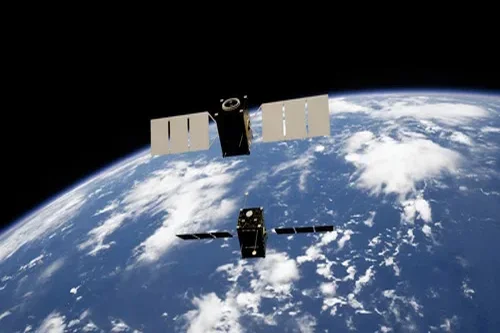
Webb discovers potential aurorae on brown dwarf
Silently floating through the universe are cosmic objects that are both too large to be planets and too small to be stars. Called brown dwarfs, these substellar objects are among the most captivating objects in the universe, and their low surface temperatures mean that most of the light they emit is infrared and thus can…
-

Webb unveils the secrets of the early universe via deep field, peers into stellar nurseries
With help from the joint NASA/European Space Agency/Canadian Space Agency James Webb Space Telescope (JWST), scientists are peering deep into the universe and uncovering secrets that were previously hidden from visible and X-ray telescopes. The JWST advanced deep extragalactic survey (JADES) utilized Webb’s incredible deep-field surveying abilities to create a deep field that shows over…
-
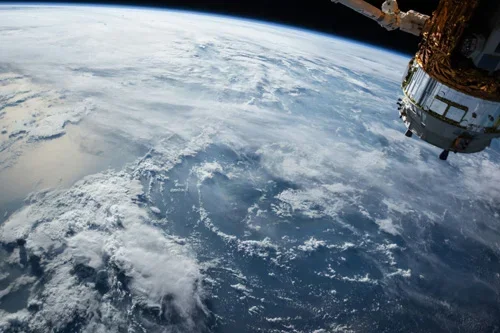
With help from NEOWISE, astronomers observe giant star destroying planet for the first time
Using the California Institute of Technology’s (Caltech) Zwicky Transient Facility (ZTF) and NASA’s Near-Earth Object Wide Field Infrared Survey Explorer (NEOWISE) observatory, a group of scientists has observed an aging star destroying a planet within its own star system for the first time. Astronomers have long believed that such a phenomenon occurred in red giant…
-

Using Hubble, researchers accidentally discover ejected black hole forcing star creation
Throughout the universe, supermassive black holes can typically be found at the center of massive galaxies that stretch tens of light years across. However, using Hubble, a team of researchers has discovered a supermassive black hole that appears to have been ejected from its galaxy. The black hole, which is around 20 million times more…
-
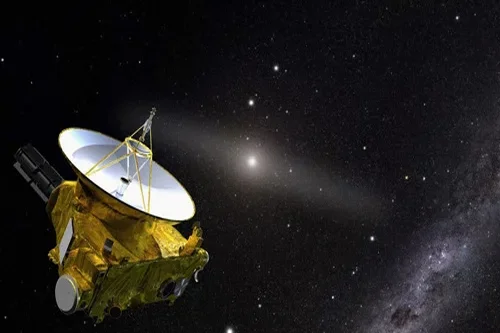
Using JWST, scientists observe silicate clouds and measure the temperature of exoplanets
With help from the joint NASA/ESA/CSA James Webb Space Telescope, two teams of scientists have made groundbreaking, first-of-their-kind discoveries on two exoplanets. One team utilized the immense power of Webb’s Mid-Infrared Instrument (MIRI) and Near-Infrared Spectrograph (NIRSpec) instruments to observe and characterize clouds and molecules in the atmosphere of an exoplanet located 40 light-years away.…
-
Using Hubble, researchers measure the mass of a single white dwarf for the first time
Of the trillions of stars scattered throughout the universe, one of the most common are the white dwarfs, which are the dormant, burned out, and leftover cores of low/medium mass stars. For decades, scientists have only measured the masses of white dwarfs within binary star systems. While these measurements provide insight into the true masses…
-
Data from ESA’s Gaia mission reveals our Sun’s future and past
On June 13, the third major data release from the European Space Agency’s (ESA) Gaia mission revealed details about the past and future of our solar system’s star, the Sun, by using data collected by Gaia on stars of similar mass and composition to our Sun. Gaia is a star mapping mission and collects massive…
-
Researchers use Hubble to observe dead star destroying planetary system
A team of researchers using archival data from the Hubble Space Telescope, a joint venture between NASA and the European Space Agency (ESA), as well as other NASA observatories have observed a white dwarf consuming and destroying a planetary system — the first time an observation of such kind has been made. The white dwarf, a…