
Tag: Titan
-
Humans to Titan Summit Asks if Robots Go First
Will Humanoid Robots Reach Titan Before Humans Do? The first-ever Humans to Titan Summit, held June 11–12 in Boulder, Colorado, reached a conclusion that undercuts its own premise: AI-powered humanoid robots may be a more practical vanguard for Saturn’s largest moon than flesh-and-blood astronauts. Pascal Lee — chairman of the Mars Institute, planetary scientist at…
-

Scientists rule out a hidden ocean on Titan, but there’s still hope for discovering life under the ice
An image from NASA’s Cassini spacecraft shows Titan in front of Saturn and its rings. (Credit: NASA / JPL-Caltech / SSI) A fresh analysis of tidal perturbations on Titan challenges a long-held hypothesis: that the cloud-shrouded Saturnian moon harbors an ocean of liquid water beneath its surface ice. But the scientists behind the analysis don’t…
-
After early struggles, NASA’s ambitious mission to Titan is “on track” for launch
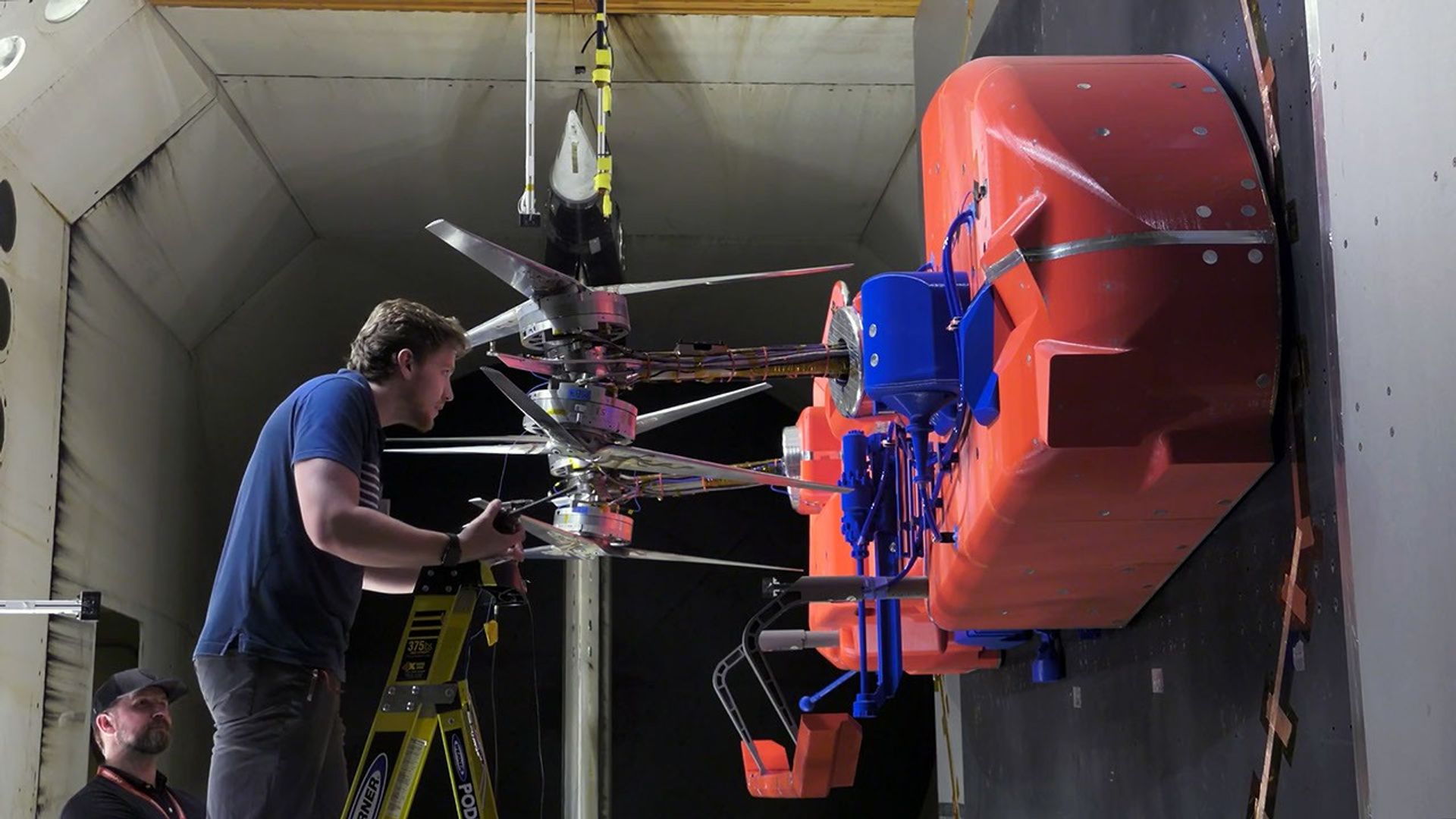
A new independent report finds that although NASA’s ambitious mission to fly across the surface of Titan is delayed and over budget, the fault is due to the space agency’s management rather than the program itself. Released Tuesday by NASA’s Office of Inspector General, the report found that the mission’s budget has soared from an…
-
How Dragonfly will support the search for life on an uninhabitable world
In July 2028, NASA’s next New Frontiers program mission, Dragonfly, will launch to Saturn atop a SpaceX Falcon Heavy. Six years later, it will descend through the thick clouds and atmospheric layers of Saturn’s largest moon, Titan — finding a world that is both similar to and different from Earth. While on Titan, Dragonfly will…
-
Webb, Keck observe Titan; find clouds and carbon molecule in northern hemisphere
By combining data from the Keck II telescope and the joint NASA/European Space Agency/Canadian Space Agency James Webb Space Telescope, a group of scientists observed cloud convection in the northern hemisphere of Saturn’s moon Titan — the first time such atmospheric activity has been observed in the region. A majority of Titan’s methane lakes and…
-
NASA awards SpaceX a contract for one of the few things it hasn’t done yet
When you compare SpaceX to the world’s other space enterprises, it’s probably easier to list the things SpaceX hasn’t done instead of reciting all of the company’s achievements. One of these is the launch of nuclear materials. SpaceX has launched a handful of planetary science missions for NASA, but these spacecraft have all used solar…
-

Arriving at Titan: How Dragonfly’s Entry, Descent, and Landing will differ from Mars missions
Since the focus on Martian exploration ramped up in the mid-1990s, most of the familiarity with the Entry, Descent, and Landing (EDL) sequence of landers and rovers to the surface of other planets has taken place against the backdrop of Mars. But when NASA‘s upcoming Dragonfly mission arrives at Titan for its own EDL, it…
-
Dragonfly mission heads toward PDR, element fabrication from Lockheed Martin set to begin
Dragonfly, NASA’s unique robotic exploration mission using a rotorcraft to fly a science laboratory around the surface of Saturn’s moon Titan, is continuing to march through its preliminary design steps. Rotor design and testing for the craft as well as Preliminary Design Reviews (PDRs) from Lockheed Martin on the subsystem portions of their contracted elements…
-
NASA provides funding for way-out space proposals, including a flying boat for Titan
Artwork shows a probe flying through the skies of Titan, one of Saturn’s moons. (Image via Quinn Morley) NASA says it’ll distribute up to $2.45 million to 14 teams in support of experimental projects that would be right at home in the pages of a science-fiction novel — including a plan to send a flying…
-

Titan impact craters reveal connections to planetary weather, set the stage for Dragonfly
Titan, the atmosphere-shrouded moon of Saturn, has captivated scientists’ attention since its formal discovery on 25 March 1655. While in-situ observations of the moon ended in September 2017 when the Cassini spacecraft was purposely plunged into Saturn’s atmosphere at the end of its mission, data from the 13 year scientific voyage continues to reveal information…