
Tag: Webb
-
Hubble and Webb Team Up to Probe Solar System’s Faintest Icy Relics
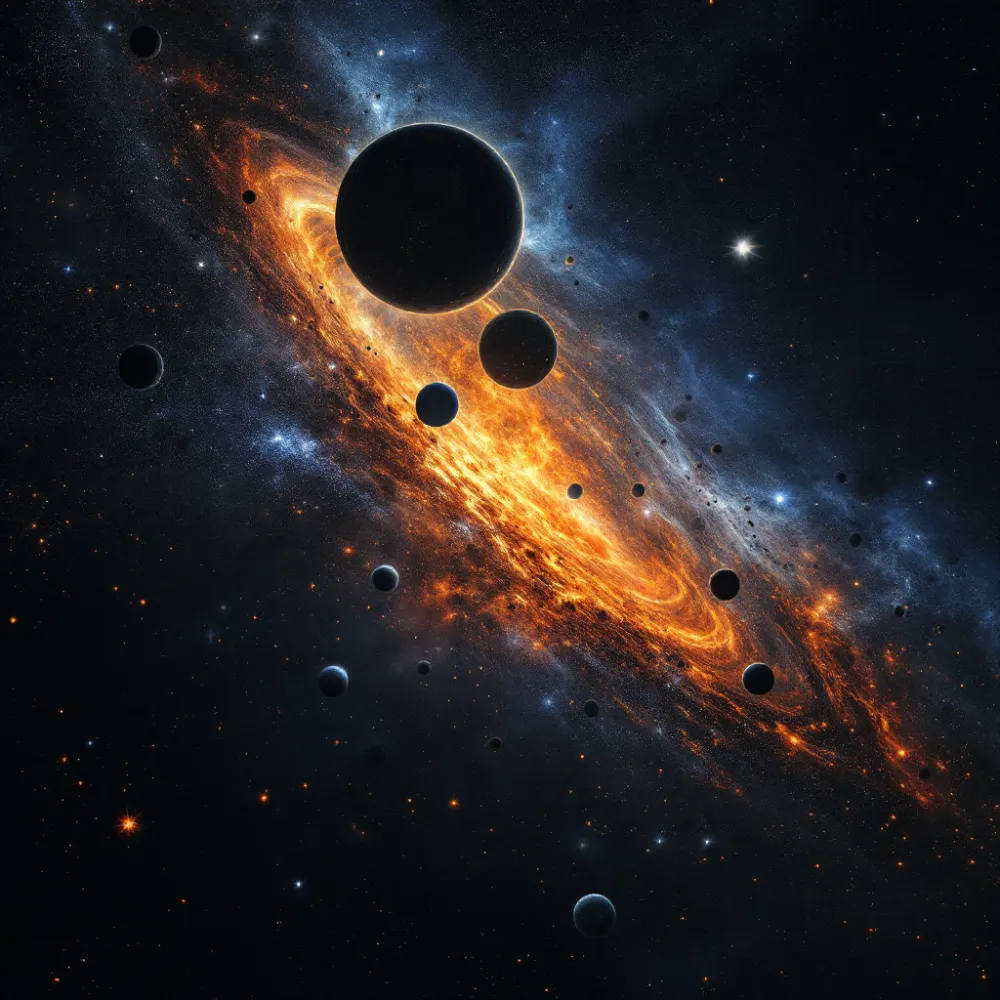
Trans-Neptunian Objects are small, faint, icy bodies orbiting the Sun beyond Neptune, most of them more than 100 million times dimmer than objects visible to the unaided eye. These objects offer the best view into an early stage of planet-building, when a disk of dust and pebbles around the Sun coalesced into city-sized planetesimals but…
-
Webb reveals a planetary nebula with phenomenal clarity, and it is spectacular
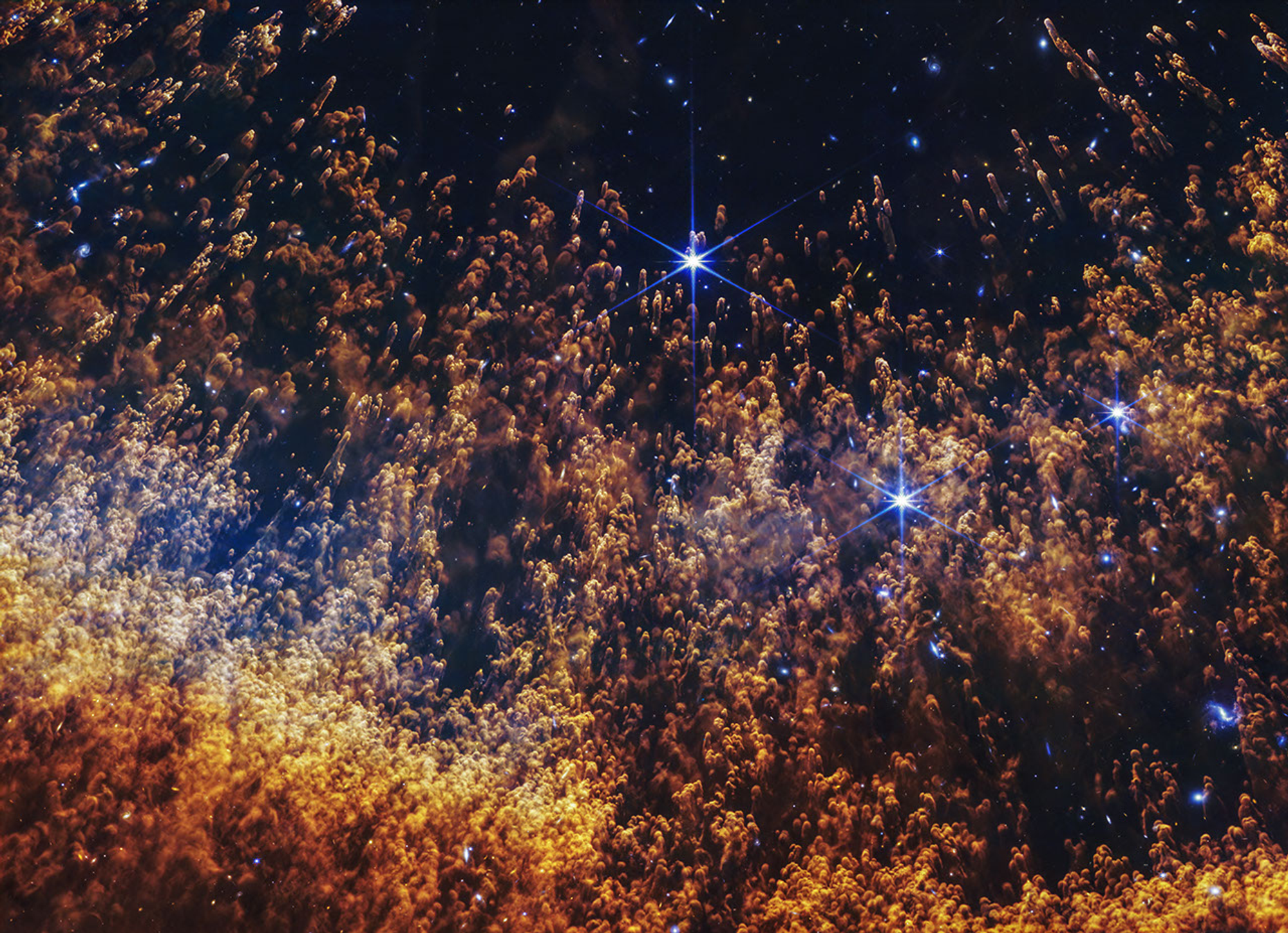
The Helix Nebula is one of the most well-known and commonly photographed planetary nebulae because it resembles the “Eye of Sauron.” It is also one of the closest bright nebulae to Earth, located approximately 655 light-years from our Solar System. You may not know what this particular nebula looks like when reading its name, but…
-

Space Science in 2026: New lunar explorers, Mars missions, and space telescopes
With many missions on the manifest, the new year promises to be packed with space science. Two interplanetary spacecraft will arrive at their destinations as another Mars window opens in late 2026. Meanwhile, multiple space telescopes have their launch dates set for this year, and the schedule promises an increased cadence for lunar missions. The…
-
Webb discovers rapidly growing black hole in the very early universe
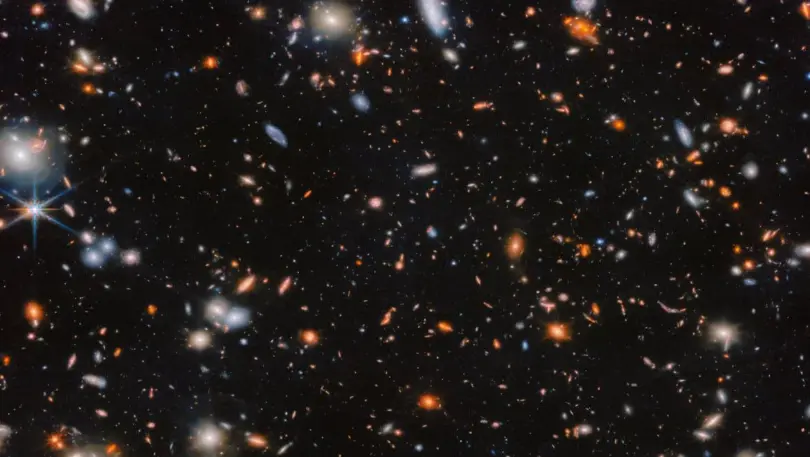
Using the joint NASA/European Space Agency/Canadian Space Agency James Webb Space Telescope, a group of astronomers has discovered a supermassive black hole within the distant galaxy CANUCS-LRD-z8.6. The galaxy is among the farthest ever observed, with Webb imaging it as it was just 570 million years after the Big Bang. CANUCS-LRD-z8.6 is a part of…
-
Wide-field surveys versus precise infrared observations: how Rubin compares to JWST
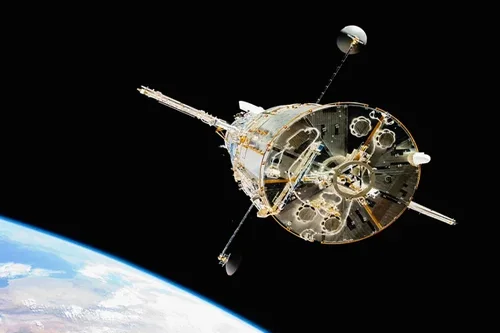
Earlier this year, the new Vera C. Rubin Observatory in Chile officially began scientific operations, becoming the world’s largest and most advanced ground-based telescope. Featuring an eight-meter primary mirror and the world’s largest camera, Rubin promises to deliver exceptional new results and astrophysical research opportunities for scientists worldwide. Meanwhile, situated at the L2 Lagrange point…
-
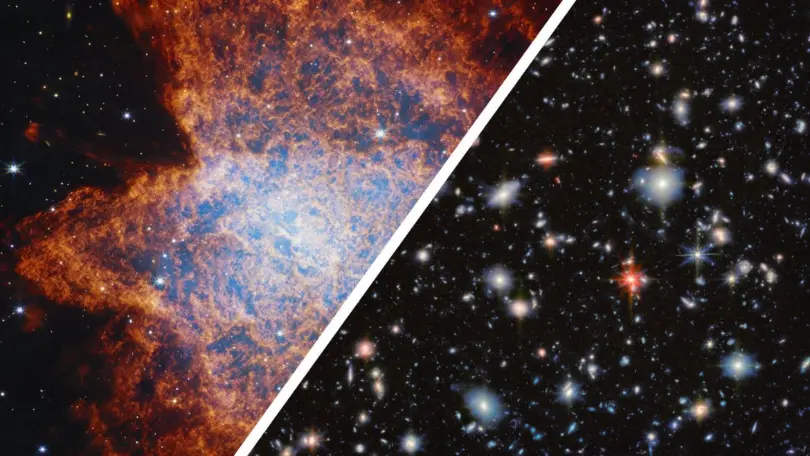
Webb reveals structures in planetary nebula, sheds new light on the Hubble Ultra Deep Field
The joint NASA/European Space Agency/Canadian Space Agency James Webb Space Telescope recently observed the remnants of a dying star shedding its outer layers. The resulting colorful cloud is known as a planetary nebula, and structures in this nebula revealed by Webb hint at the presence of a companion star. Meanwhile, a team of scientists used…
-
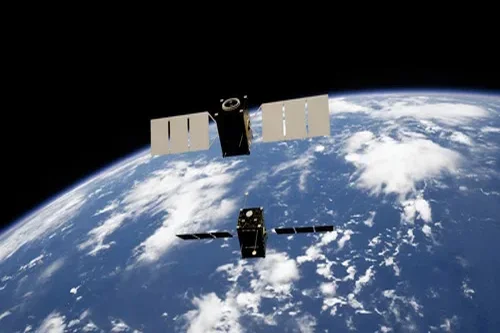
Webb, Keck observe Titan; find clouds and carbon molecule in northern hemisphere
By combining data from the Keck II telescope and the joint NASA/European Space Agency/Canadian Space Agency James Webb Space Telescope, a group of scientists observed cloud convection in the northern hemisphere of Saturn’s moon Titan — the first time such atmospheric activity has been observed in the region. A majority of Titan’s methane lakes and…
-
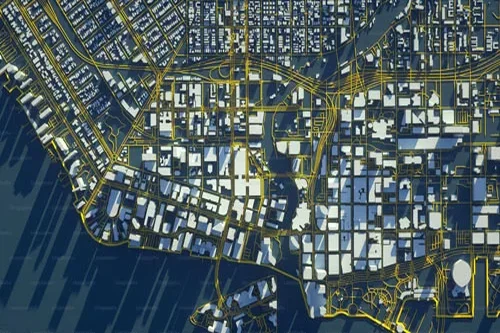
Webb investigates protoplanetary disk in extreme detail, observes glowing interstellar material
The joint NASA, European Space Agency (ESA), and Canadian Space Agency (CSA) James Webb Space Telescope, located at the Sun-Earth Lagrange Point 2, recently utilized its extraordinary suite of infrared instruments to investigate and image a protoplanetary disk around a newborn star. Webb’s observations provided scientists with unprecedented views of the disk, material jets, and…
-
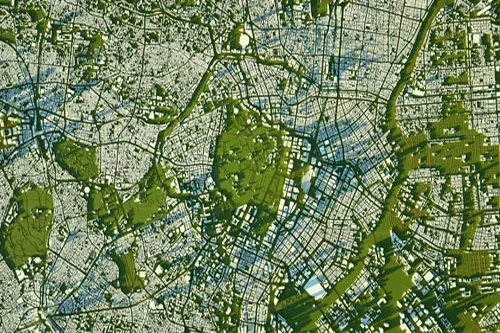
Space science in 2024: Moon missions, Martian milestones, astrophysics discoveries, and more
2024 was another busy year for space science, with many new missions, successes, and discoveries across the solar system and beyond. Three new missions were launched to the Moon, while one mission was canceled, and Curiosity and Perseverance continued to explore and make discoveries in their respective regions on Mars. Beyond the Earth-Moon system and…
-
Webb finds never-before-seen structures above Jupiter’s Great Red Spot
Using the joint NASA, European Space Agency (ESA), and Canadian Space Agency (CSA) James Webb Space Telescope, a group of scientists has discovered a variety of never-before-seen features in Jupiter’s upper atmosphere. The features were found in the atmospheric region above the iconic Great Red Spot—a high-pressure region in Jupiter’s atmosphere that produces a massive…