
General Orbit is advancing next-generation navigation systems through a software-defined approach to magnetic sensing, designed to deliver reliable positioning in environments where traditional GPS-based systems are limited or unavailable. By combining compact hardware with machine learning-driven processing, the company is addressing long-standing challenges associated with magnetic navigation, including interference, integration complexity and system scalability. General Orbit’s technology enables passive, infrastructure-independent navigation capable of operating in contested, degraded and denied environments.
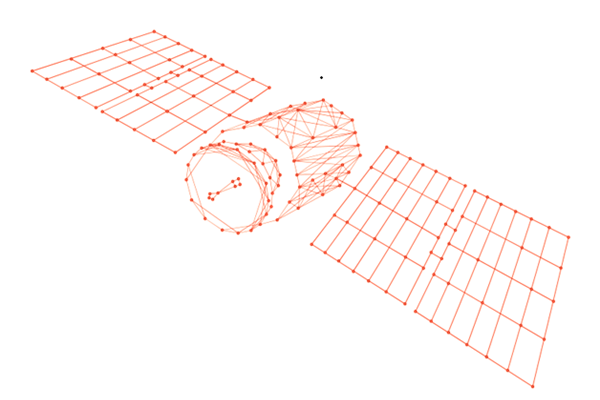
At the core of General Orbit’s solution is a software-defined magnetometer, engineered to overcome limitations of legacy magnetic navigation systems. Traditional magnetometers often require strict magnetic cleanliness, extensive calibration and large physical footprints, making them difficult to deploy across diverse platforms. General Orbit’s sensor architecture is designed to be compact, lightweight and low power (SWaP-optimized), enabling integration into small and mobile platforms without the need for additional shielding or structural modifications. By embedding advanced processing capabilities within the sensor system, the technology reduces dependency on external hardware and simplifies system design. A defining feature of the system is the use of machine learning algorithms to filter magnetic interference in real time. Magnetic navigation systems are traditionally sensitive to platform-generated noise, requiring complex compensation techniques and strict design constraints. General Orbit’s approach dynamically identifies and removes interference, allowing the system to operate effectively across different platforms without requiring extensive calibration. This capability enables consistent performance in environments with high electromagnetic noise, improving reliability and reducing operational complexity.
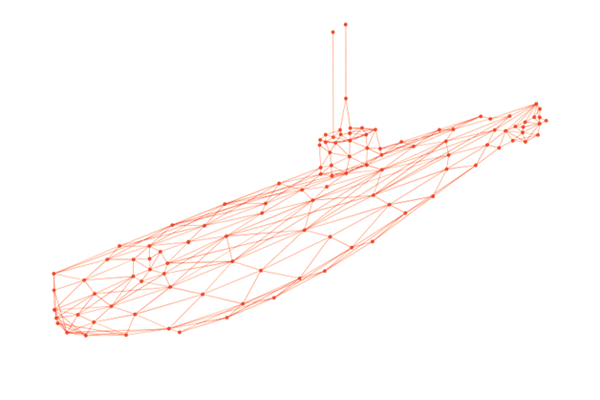
The company’s technology also addresses challenges associated with magnetic map generation and maintenance, which have historically been resource-intensive and slow to update. General Orbit integrates the sensing hardware with a software stack that enables efficient creation and continuous refinement of high-fidelity magnetic maps. Through software-defined sensing, the system supports ongoing improvements in map accuracy over time, allowing navigation performance to evolve with operational data. This capability reduces the cost and complexity of maintaining accurate navigation references across large geographic areas. General Orbit’s navigation system is designed with a platform-agnostic architecture, enabling rapid integration across a wide range of vehicles and mission profiles. The system adapts through software, reducing integration timelines and engineering overhead. This flexibility supports deployment across air, maritime and ground platforms, as well as emerging autonomous systems, without the need for extensive redesign or customization.
A key advantage of magnetic navigation is its ability to function as a passive and always-available signal source, independent of external infrastructure such as satellites or ground-based systems. This makes it particularly valuable in scenarios where GPS signals may be unavailable, degraded or intentionally disrupted. General Orbit’s system maintains consistent navigation performance in contested and denied environments, providing an alternative positioning capability that enhances operational resilience for critical missions. The company’s focus on low size, weight and power (SWaP) design enables deployment on platforms where traditional navigation systems are impractical. By delivering high-performance sensing in a compact form factor, the technology supports small satellites, unmanned systems and mobile platforms that require efficient resource utilization. This optimization expands the applicability of magnetic navigation to new use cases, including autonomous vehicles and distributed sensing networks.
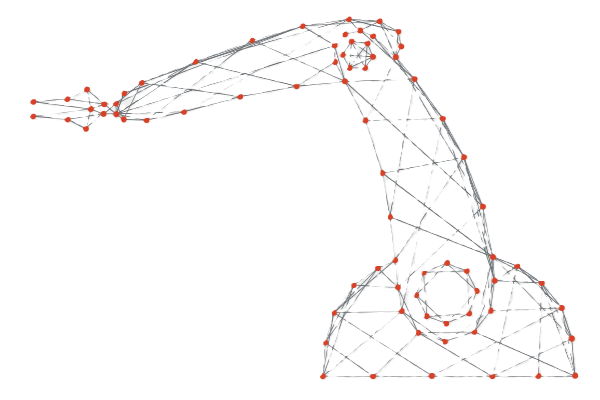
General Orbit’s technology has progressed through collaborations with NASA, where early hardware deployments supported mission validation and system testing. These efforts contributed to the refinement of the company’s machine learning-based interference mitigation techniques and the development of scalable manufacturing processes. The company is now focused on expanding the solutions to address large-scale markets, including maritime, defense and aviation sectors, where reliable navigation is critical for safety and operational efficiency. General Orbit addresses this need by delivering a navigation solution that combines software-defined sensing, machine learning and scalable system design. By enabling reliable operation in GPS-denied environments and simplifying integration across platforms, General Orbit is contributing to the development of next-generation navigation systems capable of supporting increasingly complex and autonomous operations.
About General Orbit
General Orbit is a US-based technology company focused on developing magnetic navigation solutions for resilient and infrastructure-independent positioning. Headquartered in Michigan, USA, the company designs software-defined sensing systems that enable reliable navigation in environments where traditional GPS-based systems may be limited or unavailable. General Orbit’s core technology combines compact magnetometer hardware with machine learning-based data processing to deliver accurate navigation performance while minimizing size, weight and power requirements. The solutions are designed to operate across multiple platforms, including aerospace, maritime, defense and autonomous systems, without requiring extensive hardware customization. By integrating advanced sensing, magnetic mapping and real-time interference filtering, General Orbit provides navigation capabilities that support operations in contested, degraded and GPS-denied environments.