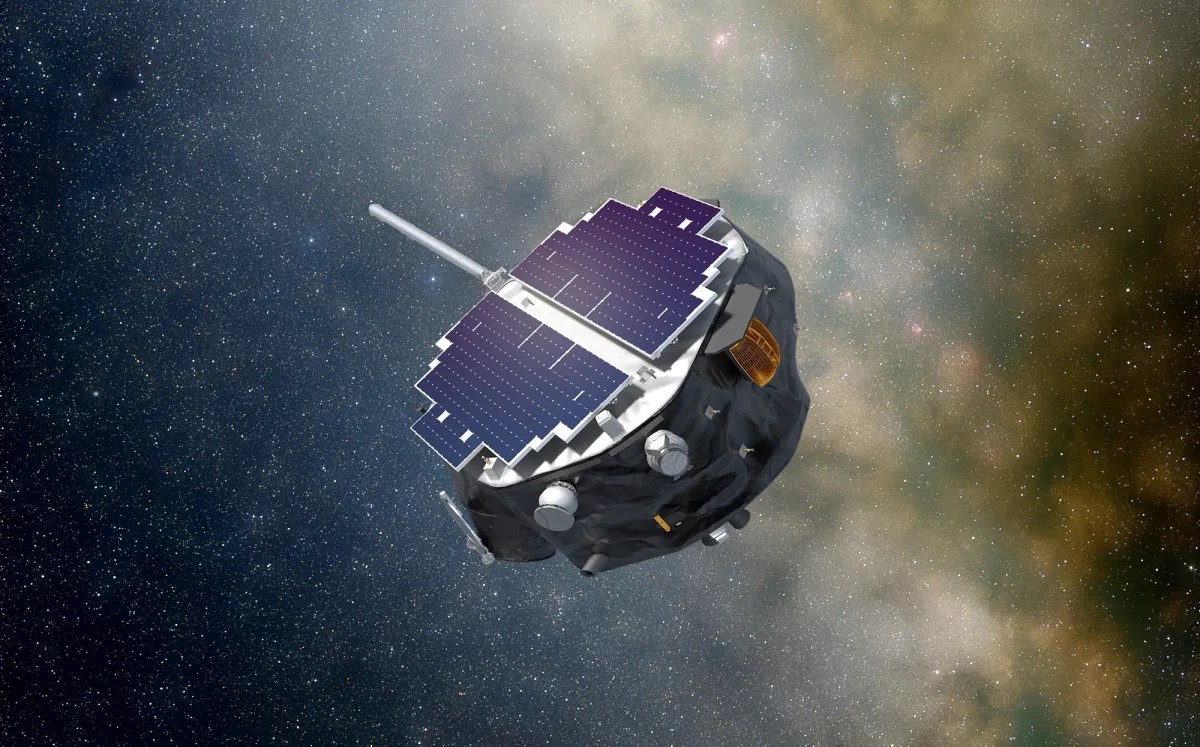
The United States launched three spacecraft on Wednesday aboard a SpaceX Falcon 9 rocket to improve monitoring of solar activity and its effects on technology, astronauts, and infrastructure on Earth.
The launch from Florida’s Kennedy Space Center sent the probes on a journey toward the Lagrange 1 point, around 1.5 million kilometers from the sun, where they will gain a stable vantage point for solar observation.
The Interstellar Mapping and Acceleration Probe will study the sun’s high-energy particles and the heliosphere, the magnetic bubble surrounding the solar system. The Space Weather Follow-on (SWFO-L1) spacecraft, operated by the National Oceanic and Atmospheric Administration (NOAA), is designed to detect solar storms in advance. “It can’t stop an incoming threat, but it can give us time to prepare,” Irene Parker of NOAA said.
Solar storms, caused by flares on the sun’s surface, can disrupt aviation, mobile communications, GPS systems, and power grids, while also posing risks to astronauts and satellites in orbit. By providing early warnings, NOAA officials said authorities could shelter astronauts, adjust air traffic operations, and adapt power networks to limit disruption.
A third spacecraft, the Carruthers Geocorona Observatory, will study Earth’s exosphere to improve understanding of how space weather interacts with the planet’s outer atmosphere.