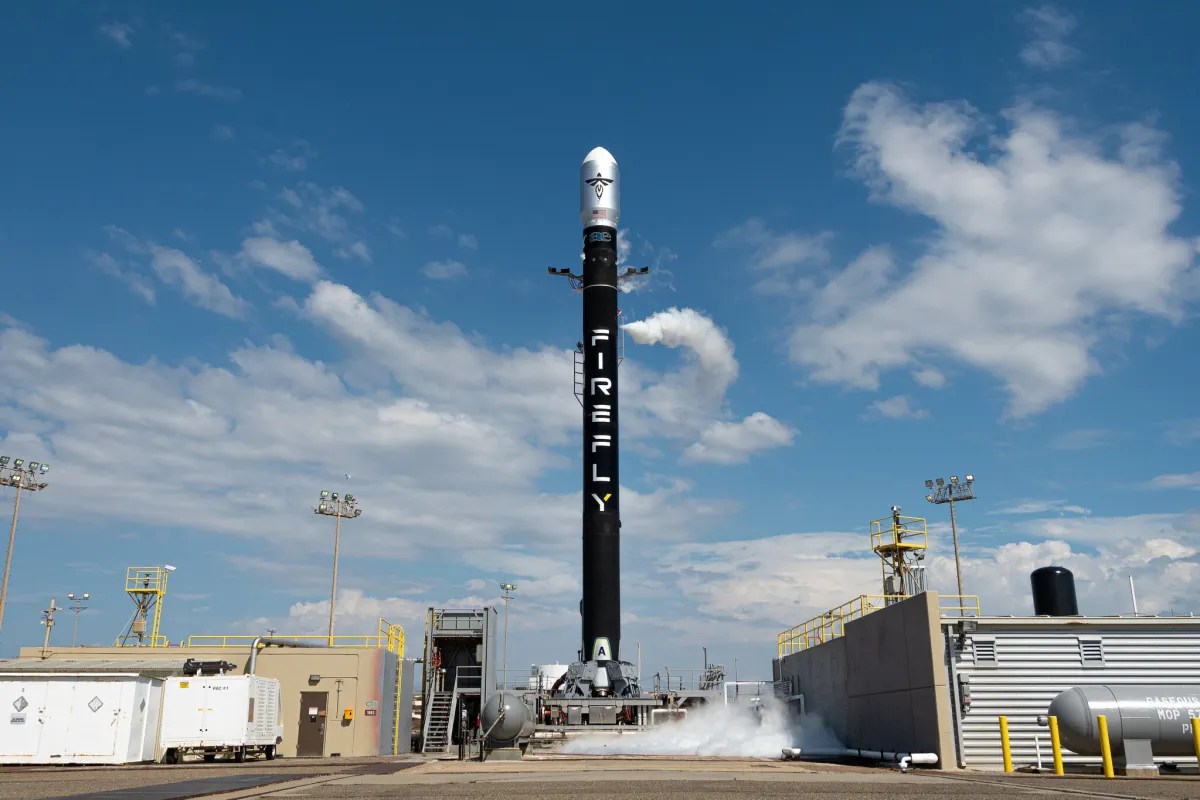
Firefly Aerospace said it has introduced a Block II configuration upgrade for its Alpha launch vehicle, aiming to improve reliability, streamline production and enhance launch operations as demand grows across commercial, civil and national security missions.
The U.S.-based space and defense company said Alpha Flight 7, targeted for launch in the coming weeks, will be the final mission using the current configuration. The flight will also serve as a testbed, flying several Block II subsystems in “shadow mode” to gather flight heritage and validate performance ahead of the full Block II deployment planned for Alpha Flight 8.
“The Block II upgrade has been part of Firefly’s strategic growth plan to meet the evolving needs of the growing global launch market,” said Jason Kim, chief executive of Firefly Aerospace. He said the company incorporated data from its first six Alpha launches and extensive ground testing to introduce changes that improve reliability and manufacturability through consolidated parts, updated configurations and strengthened structures.
Firefly said the Block II configuration is intended not only to improve production rates and reliability but also to expand Alpha’s deployable launch capabilities for responsive space missions. These include national security operations, hypersonic testing and commercial satellite launches for both U.S. and international customers.
Planned upgrades for Alpha Flight 8 include increasing the rocket’s length from about 97 feet to 104 feet, strengthening carbon composite structures using automated manufacturing, and replacing off-the-shelf batteries and avionics with consolidated systems built in-house. Firefly said the changes are designed to improve schedule certainty and production efficiency while maintaining commonality across its rockets and spacecraft. Additional modifications include optimized liquid oxygen and RP-1 propellant tanks and improved thermal protection to extend stage burn time.
Some of the Block II elements, including in-house avionics and thermal improvements, will be evaluated during Flight 7. Firefly said the first stage has already been delivered to Vandenberg Space Force Base in California, where final vehicle integration is under way ahead of static fire testing and launch.
“Flight 7 gives us the opportunity to test key systems ahead of the full Block II upgrade on Flight 8,” said Adam Oakes, vice president of launch at Firefly Aerospace. “This approach allows us to accelerate our Block II timeline while validating improvements designed to optimize production and increase reliability across the Alpha vehicle.”