Lux Aeterna has raised $10 million in seed funding to develop its reusable satellite platform Delphi, with the first demonstration mission planned for the first quarter of 2027.
The round was led by Konvoy Ventures and included participation from existing investors Space Capital, Dynamo Ventures and Channel 39 Ventures, along with new investors including Decisive Point, Cubit Capital and Wave Function Ventures.
The Colorado-based company was founded in 2024 by Brian Taylor, who previously worked on satellite systems linked to SpaceX’s Starlink network, Amazon’s Project Kuiper and spacecraft developed by Loft Orbital.
Lux Aeterna aims to bring reusability to satellite hardware, a concept that has become common in launch vehicles but remains rare for spacecraft themselves. Its Delphi demonstration satellite weighs around 200 kilograms, with just under 25% of the mass allocated to payload capacity, and is designed to withstand atmospheric reentry so that onboard hardware can be returned to Earth after missions.
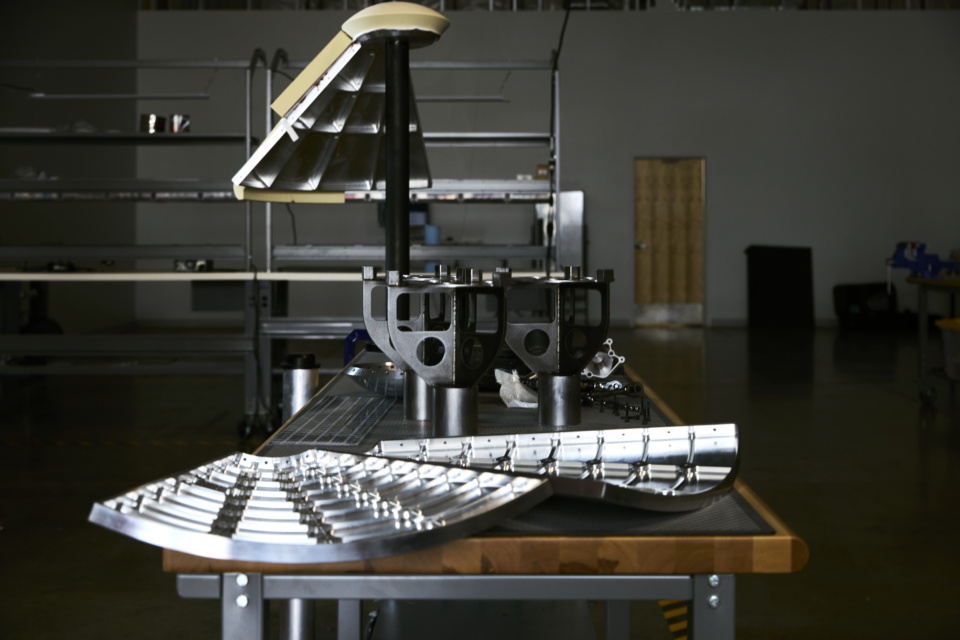
The spacecraft uses commercial off-the-shelf components and includes a proprietary retractable solar array developed by the company. Lux Aeterna is also collaborating with NASA under a Space Act Agreement to develop the satellite’s heat shield.
The company’s longer-term plan is to develop a larger production vehicle capable of up to 15 reuses or a combined 15 years of operational life, with payload capacity expected to reach 25% to 40% of the spacecraft mass.
Lux Aeterna’s concept focuses on enabling short-duration orbital missions, potentially lasting as little as a single day, allowing payload operators to test new hardware without designing systems to survive years in space.
“The current state of the art is you put a satellite up, and your goal is to make it last as long as possible,” Taylor said. “But you have to match the lifetimes of everything that’s on the vehicle…and you don’t really have flexibility.”
The company said demand for the concept is already strong, with the first Delphi mission in early 2027 fully booked. Lux Aeterna ultimately aims to operate fleets of reusable satellites capable of frequent flights.
“Our goal is to get to this concept of fleet operations where we’re moving satellites up and down on a regular basis,” Taylor said. “The vision is…tens of vehicles in our fleet and tens of flights per year, and then that climbing up to hundreds of vehicles in the fleet, and hundreds of flights per year.”